
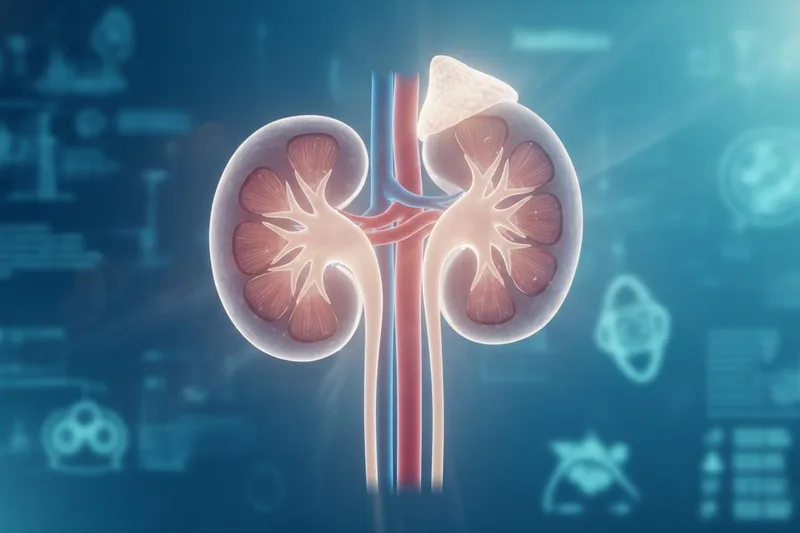
Our body is a wonderful creation, isn't it? Sometimes things happen inside our bodies that we don't know, that we can't even imagine. That's one of those special things that we're going to talk about today. Imagine, that the tubes that carry urine from one of your kidneys to the bladder (we call these `(ureters)`) usually have two instead of one! Yes, that's true. This is what we call `(Duplex Kidney)` or `(Duplicated Ureters)` in medical science. Don't be alarmed when you hear the name, this is something that doesn't cause much of a problem for most people. Let's talk about this in detail and simply.
What is this ``Duplex Kidney''? Let's understand exactly!
Simply put, a duplex kidney is a congenital condition that occurs at birth. This is when one or both of your kidneys have two tubes called ureters that carry urine to the bladder. Normally, only one ureter connects to the bladder from one kidney.
We all have two kidneys in our body. These kidneys filter the waste products in our body and produce urine. Then, this urine travels through tubes called ``ureters`` and collects in the bladder. When the bladder is full, we feel the need to urinate. Now, in this ``Duplex Kidney`` condition, two tubes come out of one kidney. One starts from the upper part of the kidney and the other from the lower part and carries urine to the bladder. This happens when the kidneys and urinary tract are developing in the womb as a fetus.
What are the main types of `(Duplex Kidney)`?
This ``Duplex Kidney'' condition can affect only one kidney, or it can affect both kidneys (which we call ``bilateral duplex kidneys''). Also, it can be complete or incomplete . Let's see what it is.
- Complete Duplex Kidney: In this case, two ureters that start from the same kidney and connect to the bladder separately. This means that two tubes enter the bladder.
- Incomplete Duplex Kidney: Here, although two ureters start from the same kidney, they join together before entering the bladder, forming a single tube that connects to the bladder. Think of it like the letter 'Y'.
What are the symptoms of this condition? Does everyone get symptoms?
The good news is that most people with a duplex kidney do not experience any symptoms . They live normal lives. However, sometimes, especially in cases of complete duplex kidney, when the ureters are not properly connected to the bladder or there is some obstruction in the flow of urine, symptoms can develop due to complications.
Symptoms that may occur are:
- Frequent urinary tract infections (UTIs) . These can include burning, pain, and a frequent need to urinate.
- Kidney infection (if a UTI is accompanied by a fever). This is a bit more serious. Symptoms may include fever, chills, and back pain.
- Urinary incontinence is the involuntary leakage of urine even after a child has been toilet trained (also known as potty trained) . This is especially common among girls.
Imagine, some children have frequent fevers, the doctor gives them medicine, but they keep getting them again. Perhaps the cause is a urinary tract infection caused by a hidden ``Duplex Kidney''.
Does Duplex Kidney cause excessive urination?
No, having a Duplex Kidney does not cause your bladder to hold more urine, nor does it make you need to urinate more often. How much urine we produce is controlled by other systems in our body. However, as I mentioned before, if someone with a Duplex Kidney is getting frequent UTIs, you may feel like you need to urinate more often because of the infection. This is not a direct result of the condition, but a symptom of the infection.
Why does this ``Duplex Kidney'' occur?
This is often caused by a cell division error that occurs early in the development of a fetus in the womb. This means that there is a slight change in the formation of the kidneys and urinary tract. The important thing is that there is no evidence that this condition is caused by anything the mother did or did not do during pregnancy. So don't feel guilty about it.
Is this something that comes from generations?
Yes, sometimes Duplex Kidney can be inherited . This means that if one of the parents has the condition, their child has a 50% chance of developing it. However, there are cases where children can develop Duplex Kidney even if the parents do not have the condition. Therefore, if someone in the family has it, it is good to be aware.
What are the possible complications of ``Duplex Kidney''?
Often, symptoms of a duplex kidney only appear when other problems develop with the development of the urinary system. These changes can block the flow of urine, cause the kidneys to swell (hydronephrosis), or cause urine to flow backward into the kidneys (reflux). Any of these conditions can lead to frequent urinary tract infections (UTIs).
Some other conditions that can be seen in association with ``Duplex Kidney'' are:
- `Ureterocele`: This is when the `(ureter)` where it connects to the bladder becomes balloon-like. This can obstruct the flow of urine.
- Ectopic ureter: In this case, the ureter is attached to a different part of the bladder (for example, the urethra or vagina). This can cause involuntary leakage of urine (incontinence).
- Vesicoureteral reflux (VUR): This is when urine from the bladder flows back up the ureters to the kidneys. This can damage the kidneys and cause infections.
- Hydronephrosis: This is when urine builds up in the kidneys and becomes swollen. This happens if there is a blockage somewhere in the urinary tract.
How is this ``Duplex Kidney'' condition diagnosed?
Doctors can diagnose duplicated ureters by using special imaging tests to take pictures of your urinary system. When trying to determine the cause of your symptoms, your doctor may ask you questions like:
- Do you have back or stomach pain?
- Do you have a problem with urinary incontinence?
- Does anyone in the family (blood relatives) have ``Duplex Kidney''?
Duplicated ureters are often discovered in childhood , especially if they have frequent UTIs or incontinence. However, some people don't know they have the condition until they are adults. It is often discovered incidentally during tests for another condition. Some of the symptoms are similar to those of other conditions, so it can be difficult to diagnose.
What tests are done to diagnose this?
Your doctor may order imaging tests like these to determine if you have Duplex Kidney:
- Kidney and bladder ultrasound: This is a painless, simple test that uses sound waves to take pictures of the internal organs.
- `Computed Tomography (CT) scan`: This uses X-rays and a computer to take detailed cross-sectional images of the body.
- Magnetic Resonance Imaging (MRI): This uses magnetic fields and radio waves to produce clear images of the inside of the body.
- Retrograde pyelogram: This is a special test. A small camera and dye are passed through the urethra, and X-ray pictures are taken to see the shape and function of the urinary system.
What are the treatments for `(Duplex Kidney)`?
Most people do not need any treatment for a duplex kidney. However, if you have an ectopic ureter, as mentioned above, or if you have other problems that are causing symptoms, you may need surgery on your kidneys, bladder, or ureters.
Do you remove a ``Duplex Kidney''?
Doctors rarely completely remove a ``Duplicated Kidney.`` The problem is not having two kidneys, but the complications associated with them. If there are symptoms, there are several types of surgery that can be performed:
- `Ureteroureterostomy`: In this, the surgeon joins the two `(ureters)` together, creating a `(ureter)` in the shape of a `(Y') to carry urine to the bladder. This is done to join the two tubes, similar to an `(Incomplete Duplex Kidney)`.
- Ureteral reimplantation: If you have an ectopic ureter, or a refluxing ureter, the surgeon will create a new opening to connect it to the bladder. This will help urine flow properly and stop it from flowing backward.
- Nephrectomy: This involves removing part or all of the kidney that is not working properly. This can reduce incontinence and the risk of infection. However, this treatment is not done very often. It is only done if one kidney is severely damaged and causing problems, and the other kidney is working well.
How long does it take to recover after surgery?
The time it takes for you to recover from surgery will vary depending on your age and the type of surgery you had. For example, a young child will usually stay in the hospital for a day or two, then go home and rest for another week or two. After the surgery, the doctor will do an ultrasound of the kidney to make sure everything is okay.
If I have a ``Duplex Kidney'', what should I expect?
Most people with a duplex kidney don't have any problems. But if you have conditions like urinary incontinence, reflux, or frequent UTIs, you may need surgery to correct them.
Is ``Duplex Kidney'' a serious condition?
Duplex Kidney is usually not a serious or dangerous condition . Most people do not have symptoms and do not require treatment.
Can I live a normal life with a Duplex Kidney?
Duplex Kidney is not life-threatening. Although treatment is required, it is usually very effective in relieving symptoms. So yes, you can live a completely normal life .
How do I take care of myself?
If you know you or your child has a duplex kidney, be aware of symptoms that affect the urinary system (such as UTIs with a fever or involuntary urination). If you or your child has had surgery, follow your doctor's instructions carefully .
When should I see my doctor?
If you have been diagnosed with Duplex Kidney and are experiencing symptoms that you think are related to it, see your doctor. Ask him or her about any new symptoms or what to do if your symptoms worsen.
When should I go to the Emergency Department (ETU) ?
If you have symptoms of a serious infection, go to the emergency room immediately. These symptoms include:
- High fever (over 102 degrees Fahrenheit / 39 degrees Celsius).
- Sudden severe abdominal pain .
- Frequent vomiting and inability to eat or drink anything .
What questions should I ask my doctor?
It may be helpful to ask your doctor questions like these:
- Are there any medications I need to take?
- What type of ``Duplex Kidney'' do I have?
- Do I need surgery? What kind?
- Do I need to see a specialist? Do I need a ``(referral)`` for that?
- Do you think my symptoms will go away on their own?
- If I have ``Duplex Kidney'', should my child be tested too?
How common is ``Duplex Kidney''?
Bisected kidneys are the most common congenital condition affecting the urinary system. Approximately one in 125 people have a complete or incomplete bisection of the kidneys.
Finally, things to remember (Take-Home Message)
Duplex Kidney or Duplicated Ureters is not a life-threatening condition and often does not cause symptoms. Many people do not even know they have the condition. If you or your child is diagnosed with Duplex Kidney and has symptoms, treatment is usually very effective in treating them. Although it may be embarrassing to talk about things like involuntary urination or pain when urinating, it is important to talk to a doctor about your symptoms . They are there to help you. They can find the cause of your symptoms and recommend the right treatment to help you feel better. The most important thing is not to panic and get the right medical advice.
` Double kidney, two ureters, congenital kidney disease, urinary tract infections, kidney surgery, ureterocele, vesicoureteral reflux


💬 Comments (0)
No comments yet. Be the first to share your thoughts here.
Add Your Comment