
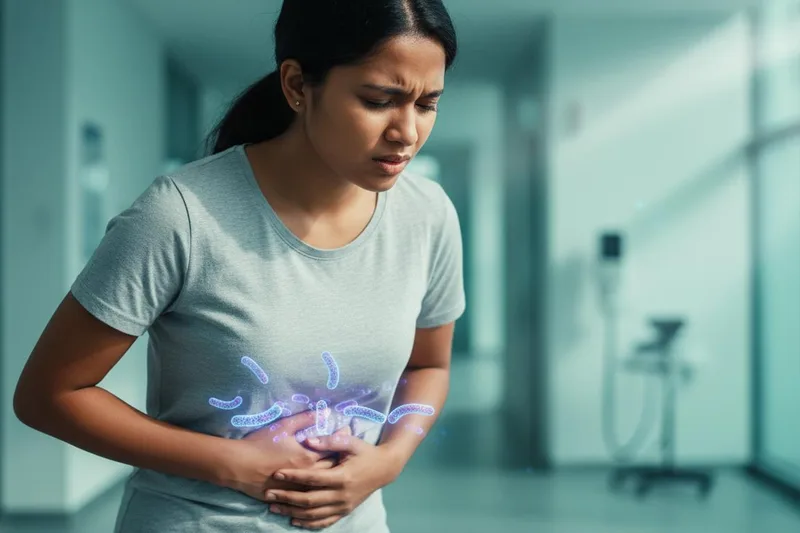
Have you ever had a stomach ache, diarrhea for days, and felt like you were going crazy? Sometimes we think that something we ate at the store is bad. However, the cause of such illnesses can sometimes be a tiny type of bacteria that we can't see with our eyes. One such bacteria is E. coli . The name sounds a little scary, doesn't it? But don't worry. Today, let's talk about what `E. coli` is, why it can sometimes be dangerous, and how we can protect ourselves from it.
What is this E. coli?
Simply put, E. coli (Escherichia coli) is a type of bacteria. They normally live in the intestines, or gastrointestinal (GI) tract, of healthy people and animals. Don't be surprised, the E. coli in your gut usually doesn't bother you. In fact, they help you digest the food you eat.
But, in some cases, only certain types of E. coli bacteria (let's call them bad types) can cause illness if they enter our bodies. These bad types can attach to our cells and produce toxins . That's when the problems start.
So what is an E. coli infection?
An E. coli infection is any illness you get from the bad E. coli bacteria mentioned earlier. For example, if you unknowingly ingest these bad bacteria, you can develop watery diarrhea, stomach pain, and other digestive symptoms (gastroenteritis). This is why it is sometimes called diarrheagenic E. coli. This is what most people mean when they talk about E. coli infections.
Not only that, but even E. coli bacteria, which are normally found in your intestines, can cause an infection if they go to places they shouldn't be, such as your urinary tract .
Most E. coli bacteria cause minor infections. But some bacteria, especially those that produce a toxin called Shiga toxin , can cause serious illness that can damage the kidneys.
What are the types of E. coli infections?
The most common E. coli infections are digestive tract infections and urinary tract infections (UTIs). In addition, these infections can also occur:
- Bloodstream infections
- Prostate infection (Prostatitis)
- Pelvic inflammatory disease (PID)
- Gallbladder infection (`Cholecystitis`)
- Wound infections
- Pneumonia (this is a little less common)
- Meningitis (this is also very rare)
How common are E. coli infections?
In a country like the United States, more than 250,000 Shiga toxin-producing E. coli (STEC) infections are reported each year. This type of STEC is the main cause of widespread and severe illness caused by E. coli.
What are the symptoms of an E. coli infection?
An E. coli infection of the digestive system (gastroenteritis) can cause symptoms such as:
- Diarrhea: Most of the time it's watery, sometimes it can be bloody.
- Stomach pain and bloating: It may feel like your stomach is turning over.
- Anorexia: Loss of desire to eat.
- Fever: Feeling hot.
It often starts with watery diarrhea. Also, symptoms can vary depending on where in your body the infection is.
What are the symptoms of an E. coli infection in the urinary tract?
If E. coli bacteria infect parts of your urinary tract, you may experience symptoms like:
- Pain in the lower abdomen or pelvic area.
- Burning or pain when urinating.
- Feeling an urgent need to urinate frequently.
- Discharge of foul-smelling urine.
How quickly do symptoms of an E. coli infection start?
Symptoms usually begin within three to five days after eating food or drinking water contaminated with the bacteria ``STEC``. Other types can cause illness within a few hours. Sometimes, symptoms may not appear for up to ten days after the bacteria has entered the body.
What causes E. coli infections?
Different strains of E. coli bacteria can cause diarrheagenic infections in the intestines. Most of the time, the symptoms are similar, like watery diarrhea. But some strains are more severe than others. Scientists classify them based on the way they attach to cells and the toxins they release.
Several types of E. coli that cause diarrhea:
- Shiga toxin-producing E. coli (STEC)
- Enterotoxigenic E. coli (`Enterotoxigenic E. coli/ETEC`)
- Enteropathogenic E. coli (`Enteropathogenic E. coli/EPEC`)
- Enteroaggregative E. coli (`Enteroaggregative E. coli/EAEC`)
- Enteroinvasive E. coli (`Enteroinvasive E. coli/EIEC`)
- Diffusely adherent E. coli (DAEC)
Other important types of E. coli are Uropathogenic E. coli (UPEC), which causes urinary tract infections (UTIs), and E. coli K1, which can cause meningitis in newborns.
What is Shiga toxin-producing E. coli (STEC)?
`STEC` is a special type of `E. coli` bacteria. It releases a toxin called `Shiga toxin` , which damages our cells. It is similar to the toxin released by the bacteria `Shigella`. `STEC` is known for causing severe `E. coli` diseases. This is often caused by contaminated food.
STEC is also called enterohemorrhagic E. coli (EHEC) , because it can cause bleeding in the intestines and bloody diarrhea (hemorrhagic colitis). About 5% to 10% of people with STEC develop a condition called Hemolytic Uremic Syndrome (HUS) , which causes blood clots and kidney damage. The E. coli O157:H7 subtype is the one that is most likely to cause the most severe illness.
What kind of E. coli causes Traveler's Diarrhea?
Enterotoxigenic E. coli (`Enterotoxigenic E. coli/ETEC`) is the type that causes the infection ``Traveler's diarrhea`` . The symptoms of this start very quickly – sometimes within a few hours. The ``ETEC`` type is more common in countries with warm climates. In Sri Lanka too, if we are not careful while traveling, this can happen.
How do we get E. coli?
Many types of E. coli that cause diarrhea are spread through a process called fecal-oral transmission . Simply put, this happens when tiny pieces of feces, too small to see, enter our digestive tract through our mouths. Some types, like STEC, can also be spread through undercooked meat and unpasteurized beverages.
Specifically, E. coli can be transmitted in the following ways:
- By eating contaminated food: things like undercooked meat, raw vegetables and fruits that are not washed properly. We also need to be careful about things like salads and sambols that we buy from stores.
- By drinking unpasteurized beverages: milk, fruit juice (and things made from them, like cheese and ice cream).
- Drinking (or swallowing) contaminated water: Animal and human feces can contaminate natural water sources (lakes, streams, rivers), swimming pools, and untreated drinking water.
- By touching feces or contaminated surfaces: When changing diapers, wiping after using the toilet, touching farm animals, or touching objects or surfaces that have been touched by someone with an E. coli infection, your hands can get feces on them. If you then put those hands in your mouth, you can get E. coli.
- Not wiping properly after using the toilet: This can allow E. coli in your stool to enter your urinary tract and cause a urinary tract infection (UTI).
Young babies can sometimes develop E. coli infections at birth.
Is E. coli a contagious disease?
Yes, E. coli can be spread from person to person. Although it is not spread through direct contact, it can be spread by caring for someone with an E. coli infection, especially if you come into contact with their feces. It can also be spread by touching objects, surfaces, or food that a person with an E. coli infection has touched without washing their hands properly.
Who is at higher risk for developing E. coli?
Anyone who comes into contact with the disease-causing E. coli bacteria can become infected. However, the following people are most at risk:
- Newborn babies and young children
- People over 65 years of age
- People with weakened immune systems (for example, those with HIV or cancer, or those taking immunosuppressive medications)
- People with diabetes (`Diabetes Mellitus`)
- People with bowel diseases such as ulcerative colitis
What are the possible complications of E. coli infections?
E. coli can sometimes cause life-threatening complications, including:
- Hemolytic Uremic Syndrome (HUS) : This can cause severe damage to the kidneys.
- Sepsis : A severe reaction of the body to an infection in the bloodstream.
- Malnutrition or stunted growth : Young children with persistent diarrhea may not be able to absorb the nutrients their bodies need and may experience stunted growth.
How do you diagnose an E. coli infection?
Your doctor will diagnose an E. coli infection based on your symptoms. If you have diarrhea or other digestive symptoms, your doctor will test a stool sample to see if E. coli is present. If you have other symptoms, he or she may test your urine, blood, or cerebrospinal fluid (CSF) .
What tests are used to detect E. coli?
Specific tests for E. coli are:
- Stool test
- Urinalysis or urine culture
- Blood culture
- Spinal tap/lumbar puncture
How are E. coli infections treated?
E. coli infections that cause digestive symptoms often don't need treatment. Doctors don't usually give antibiotics or antidiarrheals for STEC infections, because those medications can increase the risk of someone with STEC developing HUS. Instead, doctors will monitor your condition and give you fluids, such as saline, to prevent dehydration.
Important: If you have a `STEC` infection, do not take antidiarrheal medications (e.g. `Loperamide`) without medical advice.
However, if you have another type of E. coli infection - such as a urinary tract infection, meningitis or sepsis - or if your symptoms are severe, your doctor will treat you with antibiotics.
What antibiotics are given for E. coli infections?
Some antibiotics that doctors use for E. coli infections are:
- `Trimethoprim/sulfamethoxazole/TMP/SMX`
- `Ciprofloxacin`
- `Rifaximin`
- Nitrofurantoin (often for urinary tract infections)
Can E. coli infections be prevented?
The most important thing you can do to protect yourself from E. coli infections is to wash your hands . It's especially important to wash your hands thoroughly with soap and hot water during these times:
- Before and after cooking food, and after handling raw meat and fish.
- After going to the bathroom, after changing diapers, after touching animals.
Additionally, you can reduce the risk of E. coli infection by following safe food preparation methods:
- Do not drink unpasteurized milk or fruit juice.
- Wash all raw vegetables and fruits thoroughly under running water before eating.
- Don't just leave meat out of the refrigerator on the counter and thaw it. Thaw it in a plastic bag.
- Don't wash meat before cooking it. Washing meat can spread bacteria to surrounding surfaces, utensils, and other foods.
- Use a plastic, silicone, or ceramic cutting board for raw meat. Wooden cutting boards are difficult to clean completely and can harbor bacteria.
- Use separate surfaces for preparing different types of food. Surfaces like cutting boards can spread bacteria. If you don't have separate cutting boards, after working with raw meat, wash the surface thoroughly with soap and hot water before placing another type of food (like raw vegetables) on it.
- Cook all meats to a safe temperature before eating.
- Do not place cooked meat on a plate that has had raw meat.
- Put leftover food in the fridge immediately.
What happens if E. coli develops?
E. coli infections can cause anything from mild diarrhea to life-threatening illness. Most people get better on their own or with antibiotics. STEC infections are not usually treated, but you may need supportive care, such as saline. You may be hospitalized and isolated to stop the spread of STEC.
How long has E. coli been around?
Depending on the type of E. coli infection you have, your symptoms may last from two days to two weeks. STEC infections usually last about five to seven days.
Will an E. coli infection get better on its own?
Minor E. coli gastroenteritis and some urinary tract infections can get better on their own. You may get better in about a week without any treatment. However, if you have severe diarrhea that lasts for several days, have stomach pain, have pain when you urinate, or are urinating very little, you should definitely see a doctor.
Can you die from E. coli?
Yes, E. coli infections can be fatal. Studies show that the mortality rate from E. coli infections is about 17%. However, the results of these studies vary widely (ranging from 8% to 35%). In general, urinary tract infections caused by E. coli are less likely to be fatal than other E. coli infections.
Sepsis is the leading cause of death in people with E. coli infections. The mortality rate is higher in people younger than 1 year, older than 44 years, those with a respiratory infection, or those with an infection that does not respond to antibiotics.
How do I take care of myself?
- Do not eat or drink anything that increases diarrhea (such as caffeine, alcohol).
- Drink plenty of fluids to avoid dehydration.
- If a doctor has diagnosed you with STEC (specifically E. coli O157:H7), do not take antidiarrheal medications (such as bismuth subsalicylate - Pepto-Bismol®, Kaopectate®, or loperamide - Imodium®). These medications may increase your risk of developing HUS.
When should I see a doctor?
If you have diarrhea for more than three days, have symptoms of a urinary tract infection, or have other health problems, see a doctor.
When should I go to an Emergency Treatment Unit (ETU) ?
If you have any of these symptoms, go to the nearest emergency room or seek medical advice immediately:
- If you can't keep any fluids down.
- If you have diarrhea with blood.
- If you vomit frequently.
- If the fever is higher than 103 degrees Fahrenheit (40 degrees Celsius).
- If you urinate very little.
- If you have confusion or other mental changes.
- If you are very weak or sleepy.
What questions should I ask the doctor?
It may be helpful to ask a doctor questions like these:
- What medications are safe for me to take?
- What type of E. coli do I have?
- How to prevent the spread of E. coli?
- What should I do to prevent this from happening in the future?
E. coli is a type of bacteria that can live in our bodies without causing any problems. But some strains can make us sick, especially if they get into places they shouldn't. Most E. coli infections will get better on their own. But if your symptoms last more than a few days or are severe, you should definitely see a doctor.
The most important things to remember (Take-Home Message)
Okay, so from what we've discussed, I hope you've gained a better understanding of E. coli. Keep these points in mind:
- E. coli isn't bad for everyone, but some strains are dangerous.
- Hand washing is the best way to avoid this. Be sure to wash your hands before preparing food and after using the toilet.
- Be careful about cleanliness when preparing food. Cook raw meat and fish thoroughly, and wash fruits and vegetables thoroughly.
- If you have diarrhea or stomach pain for several days, if the diarrhea is accompanied by blood, or if you have a fever , be sure to see a doctor.
- Do not take medicine for diarrhea without a doctor's advice, especially if it is a `STEC` infection.
We hope this information is useful to you. Stay healthy!
` E. coli, E. coli, infection, diarrhea, stomach ache, urinary tract infection, food poisoning, bacteria


💬 Comments (0)
No comments yet. Be the first to share your thoughts here.
Add Your Comment