
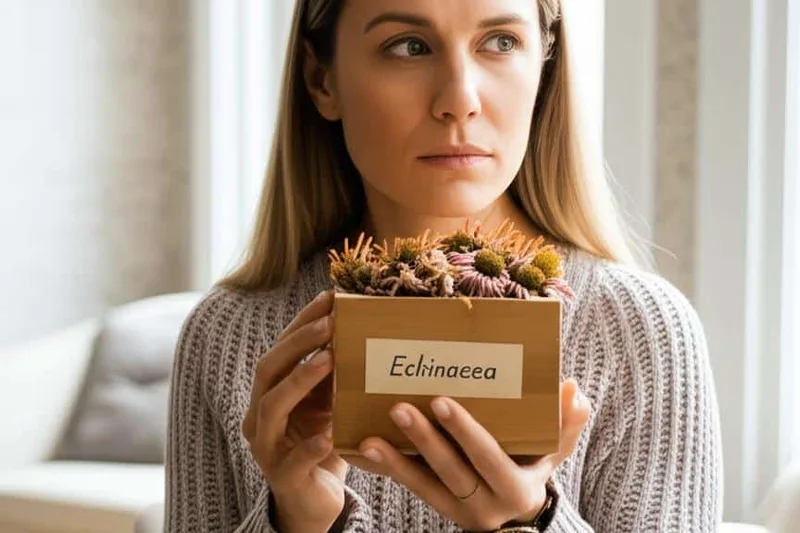
Do you also get tired of catching a cold? Coughing, sneezing , body aches... It feels like this trouble will not subside even after days. We try everything from things like coriander and five-leaf clover to various medicines. At times like this, you may have heard of the herbal supplement "Echinacea". Some say it is great for colds. So today, let's talk about what is true about this story and whether it is really good to use it.
What exactly is Echinacea?
Simply put, Echinacea is a beautiful flowering plant. Although it is a plant that grows in countries like America and Canada, it has been used as a medicine for centuries. Some people also call it "purple coneflower". All parts of this plant, including the leaves, stems, flowers, and roots, are used to make supplements, liquid extracts, and teas. These can now be found in pharmacies and places that sell supplements in our country.
Is this really good for colds?
This is the most important question. Medical research on this has yielded conflicting results . That is, some studies say there is a small benefit, while others say there is no benefit at all.
Think of it this way: our bodies have an army of defenses that fight disease. We call it the immune system . The extract of the echinacea plant has been shown to have some effect on this immune system. Some studies show that it increases the number of white blood cells in our bodies that fight germs. A large review of studies conducted in 2014 found that it may have a very small benefit in preventing the common cold.
However, two other major studies conducted by world-renowned health institutions found that echinacea does not help with colds in either children or adults.
So why are these results so different? One reason is that the studies used different types of echinacea plants, different parts (such as flowers and roots), and different strengths of extracts. Also, there are more than 200 types of viruses that cause colds. So echinacea may only affect a few of these viruses.
Simply put, there is not enough scientific evidence yet to say that this is 100% effective for colds.
Are there any side effects from using echinacea?
This is something that many people don't think about. "It's an herb, so what are the side effects?" Many people think. Although the benefits of echinacea are uncertain, there are some potential risks.
The most common side effect is upset stomach . That means things like stomach pain and nausea. But there are also more serious things that can happen. That's allergic reactions .
| Possible allergic reactions to echinacea | |
|---|---|
| Skin rashes | Eczema, rash, or red spots on the body. |
| Worsening of asthma | If you have asthma, your symptoms may worsen and you may have difficulty breathing. |
| Anaphylaxis | This is a very dangerous, life-threatening emergency . Severe symptoms such as difficulty breathing, swelling of the throat, and dizziness occur. If this happens, you should immediately go to a hospital's Emergency Treatment Unit (ETU). |
If you are allergic to other plants in the daisy family, such as ragweed and chrysanthemums, you are at higher risk of being allergic to echinacea.
Other things to consider
Problems with other medications
Echinacea may interact with some other medications you are taking. For example, there is a risk of liver damage when taking echinacea with some heart medications (e.g. amiodarone) and some anti-fungal medications.
Long-term use
Some experts say that echinacea should not be taken for more than 8 weeks at a time. Although it has not been proven to cause harm, doctors still don't know for sure whether it's safe for long-term use.
The most important thing: Herbal supplements are not regulated by the government like conventional medicines. This means that their quality, safety, or effectiveness do not have to be proven before they are put on the market. So, there is no guarantee that the bottle you buy will contain exactly what is on the label.
Other alternative treatments for the common cold
Like echinacea, there are other things that some people use to reduce cold symptoms. Many of these also need further research into their effectiveness.
| Alternative treatment | A little description |
|---|---|
| Eucalyptus | Inhaling steam helps open the nose. |
| Garlic | It is believed to have antimicrobial properties. |
| Honey | It provides relief from itchy throat and cough. |
| Lemon | Vitamin C and a warm drink bring relief. |
| Vitamin C | It helps with immunity, but there are different opinions about its effect on colds. |
| Zinc | There is a belief that treating a cold at the early stage of symptoms can shorten the duration of the cold. |
If you're considering using echinacea or any other herbal or alternative treatment, be sure to talk to your doctor first . Remember, even herbal remedies can have side effects and can interact with other medications you may be taking. Your safety is most important.
Take-Home Message
- Echinacea is an herbal remedy used for colds, but scientific evidence about its effectiveness is conflicting.
- These can cause side effects ranging from minor things like stomach upset to severe allergic reactions (anaphylaxis) that can be life-threatening.
- If you are taking medication for other conditions (especially heart disease), using echinacea can be dangerous.
- Because herbal supplements are often not strictly regulated, there is no guarantee of their quality and safety.
- Before starting any new supplement, always consult your doctor.


💬 Comments (0)
No comments yet. Be the first to share your thoughts here.
Add Your Comment