
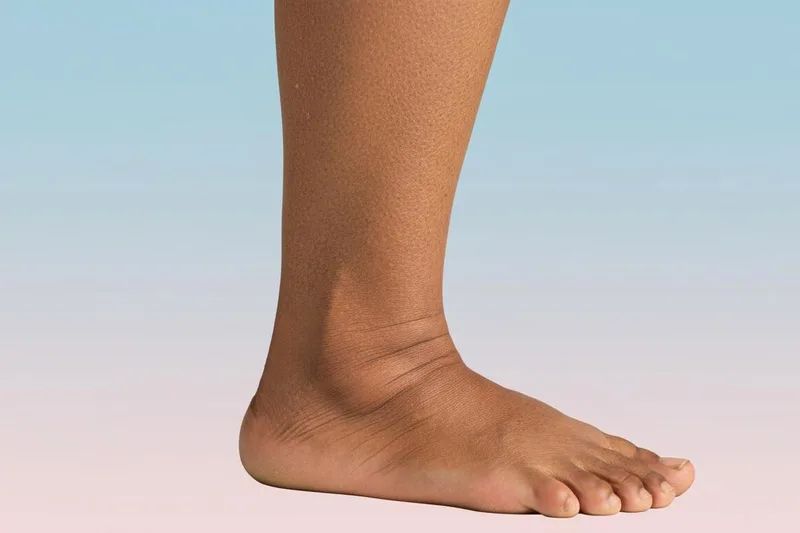
Have you ever heard of the disease called "elephant foot" or "barawa"? You must have seen some people's hands and feet become unusually swollen, their skin thickened, and sometimes deformed, right? This is actually an infectious disease transmitted by mosquitoes that affects our lymphatic system. There is nothing to be afraid of, let's talk about this in detail and very simply.
What is this elephant trampling? Simply put...
Elephantiasis, or in medical terms, Lymphatic Filariasis, is caused by tiny parasitic worms (filarial worms) that enter our lymphatic system and disrupt its function. These worms are very small, like hairs, and can only be seen with a microscope.
Imagine that our body has a special system that removes waste and helps with immunity, which is the lymphatic system. This system contains a fluid called lymph that flows through lymphatic capillaries. When the worms I mentioned block these lymphatic capillaries, the fluid doesn't flow properly and gets stuck in one place. That's when symptoms like swelling and thickening of the skin appear. Sometimes when this condition becomes severe, it swells like an elephant's leg, which is why it's called "elephant's foot."
How widespread is this disease in the world?
Currently, about 1.5% of the world's population, or nearly 120 million people, suffer from this disease. It is especially common in hot, tropical countries . Countries like Asia, Africa, and South America have the most patients. Since our Sri Lanka is also a tropical country, it is very important to be concerned about this.
But remember one thing, the chances of contracting this disease just because you've been on a short trip to a country like that are very low. To get this disease, you have to be in an area where the disease is prevalent for months, maybe even years, and be exposed to mosquito bites continuously.
What are the symptoms of Barawa disease?
Most of the time, not everyone who is infected with Bara disease will develop severe symptoms. About two-thirds of people may not develop any major symptoms. However, the disease often weakens the immune system.
Some people may experience symptoms like these:
- Inflammation: This is a condition that occurs when the immune system becomes overactive.
- Lymphedema: Swelling caused by the accumulation of fluid in the lymphatic system.
- Hydrocele: A swelling of the testicles in men.
- Edema: Swelling caused by the accumulation of fluid in various tissues of the body.
These swelling-like symptoms can affect the following areas of the body:
- Hands
- Legs
- Breast
- Testicles
- Male gender
- The area around the vagina (vulva)
- Face (rarely)
Why does this weight build up? What is the reason?
Simply put, filariasis is caused by a parasitic infection called filariasis. It is caused by a type of roundworm. The worms are so small that they are invisible to the naked eye . When viewed under a microscope, these worms look like threads.
There are several types of filarial worms:
- Wuchereria bancrofti: This type of worm causes 9 out of 10 infections.
- Brugia malayi: This is the cause of most remaining infections.
- Brugia timori: This species can also cause infections.
How is this disease transmitted?
This is the most important thing. Malaria is transmitted by mosquitoes. Imagine, a mosquito bites a person who has Malaria. Then, the filarial worms (microfilariae) in that person's blood go into the mosquito's body. Then, when that infected mosquito bites another healthy person, those worms enter the other person's blood.
Usually, a single mosquito bite does not cause the disease. To develop the disease, you need to be continuously exposed to bites from infected mosquitoes for several months, sometimes even years.
Once these worms enter your bloodstream, they go straight to your lymphatic system. That's where they grow and become pinworms. These pinworms can live inside your body for up to 7 years. Then they multiply and release millions of more pinworms (microfilariae) into your bloodstream.
Important: These microfilariae usually circulate in the blood at night. That is why blood tests need to be taken at night.
What are the complications of Barawa disease?
When your lymphatic system is damaged over time, your body's ability to fight infections decreases. This decreased immunity can lead to conditions like:
- Frequent bacterial infections . Sometimes the skin becomes cracked or injured, allowing infection to enter.
- Thickening of the skin and fluid retention, resulting in swollen, painful, and enlarged body parts .
- Tropical pulmonary eosinophilia syndrome: This is a condition in which the number of eosinophils, a type of white blood cell, increases. This can cause coughing and difficulty breathing.
How is the diagnosis made?
To know for sure if you have Bara disease, a doctor will need to test a sample of your blood. This can be done using the following methods:
- Microscopic blood test: Your blood sample is examined under a microscope. This will look for filarial worms in the blood. As I mentioned earlier, these worms are nocturnally active in the blood. Therefore, you may need to donate blood at night.
- Antibody test: Your blood sample is tested for antibodies. Antibodies are substances your body makes in response to an infection. This test can be done during the day.
What are the treatments for Barawa disease?
The treatment plan you receive will depend on what symptoms you have and how severe they are. Bara disease is usually treated like this:
- Antiparasitic drugs: You may be given medications such as ivermectin (Stromectol®), diethylcarbamazine (Hetrazan®), or albendazole (Albenza®) . These medications kill the tapeworms in your blood or stop them from multiplying. Taking these medications can also prevent you from passing the disease on to others. However, because the worms may still be in your body, you will need to take these medications once a year for a few weeks .
- Surgery: Surgery may be required to remove the dead worms from your bloodstream. If filariasis has caused a hydrocele (swelling of the testicles), surgery may also be required to remove the accumulated fluid.
- Elephantiasis management: Your doctor may recommend methods to help control swelling, such as elevating the swollen arm or leg, or using compression garments.
Are there any side effects of the treatment?
If you are taking medication for malaria, it is very important to be under the close supervision of a doctor , as these anti-parasitic medications can cause some serious side effects. For example:
- Dizziness
- Fever
- Headache
- Muscle or joint pain
- Nausea
Therefore, it is very important to follow medical advice exactly.
Can this disease be completely cured?
To be honest, there is currently no specific cure for tapeworm. Medication can kill most of the worms and stop you from passing the disease on to others. Treatment can also reduce your symptoms.
What happens if you get the disease? What is the social impact?
People with rheumatoid arthritis sometimes face negative social consequences . Especially if they have severe, visible symptoms, such as excessive swelling of the limbs, they may feel socially isolated and embarrassed. In addition, chronic swelling or pain can affect a person's ability to perform daily activities and hold a job.
But remember, although there is no complete cure for Bara disease, you can control the disease, reduce symptoms, and live a normal life. All you need to do is follow proper medical advice and take care of your health.
How can this disease be prevented?
The best way to prevent dengue fever is to avoid mosquito bites. This is especially important in tropical areas. If you live in an area where dengue fever is common, or if you are traveling to one, follow these steps to avoid mosquito bites:
- Sleep under a mosquito net.
- Apply insect repellent to exposed skin, especially at night.
- Wear long pants and long-sleeved clothes.
- Keep your garden and surrounding area clean. Remove mosquito breeding sites (tire, coconut shells, tin cans, etc.)
The World Health Organization (WHO) recommends that in areas where malaria is common, the entire community be given preventive chemotherapy . In this method, people at risk of infection are given a fixed dose of medication once a year. Although these medications do not have much effect on the adult worms, they do prevent the young worms from multiplying. They also prevent the parasites from being transmitted to mosquitoes.
When should you see a doctor?
If you develop any unexplained swelling or thickening of the skin – especially in your arms, legs, breasts, scrotum, or vaginal area – be sure to let a doctor know. The doctor can then perform the necessary tests to confirm the diagnosis or rule it out.
What are the important questions to ask the doctor?
When you go to see the doctor, you can also ask questions like these:
- Could this situation I am in be largely due to my weight?
- How do I manage symptoms related to weight gain?
- What treatments do you recommend for me?
- What are the side effects of the treatment?
- What are the chances of infection recurring after treatment?
- How can I protect myself from Barawa disease?
How to manage the symptoms of lymphedema?
Even if the medication kills the filarial worms, you may still develop a swelling condition called lymphedema. You can do these things to manage these swelling symptoms:
- Disinfect and cover any wounds thoroughly.
- Elevate swollen arms or legs.
- Increase your activity level (this encourages lymph flow).
- Wash and dry the swollen areas of your body every day.
- Reduce the risk of falls and injuries by wearing properly fitting shoes.
Final Take-Home Message
Malaria is a disease that is common in subtropical and tropical climates where filarial worms are common. Usually, a person needs to be repeatedly bitten by infected mosquitoes to develop the disease. Therefore, the disease is most often contracted by people living in high-risk areas. Malaria is very rare in short-term travelers.
However, if you develop symptoms, it is very important to tell a doctor. A simple blood test can confirm whether you have a parasitic infection. Don't panic, the most important thing is to be informed and take the necessary steps.
` Barawa, Elephantiasis, Lymphatic Filariasis, Elephantiasis, Mosquito Disease, Lymphatic System, Filariasis


💬 Comments (0)
No comments yet. Be the first to share your thoughts here.
Add Your Comment