
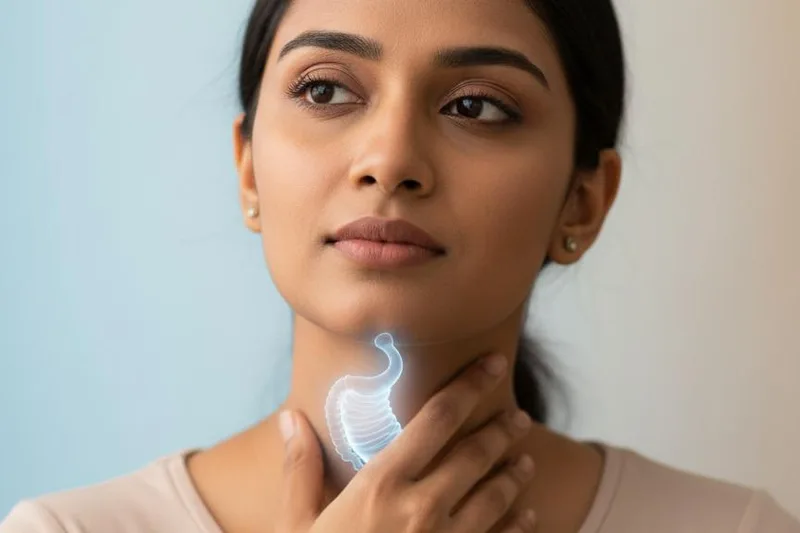
Do you suddenly feel like your throat is blocked when you eat? Maybe you drink a little water but find it difficult to swallow? If you have this kind of difficulty swallowing, we are going to talk about a special test that can be done to find out the exact cause. Don't be alarmed when you hear this, it's not as big a deal as you think.
What is EndoFLIP?
Simply put, EndoFLIP (functional luminal imaging probe) is a method of examining the function of your esophagus. The esophagus is the muscular tube that carries the food we eat from our mouth to our stomach (stomach). Sometimes, when this tube doesn't work properly, we have difficulty swallowing food.
The EndoFLIP test mainly measures two things:
1. The size of the space inside your esophagus (diameter) .
2. The way it expands when you put a little pressure on it (that is, the tightness of the walls).
These measurements can help doctors determine the exact cause of your difficulty swallowing. This test is often done during an upper endoscopy . Because you are under anesthesia, you won't feel anything and will be completely asleep.
What diseases can be detected with the EndoFLIP test?
Gastroenterologists use this test to diagnose a variety of conditions, including:
- Achalasia: This is when the muscles in the lower part of the esophagus do not relax properly, causing food to get stuck in the stomach.
- Eosinophilic esophagitis: A condition in which the inside of the esophagus becomes inflamed due to an allergy.
- GERD (Gastroesophageal Reflux Disease): This is a condition in which stomach acid flows back up into the esophagus. It is a more severe form of gastritis, which we commonly call gastritis.
This test is also used to follow-up on someone who has had surgery on the esophagus.
How is this test actually done?
Imagine, this is a very simple procedure. In this, a thin plastic tube (catheter) is inserted into your esophagus. At the end of this tube is a small balloon with sensors.
As the doctor slowly inflates this balloon, the sensors measure the pressure and space inside the esophagus and send that data to a computer.
These measurements give your doctor a clear picture of whether your esophagus is too narrow or if its walls are too thick, both of which can prevent food from going down.
How should I prepare before the test?
Your doctor will give you clear instructions on this, but there are usually a few things you can do. Let's see what they are.
| What to do | Why is that? |
|---|---|
| Avoid eating and drinking (including water) for at least 4 hours before the test. | It is important that the stomach is completely empty during the test so that the test can be performed clearly and safely. |
| Make arrangements to bring someone to take you home after the test. | Since you will be given anesthesia, you may feel a little drowsy and sleepy for a while after the test. Therefore, it is not advisable to drive alone. |
What happens during the test?
Okay, now let's see what happens step by step.
1. Anesthesia: First, an anesthesiologist will inject a drug into a vein in your arm. This will put you to sleep for a short time.
2. Inserting the endoscope: The doctor will then insert the endoscope, a thin, flexible tube with a camera and light attached, through your mouth and down your esophagus. The images from this camera can be viewed on a monitor.
3. Insertion of the EndoFLIP tube: While watching the images from the endoscope's camera, the doctor inserts the EndoFLIP tube into the esophagus.
4. Inflating the balloon: Then, the balloon is slowly inflated and data is obtained from the sensors.
5. Tube Removal: After recording the data, deflate the balloon and carefully remove both the EndoFLIP tube and the endoscope.
This entire process takes a very short time, about 15 minutes .
Does this hurt?
No, not at all. You will not feel any pain because you are under anesthesia. You may feel a little pressure when the tube is inserted, but it is not painful.
Are there any side effects?
Side effects are very rare . Some people may experience a slight sore throat or a cold-like sore throat for a day or two after the test. This usually goes away on its own.
What happens after the test? When will the results be available?
Once the test is over, you will be sent home after spending some time in a recovery room until the anesthesia wears off completely.
In most cases, your doctor will discuss the initial results of the test with you before you go home. Or, they will ask you to come to the clinic on a different day to discuss the full report. They will also explain to you what tests need to be done next and what treatments can be started.
Which is better, EndoFLIP or Manometry?
You may have also heard of a test called Esophageal Manometry. This also looks at the function of the esophagus, specifically measuring the way the muscles in the esophagus contract (peristalsis).
However, EndoFLIP can provide more detailed and detailed information than Manometry . Therefore, doctors may resort to EndoFLIP in more complex cases.
There are times in life when you have difficulty swallowing food, right? How annoying is it to not be able to eat something you like without fear, to not be able to enjoy a meal properly? But this EndoFLIP test is a good step to find out the exact cause of your problem. Once you know the cause, you can start the right treatment for it. Then you will be able to enjoy a meal without fear and with pleasure again.
Take-Home Message
- EndoFLIP is a very important and modern test that detects the cause of swallowing difficulties.
- You won't feel any pain during this procedure. You will be fully anesthetized.
- The entire test takes a very short time, about 15 minutes.
- The risk of side effects is very low. You may experience something like a slight sore throat.
- This test can be the first and most important step in getting the right treatment for your swallowing problem.
- If you have any further questions about this, don't hesitate to ask your doctor.




💬 Comments (0)
No comments yet. Be the first to share your thoughts here.
Add Your Comment