

The blood vessels in your esophagus, the tube that carries food from your throat to your stomach, can sometimes become enlarged, swollen, and knotted. This condition is medically known as 'Esophageal Varices'. These often develop in people with liver disease. These swollen veins are very delicate, so they can easily burst and bleed profusely. This is a life-threatening emergency. So, today we are talking about a special injection that can stop this type of bleeding and prevent it from happening again.
What is Ethanolamine?
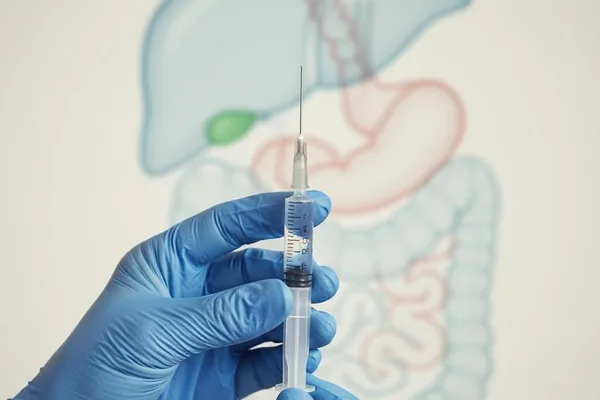
Simply put, Ethanolamine is a drug. It is injected directly into the varicose veins as an injection. Doctors call this treatment 'Sclerotherapy'. Think of it like putting a plaster over a bleeding area and tightening it.
When this injection is injected into a vein, it damages the inner wall of the vein, causing inflammation. A blood clot then forms in that area, and scar tissue gradually hardens, almost completely closing off the vein. This stops the flow of blood through the vein and controls the bleeding. This is a treatment that can only be performed in a hospital setting by a highly skilled physician.
Things you need to tell your doctor before undergoing this treatment
Before deciding if this treatment is right for you, it's important to tell your doctor some information. Don't hide even the smallest details, because it's very important for your safety.
| Situation you need to report | Why is that important? |
|---|---|
| Allergies you have | Be sure to tell your doctor if you are allergic to any of the ingredients ethanolamine, oleic acid, or any other medicine, food, or dye. This will help prevent a serious allergic reaction (anaphylaxis). |
| Heart Disease | If you have heart disease, you should be especially careful when taking this medicine, as there may be some effects on the heart after this treatment. |
| Liver Disease | Liver disease is the main cause of esophageal varices. It is essential for your doctor to be aware of your liver condition in order to plan your treatment. |
| If you are pregnant or expecting a baby | The safety of this medication during pregnancy has not yet been fully established, so it is essential to talk to your doctor about this. |
| If a mother is breastfeeding her child | It is not clear whether this medicine passes into breast milk. Therefore, for your safety and that of your baby, inform your doctor. |
How do you use this medicine?
This is not a medicine you can pick up at a pharmacy and take home. This is a medicine that can only be given by a medical professional, in a hospital or clinic.
This treatment is usually done during an endoscopy . This means that a thin, flexible tube with a camera attached is inserted through your mouth, passed down your esophagus, and the varicose veins are very precisely injected into them while being viewed on a monitor.
Important: If this medicine is given to young children, it should be done under the advice of a pediatrician and with special care.
What if the dosage of the medicine is increased? (Overdosage)
Since this treatment is given under medical supervision in a hospital, the risk of overdose is very low. However, if you think or suspect that something has happened, inform the medical staff immediately. In case of an emergency, you should go directly to the Emergency Treatment Unit (ETU) . Also, if you need advice on any drug or chemical ingestion, you can call the National Poisons Information Centre at the Colombo National Hospital .
Possible side effects after treatment
As with any medical treatment, some side effects can occur. Although not everyone gets them. If you experience any of the symptoms below, tell your doctor or nurse immediately.
| Side effect/symptom | Description |
|---|---|
| Serious side effects that should be reported to the doctor immediately | |
| Allergic Reactions | Skin rash, itching or hives, swelling of the face, lips or tongue. |
| Difficulty breathing | Difficulty breathing, feeling suffocated. |
| Chest pain | Pain behind the sternum. This can be a symptom of heart disease. |
| Esophageal pain or difficulty swallowing | Pain in the throat or chest when swallowing. |
| Fever | An increase in body temperature can be a sign of infection. |
| Changes in urination | Decreased urine output or difficulty urinating. This may be a sign that the kidneys are affected. |
This list does not include all possible side effects. If you notice anything else unusual, talk to your doctor about it.
Take-Home Message
- Ethanolamine is a special injection given in a hospital to stop bleeding caused by esophageal varices.
- Before undergoing this treatment, give your doctor a complete description of all your medical conditions (especially heart and liver diseases) and allergies.
- This is not a take-home medicine and is usually only given by a specialist doctor in conjunction with an endoscopy.
- Seek immediate medical attention if you experience chest pain, difficulty breathing, fever, or severe allergic symptoms after treatment.
- Follow your doctor's instructions exactly. If he tells you to come back for treatment, don't skip those appointments.




💬 Comments (0)
No comments yet. Be the first to share your thoughts here.
Add Your Comment