
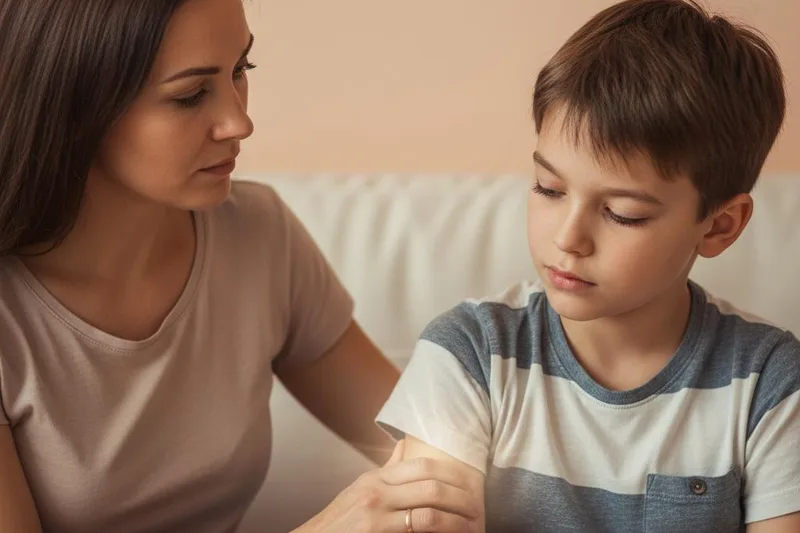
Does your child often complain that his or her leg or arm hurts? Perhaps a bruise from a fall while playing doesn't go away even after months? We often think of these as minor injuries or sprains caused by children's mischief. But sometimes, a symptom that starts out as simple as this can be a sign of something more serious. Today we're going to talk about a rare, but important cancer that we should all be aware of. That is Ewing Sarcoma.
Simply put, what is Ewing Sarcoma?
Ewing sarcoma is a rare type of cancer that develops in the bones or the soft tissues around them . Soft tissues include our muscles, tendons, and ligaments. These tumors most commonly occur in areas such as the hip, ribs, shoulder, thigh, or collarbone.
This condition is most common in children during puberty, when their bones are growing rapidly. Specifically, it affects those between the ages of 10 and 20. However, it can also affect younger children and young adults in their 20s and early 30s.
Are there main types of Ewing sarcoma?
Yes, doctors have identified three main types of this. Let's see what they are.
| Cancer type | Simple explanation |
|---|---|
| Ewing sarcoma of bone | This is the most common type. As the name suggests, this cancer arises directly in the bone. |
| Extraosseous Ewing tumor (EOE) | Here, the cancer develops in the soft tissues around the bones, such as muscle and fatty tissue. |
| Peripheral primitive neuroectodermal tumor (PPNET) | This type is a little different. It can start in the bone or in the soft tissue. It starts in the nerve tissue. |
What are the symptoms of this disease? Things I should be aware of as a parent
The symptoms of this disease can sometimes be easily confused with other common illnesses, so it's important to be aware of this.
Imagine your child is playing cricket and he keeps saying that his shoulder hurts. You think it's just a pain that happens when you bowl. But if the pain has been there for months, especially at night, and there's a small swelling there, it's not a good idea to just ignore it.
The most important thing is that if a child continues to complain about pain, don't ignore it. It's best to see a doctor, especially if there's no obvious cause for the pain.
Below are the main symptoms seen in Ewing sarcoma.
| Symptom | Further information |
|---|---|
| Pain in the bones | This is the most common symptom. The pain may come and go. The pain may be worse at night, especially if it is severe enough to wake the child from sleep. |
| A tumor or swelling | The cancer may appear as a lump or swelling. It may feel warm to the touch and may be painful. These can appear on the arms, legs, or chest. |
| Unexplained fever | There may be a persistent fever without any other cause (such as a runny nose, cough, or cold). |
| Breaking bones for no reason | Cancer can weaken the bone, and even if it's not a major accident (like getting out of bed), it can break. Doctors call this a 'pathological fracture.' |
| Other features | Things like sudden weight loss and feeling tired all the time can happen, but these are often only seen when the cancer has spread to other parts of the body. |
Why does this kind of disease occur?
This question comes to many parents. You may think, "Did we do something wrong?" But that's not the truth.
Ewing sarcoma is caused by a genetic mutation that occurs after a child is born . Simply put, two genes in our cells (EWSR1 and FLI1) combine to form a new faulty gene. This new gene causes cells to divide uncontrollably and form a cancerous tumor.
The important thing is that this is not a hereditary disease. Also, researchers have not found that it is caused by external factors, such as smoking or exposure to chemicals, like other types of cancer. This is because it often develops in young children and young adults who do not have the opportunity to be exposed to such things for a long time. So, this is not something that is due to anyone's fault.
Are there risk factors?
Although anyone can develop this disease, some groups have been found to be at slightly higher risk.
- Age: Those between the ages of 10 and 20 are at highest risk.
- Gender: Men are slightly more likely to develop it than women.
- Race: This disease is more common in white people than in Asian or black people.
How do doctors accurately diagnose this disease?
When you go to see a doctor because you are suspicious of your child's symptoms, the first thing he or she does is examine your child carefully. He or she will feel for any pain or swelling, ask you and your child about the symptoms, and then order a series of tests to confirm the diagnosis.
1. Imaging tests: These take pictures of the bones and soft tissues inside the body.
- X-ray examination
- CT scan
- MRI scan
- PET scan
- Bone scan
2. Biopsy: This is the test that confirms the disease 100% . Here, a very small piece of tissue is taken from the tumor and examined under a microscope. This is what will tell you exactly whether it is cancer or Ewing's sarcoma.
3. Blood tests: A complete blood count (FBC), and other specific enzyme levels (such as LDH) can give some idea of the nature of the cancer and whether it has spread.
What are the treatments for this?
Ewing sarcoma is treated by a team of oncologists. The treatment plan may vary from patient to patient. It depends on the size of the tumor, its location, and whether it has spread to other areas.
The main treatment methods are:
- Chemotherapy: This involves giving the body drugs that kill cancer cells. Chemotherapy is usually given first to shrink the tumor. Chemotherapy is then given again after surgery to kill any remaining cancer cells.
- Surgery: After the tumor has shrunk with chemotherapy, it is completely removed through surgery.
- Radiation Therapy: In some cases, high-energy rays are used to destroy cells that remain after surgery or if surgery cannot completely remove the tumor.
In some developed countries, treatments such as an autologous stem cell transplant are also used if the cancer has not spread to the bone marrow. You may also be able to participate in clinical trials that are researching new treatments. You can talk to your doctor about this to find out more.
Side effects and long-term effects of treatment
Cancer treatment is not easy. Chemotherapy and radiation therapy can cause short-term side effects such as hair loss, vomiting, and fatigue. There can also be long-term effects (late effects) that can appear months or years after treatment ends.
- Effects on internal organs (heart, kidneys)
- Effects on the child's development
- Mental health problems (anxiety, depression)
- Effects on learning and memory ability
- Effects on future fertility
Therefore, it is essential to continue to be under the doctor's supervision, both during and after treatment.
How can I, as a parent, help my child?
When a child is diagnosed with cancer, the whole family falls apart. That's normal. But during this difficult time, your child needs you more than ever.
Think about it, adolescence is a time when children's emotions are always high and low, and they think a lot about their appearance and their friends. Having to fight cancer at such a time can be a burden that they can't bear.
- Listen patiently: Allow them to express their fears, anger, and sadness. It's better to listen to what they have to say than to say, "Don't think that."
- Daily life: They may be very sad that they will not be able to go to school or play with friends because of treatment. Encourage them to stay connected with friends as much as possible (such as video calls) and engage in hobbies that they can do at home.
- Think about yourself too: To take care of your child, you first need to be strong. If you are also having a hard time coping with this, talk to someone you trust. If necessary, seek psychological counseling.
- Work closely with the medical team: Be well informed about your child's condition, treatment, and side effects. Don't be afraid to ask questions.
This is a journey we face together as a family. We can overcome this challenge with support and love for each other.
Take-Home Message
- Ewing Sarcoma is a rare type of cancer that mainly affects the bones and soft tissues of children and young adults.
- If you have unexplained, persistent bone pain (especially at night), swelling, or a lump, do not ignore it and see a doctor immediately.
- This disease is caused by a random change in genes, not by the fault of the parents or the child.
- Although treatment methods (chemotherapy, surgery, radiation) are difficult, they provide very successful results.
- During this difficult journey, the child needs medical treatment, as well as the love, care, and emotional support of family members.




💬 Comments (0)
No comments yet. Be the first to share your thoughts here.
Add Your Comment