

Imagine that someone is in a very critical condition, their heart and lungs are not working properly. They have reached a point where neither normal medicines nor the ventilators we all know can save them. It is at times like these that doctors think of this technology called ECMO as a last resort. Although many people have not heard of it, this is a truly amazing device that can save lives. Today, we will talk about this simply, in a way that you can understand.
What is ECMO in simple terms?
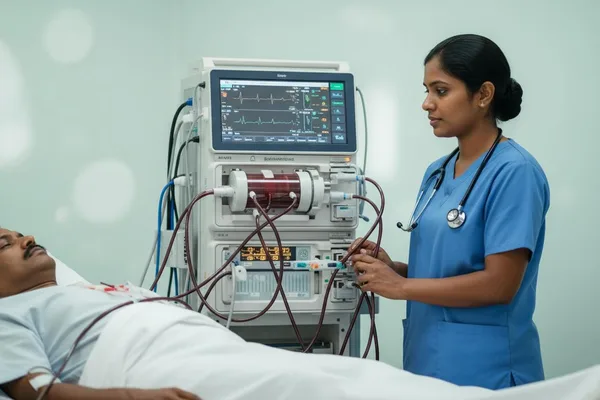
Simply put, ECMO is a machine that works like an artificial heart and lungs outside the body. When your heart and lungs are too weak to do their job properly, this machine temporarily takes over.
If we break down the meaning of the name ECMO, it is as follows:
- Extracorporeal - This means "outside the body".
- Membrane Oxygenation - This means "providing oxygen through a special membrane."
Do you understand now? What happens here is that the blood that is taken out of the body is oxygenated inside a machine with a special membrane and then pumped back into the body. This machine does exactly what our lungs do. It also sometimes does the pumping work that the heart does.
Many people think that this is like a ventilator. But that's wrong. A ventilator only pushes air into and out of the lungs. But an ECMO machine adds oxygen directly to the blood and removes carbon dioxide from the blood. It's a much more complex process than that.
By giving the heart and lungs a "break" in this way, they are able to repair the damage they have suffered. In the meantime, the ECMO machine provides a continuous supply of oxygen to the body.
Are there types of ECMO?
Yes, there are two main types of ECMO. Doctors decide which type to use based on the patient's condition.
| ECMO Type | Who is helping? | Simply put... |
|---|---|---|
| Venoarterial (VA) ECMO | For the heart and lungs | This type of machine takes over the work of both your heart and lungs. This means that the machine does both the pumping of blood and the oxygenation of the blood. |
| Venovenous (VV) ECMO | Only for the lungs | This only helps the lungs. This type is used if your heart is working well, but your lungs are not working properly. Here, your heart is the one pumping the blood. |
In what cases is ECMO used?
ECMO is not something you use for a common cold or flu. It is a life-saving procedure used for critically ill patients when no other treatment is successful.
- Acute Respiratory Distress Syndrome (ARDS): When the lungs are severely damaged due to conditions such as severe pneumonia, burns, or drowning, and the body is unable to get oxygen. ECMO has helped many people with this condition during the COVID-19 pandemic.
- Pulmonary Embolism: A blood clot that forms in the body (usually in the legs) breaks loose and lodges in a major blood vessel in the lungs. This is a very dangerous and potentially fatal condition.
- Heart Injuries: When the heart muscle is damaged due to a severe heart attack, accident, or fall, and is unable to pump blood properly.
- For newborns: ECMO is used to save the lives of very young babies who have severe heart or lung problems at birth, especially those born prematurely.
- Organ transplants and surgeries: ECMO is used to help a patient who is waiting for a heart or lung transplant, or to help the body recover after major surgery.
How does ECMO treatment work?
This process takes place in an intensive care unit (ICU) under the supervision of a team of specially trained doctors and nurses.
1. Cannulation: First, the patient is completely anesthetized. This means that they will not feel any pain. Then, a surgeon inserts large tubes (tubes or cannulas) into a major blood vessel or artery in the patient's neck, chest, or groin.
2. Connecting to the machine: A single tube draws the body's oxygen-depleted blood into the ECMO machine.
3. Adding oxygen: As this blood passes through the artificial lung (oxygenator) inside the machine, the carbon dioxide in it is removed and oxygen is added.
4. Pumping back into the body: The clean, oxygenated blood is pumped back into the body through another tube.
During this entire process, the patient may be conscious or sedated. The ECMO team carefully monitors the patient and the machine for 24 hours.
How do you wean yourself off ECMO?
Once your heart and lungs are feeling better and you are able to function on your own again, your doctors will gradually start to wean you off the machine. This is called "weaning." The support from the machine is gradually reduced, allowing your body to function on its own. If everything is going well, the tubes will be removed in a few days and the stitches will be put back in place.
What are the benefits and serious risks of ECMO?
Like any complex medical treatment, ECMO has both great benefits and serious risks. It is a life-and-death decision.
| Benefits | Risks |
|---|---|
|
|
How can you help the family of a patient?
It's a very difficult experience for a family to see a loved one connected to a machine like this. But there are things you can do. But before doing anything, be sure to get permission from the doctor or nursing staff.
- Talk to the patient: Even if they are unconscious, they may be able to hear you. Your voice will be comforting to them.
- Read a book or listen to music: Calming music or the sound of you reading a book can bring them comfort.
- Bring and keep family pictures: Keep pictures of your family where they can see them.
- Moisturize the skin: To prevent skin dryness, you can ask your doctor to apply a suitable lotion.
The most important thing is that you also think about your health. This is a very stressful time mentally. So eat well and get some rest. Only if you stay strong will you be able to help the patient.
Is ECMO really the last resort?
Yes, ECMO is often a last resort . Doctors make this decision after all other possible treatments have failed.
Also, ECMO is only used for patients with reversible conditions. For example, severe pneumonia can be cured. ECMO is given to help the lungs until it heals. However, ECMO is not used for a disease that is incurable, such as terminal cancer.
This is not a cure. It is used to buy time for the patient to recover without harming other organs in the body. Therefore, a patient can die while on ECMO if their underlying condition cannot be controlled.
Take-Home Message
- ECMO is a life-saving machine that works like an artificial heart and lungs outside the body.
- This is used for extremely critical patients with severely impaired heart or lung function.
- ECMO does not cure the disease. It only gives the body time to recover or until another treatment (e.g., an organ transplant) is available.
- While this treatment has great potential to save lives, it also carries serious risks such as bleeding, infection, and paralysis.
- The decision to provide ECMO treatment is made after a thorough examination of the patient's condition by a team of specialist doctors.
- If a doctor is talking about this type of treatment for a loved one, don't be afraid, and clearly listen to all your questions.




💬 Comments (0)
No comments yet. Be the first to share your thoughts here.
Add Your Comment