

When you feel any discomfort, redness, itching, or dryness in your eyes, you immediately think of going to the pharmacy and buying a bottle of eye drops, right? These really do bring instant relief to our eyes most of the time. But do we really know about them? Is it okay to use any one of them? Today, we will talk about this very simply, as if we were talking to a friend.
What exactly are these eye drops?
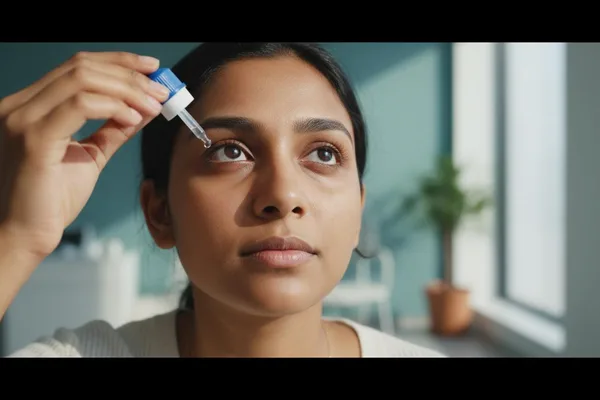
Simply put, these are liquid medications that we put a drop or two on the surface of the eye, that is, on the eyeball. They are also called topical medications . This means that they are not injected into the eye or ingested, but are applied directly to the affected area, that is, the surface of the eye. When applied that way, the medication can do its job directly.
This eye drop bottle can contain a variety of medications and nutrients. As such, they have the ability to treat a variety of eye conditions, symptoms, and discomforts.
Did you know that there are two types of eye drops?
Yes, there are two main types of eye drops. One is the type that you can buy from a pharmacy without a prescription. We call this Over-the-Counter (OTC) . The other is the type that must be prescribed by a doctor . Let's look at the difference between these two and what makes them different in a table.
Over-the-counter (OTC) Eye Drops
These are usually used for minor eye problems. However, it is safest to seek medical advice before using them.
| What to do | Simply put... |
|---|---|
| Eyelid reduction | The astringents in these ingredients break down the mucus in the eye and reduce the formation of mucus. |
| Lubricate the eyes | Things like artificial tears, which are used for dry eyes. These contain ingredients called demulcents , which reduce friction between the parts of the eye and provide comfort to the eye. |
| Softening the tissues around the eye | Ingredients called emollients help soften dry, flaky tissue around the eyes (these are different from the stuff found in hand lotions). |
| Reducing eye redness and inflammation | The vasoconstrictors contained in these reduce redness and inflammation of the eye by constricting the fine blood vessels (capillaries) on the surface of the eye. |
| Irrigate the eye | Specially formulated liquids to wash away dust and other debris from your eyes. These are much safer for your eyes than tap water. |
Prescription Eye Drops
These are medications that are prescribed by a doctor for more serious eye conditions. These should never be used without medical advice.
| What to do | Simply put... |
|---|---|
| Eye twitching | Drops containing anesthetics are used to reduce eye pain or to numb the eye before something like an eye exam. |
| Bacterial killing | Eye drops containing antibiotics are given for bacterial infections of the eye (e.g., strep throat). |
| Reducing allergies | Drops containing antihistamines are given to control allergy symptoms such as itchy and red eyes. |
| Reducing inflammation | Eye drops containing strong medications, such as corticosteroids, are recommended to control inflammatory conditions in the eye. |
| Dilate pupils | These are used to look carefully inside the eye during an eye examination and to temporarily enlarge the pupil. |
| Reducing eye pressure | These medications are essential to control intraocular pressure in conditions such as glaucoma . |
What are the benefits of using eye drops?
There are several benefits to using the correct eye drop.
- Can be very effective: If you use the eye drop that is exactly right for your eye problem, the relief and healing it provides will be much greater.
- Generally safe: Medicines, especially those prescribed by a doctor, are strictly tested by government agencies such as the Drug Regulatory Authority before they reach the market. Therefore, you can have great confidence in their safety.
- Easy to use: You can ask your doctor how to properly apply the eye drops.
So isn't there a risk? Disadvantages you should definitely know about!
Here's something you should definitely keep in mind: Eye drops are not always harmless.
Just as you might avoid a serious lung disease by drinking honey for a cough, don't avoid a serious underlying disease by putting eye drops on a red eye.
1. It may mask a serious underlying condition: Sometimes, eye drops only temporarily suppress the symptoms. For example, some eye drops that are used to treat red eyes can help reduce the redness. However, the cause of the redness may be a serious infection or condition like glaucoma. Even though the medication may reduce the redness, the underlying condition may be getting worse. That's why it's important to avoid using these without consulting a doctor.
2. The wrong eye drop can make the problem worse: Imagine that your eye is hurting because of increased eye pressure (glaucoma). But what if you accidentally put a medicine that is supposed to dry your eyes? Instead of getting better, the condition can get worse.
3. The eye's natural defenses are bypassed: Our eyes have natural ways to protect themselves from germs. But if we use an eye drop that is not clean, or is expired, or has become contaminated, those germs can go straight into the eye. This can cause serious infections and even loss of vision.
4. Substandard products: Some companies manufacture eye drops without proper standards in order to make a profit. Similarly, we don't know what's in the bottles of medicine we buy on the street or from untrustworthy places.
When should I see a doctor?
In fact, if you have any eye problems, it's best and safest to see a doctor before using any eye drops. Your doctor can diagnose the exact problem with your eye and prescribe the most appropriate medication.
In addition, be sure to see a doctor in the following cases:
- If the eye drops you use are no longer working, it means they no longer have the same quality they used to.
- If new side effects (e.g. eye irritation, blurred vision) occur after using the medication.
- If you have any questions about how to store or use your medication.
How to use eye drops safely? - These tips are very important!
Okay, now let's say a doctor prescribes you an eye drop. Be very careful about these things when using it.
Before applying medicine to the eyes
- Wash your hands thoroughly with soap: This is essential to stop the germs on our hands from getting into our eyes.
- Check the expiration date on the bottle: Expired medicines may lose their effectiveness and may harbor germs.
How to apply medicine to the eye
1. Tilt your head back and look up.
2. With the index finger of one of your hands, gently pull the eyelid down under the eye. This will create a small pouch.
3. Hold the eye drop bottle with your other hand about an inch above your eye. Never let the tip of the bottle touch your eye, eyelid, or fingers. Doing so can introduce germs into the bottle.
4. Gently squeeze the bottle and let the recommended number of drops (usually one or two) fall into the bag formed by the lower eyelid.
5. Close your eye and gently press the corner of your eye near the nose with your finger for about a minute. This will stop the medicine from going down your throat and help the medicine to be absorbed better into the eye.
Other important points
- Only use the medicine prescribed for you: Never give your eye drops to anyone else or use someone else's. This is very dangerous.
- Do not put eye medicine in your ears, or ear medicine in your eyes: Although some bottles look the same, the medicines they contain are completely different.
- When you're done using it, close the bottle cap tightly: otherwise, dust and germs can get inside.
- Buy only from a trusted source: Don't buy medicine from substandard sources, thinking it's cheap.
Cases where it should not be used without medical advice
OTC eye drops, which are available from pharmacies without a prescription, cannot cure some serious diseases. If you have the following conditions, you should definitely seek the advice of an ophthalmologist.
- Cataracts
- Glaucoma
- Retinal diseases , for example (macular degeneration)
- Eye complications caused by diabetes, for example (diabetic retinopathy)
Take-Home Message
- If you have any eye problems, instead of going to the pharmacy and buying a random eye drop, first see a doctor. That's the biggest help you can give your eyes.
- Use the medicine prescribed by your doctor, as directed, and for the prescribed period of time.
- Wash your hands thoroughly and stay clean before and after putting an eye drop in your eye.
- Never, for any reason, share your eye drops with others.
- Be careful not to let the tip of the bottle touch your eye or any other surface.
- The word "over-the-counter" does not mean "completely safe." Therefore, it is wise to seek medical advice before using it.




💬 Comments (0)
No comments yet. Be the first to share your thoughts here.
Add Your Comment