
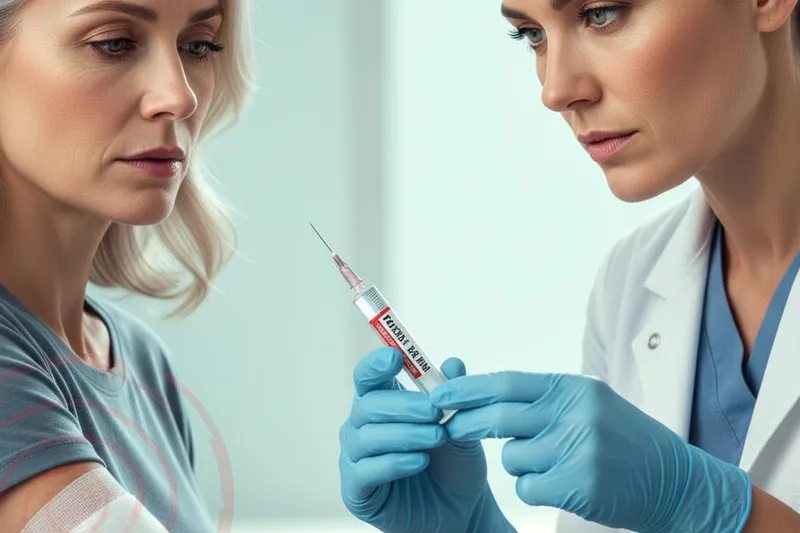
Imagine that someone in your family, perhaps your mother, father, or even yourself, takes a blood thinner every day to prevent blood clots due to heart disease or other reasons. These are valuable life-saving medications. But what if you suddenly have a serious accident and start bleeding profusely? Or if you have to have emergency surgery? At such a time, you need to stop the blood thinner quickly and restore blood clotting. Today we are talking about a special drug that is used in such a life-and-death emergency.
Simply put, what is this Factor Xa vaccine?
This is not a drug you would normally take. Factor Xa (or factor Xa) is a specific "reversal agent" that reverses the effects of certain blood thinners. Specifically, this injection is used to control life-threatening bleeding in people taking the two blood thinners apixaban and rivaroxaban .
This is like a fire extinguisher used to put out a fire. It is not always needed. But, if there is an emergency, it is indispensable. This vaccine is the same.
This medicine is known by the brand name `ANDEXXA`. Remember, this is only given in very urgent and serious cases.
Things you need to tell your doctor before giving you this medicine:
Since this vaccine is given in a hospital under medical supervision, the medical team will ask you the necessary questions. However, it is very important for you to inform them about these matters as well.
- Allergies: Have you ever had an allergy to any medicine, food, dye, or preservative? If so, be sure to tell us about it.
- If you are pregnant: Are you pregnant? Or are you expecting a baby in the near future? It is essential to tell your doctor about this.
- If you are a breastfeeding mother: If you are a breastfeeding mother, inform the medical team.
Based on this information, the doctor will decide whether to give you this medicine or not, and how to give it.
How is this medicine administered to the body?
This is not a pill or syrup that you take home. This medicine is only given in a hospital or clinic. It is given as a slow injection, like saline, into a vein. We call this process an infusion . A doctor or trained nursing staff will monitor your condition very closely throughout the entire time you are given this injection. So you are safe.
What if I take too much medicine?
This is in a hospital, where doctors calculate the correct dose, so the chances of an overdose are very low. However, if you suspect that something has happened, inform the medical staff taking care of you immediately. Normally, if an overdose occurs, we inform the National Poisons Information Centre at the National Hospital in Colombo . However, in this case, since you are already in the hospital, the necessary steps will be taken by informing the ETU (Emergency Treatment Unit) immediately.
What are the possible side effects of this medicine?
Like any medicine, this one can have some side effects. Some of these we need to be especially careful about.
| Types of side effects and their characteristics | |
|---|---|
| Things to tell your doctor or nurse immediately | |
| Allergic Reactions | Skin irritation, itching or rash, swelling of the face, lips or tongue. |
| Signs of a New Blood Clot | Because this medication promotes blood clotting, it can sometimes cause a blood clot to form in an unwanted place. So watch out for these symptoms:
|
| Signs of an Infection | Fever or feeling like you have a cold, cough, sore throat, pain when urinating. |
| Things that are usually not serious, but should be reported to the doctor if they persist | |
| Discomfort at the injection site | Pain, redness, or swelling at the injection site. |
The most important thing is that if you feel anything unusual or uncomfortable that is not mentioned in this list, do not be afraid to inform the medical staff who will be taking care of you immediately.
Can there be problems with other medications?
There have been no major drug interactions reported with this medication. However, for your own safety, it is wise to inform your doctor about all medications you are taking, including prescription medications, vitamins, herbal or traditional medicines, and supplements.
Take-Home Message
- Factor Xa is a special injection that reverses the effects of blood-thinning medications like apixaban or rivaroxaban and is only used in cases of sudden, life-threatening bleeding .
- This is only given in a hospital, as an infusion into a vein. It cannot be used at home.
- Be sure to tell your doctor about any allergies you have and whether you are pregnant or breastfeeding before taking the medication.
- Notify the medical staff immediately if you develop any signs of a new blood clot (such as dizziness, chest pain, difficulty speaking, swelling in an arm or leg), allergic symptoms , or signs of infection (fever) during or after the medication.
- If you have any questions or concerns about this medication, please discuss it clearly with your doctor.


💬 Comments (0)
No comments yet. Be the first to share your thoughts here.
Add Your Comment