

You are standing in a crowded, overheated room or getting blood drawn when the world suddenly begins to dim. Your ears ring, a wave of cold sweat washes over your skin, and within seconds, your knees buckle as the room goes black. Watching a child, partner, or colleague lose consciousness and collapse is equally frightening. Clinically known as syncope, fainting accounts for roughly 1% to 3% of all emergency department visits worldwide. While witnessing a blackout often triggers sheer panic, the majority of episodes are benign and transient. However, knowing how your body regulates blood flow—and learning to distinguish an innocent dizzy spell from a cardiovascular emergency—can prevent traumatic injuries and save lives.
Key Clinical Takeaways.
- The Mechanism: Fainting occurs due to transient cerebral hypoperfusion—a temporary drop in oxygenated blood flow reaching the brain.
- The Warning Window: Most people experience prodromal symptoms (lightheadedness, tunnel vision, nausea, pallor, cold sweats) seconds before collapsing. Acting right away by lying flat can abort the episode.
- Critical Red Flags: Fainting during physical exertion, sudden loss of consciousness without warning, or episodes paired with chest pain require emergency medical evaluation.
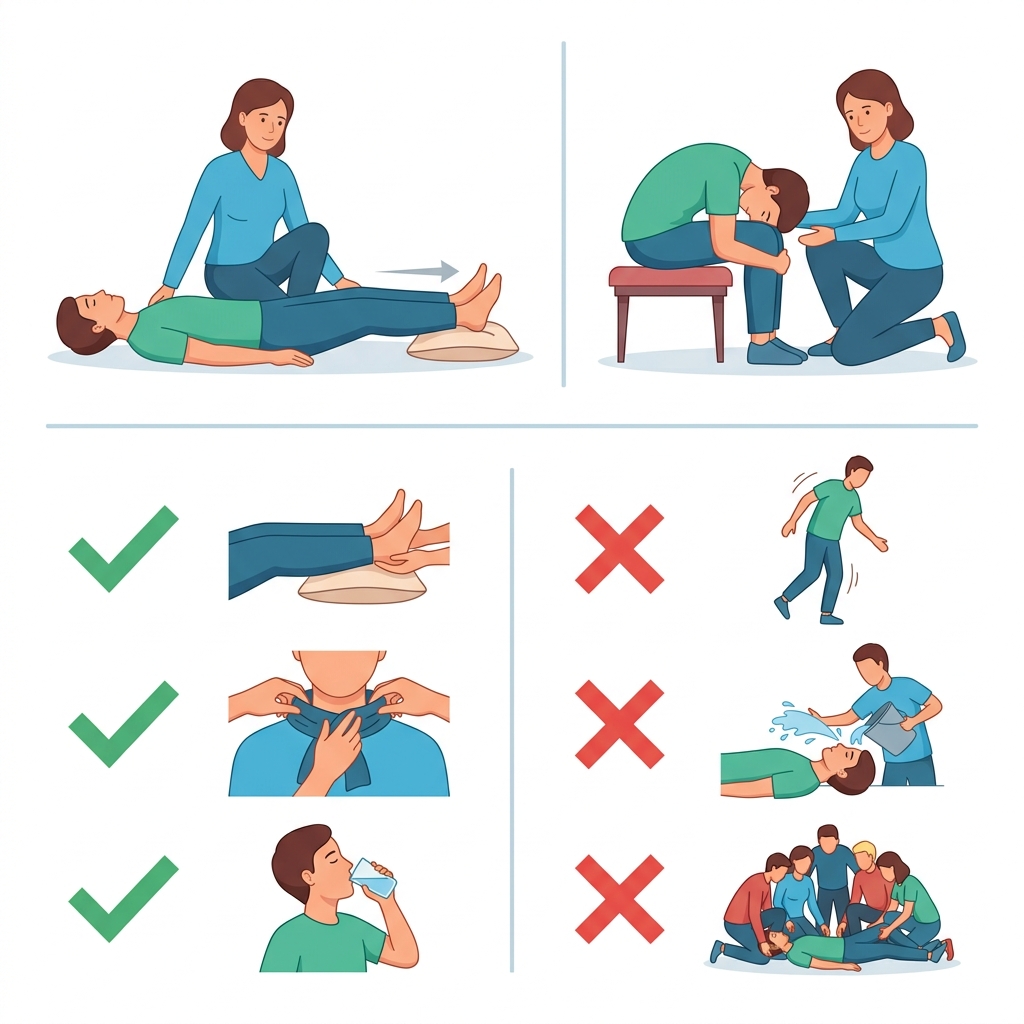
- First-Aid Priority: Place the person flat on their back and elevate their legs about 12 inches (30 cm) to restore venous return to the heart and cerebral circulation.
What Causes Fainting? Understanding the how it happens.
The human brain demands a continuous, uninterrupted delivery of glucose and oxygen. If cerebral perfusion drops for even 6 to 8 seconds, or if systolic arterial pressure falls below about 60 mmHg, the reticular activating system in the brainstem shuts down temporarily to protect neural tissue, resulting in loss of consciousness and loss of postural tone. Gravitationally, falling flat is the body's involuntary survival reflex: lying horizontally removes the hydrostatic barrier of gravity, rapidly restoring arterial perfusion to the brain.
1. Reflex (Neurally Mediated) Syncope.
Reflex syncope is the most common category, accounting for more than 50% of all fainting episodes, especially in adolescents and young adults.
- Vasovagal Syncope: Triggered by emotional distress, extreme pain, blood-injury phobia, or prolonged standing in warm, crowded environments. The autonomic nervous system inappropriately withdraws sympathetic tone while overactivating parasympathetic (vagal) activity, causing systemic vasodilation (hypotension) and bradycardia (slow heart rate).
- Situational Syncope: Triggered by involuntary autonomic reflexes during specific bodily functions such as micturition (urination), defecation, severe coughing bouts, or swallowing.
- Carotid Sinus Hypersensitivity: Occurs when mechanical pressure on the neck (e.g., tight collars or sudden head turning) activates the carotid baroreceptors, prompting an exaggerated drop in heart rate and blood pressure.
2. Orthostatic (Postural) Hypotension.
When transitioning quickly from a supine or seated posture to standing, gravity pools 500 to 1,000 mL of blood in the venous circulation of the lower extremities and splanchnic vascular bed. In healthy people, compensatory baroreceptors trigger rapid vasoconstriction and a reflex heart rate increase. When this compensatory mechanism fails, systolic blood pressure drops by ≥20 mmHg or diastolic drops by ≥10 mmHg within 3 minutes of standing. Common culprits include:
- Dehydration and Hypovolemia: Inadequate oral fluids, prolonged heat exposure, vomiting, diarrhea, or heavy sweating.
- Pharmacotherapy: Antihypertensives, diuretics, beta-blockers, vasodilators, and tricyclic antidepressants.
- Postural Orthostatic Tachycardia Syndrome (POTS): An autonomic disorder characterized by an excessive heart rate elevation (≥30 beats per minute in adults, ≥40 bpm in teens) within 10 minutes of standing, accompanied by severe presyncope and fatigue.
3. Hyperventilation and Respiratory Imbalance.
Acute panic attacks, extreme anxiety, or intense pain can trigger hyperventilation (rapid, deep breathing). Exhaling excessive carbon dioxide drives blood levels into acute hypocapnia ($PaCO_2$ drops below 35 mmHg), shifting systemic pH into respiratory alkalosis. Hypocapnia triggers profound cerebral vasoconstriction, decreasing cerebral blood flow by up to 30% to 40% and inducing dizziness, perioral tingling, and eventual syncope.
4. Endocrine, Metabolic, and Hematologic Triggers.
- Hypoglycemia: A rapid drop in plasma glucose (<70 mg/dL or <3.9 mmol/L)—often seen in people with diabetes using insulin or skipping meals—starves neurons of essential metabolic substrate, mimicking or precipitating syncopal episodes.
- Severe Anemia: Diminished hemoglobin levels (<8 g/dL or <80 g/L) blunt the oxygen-carrying capacity of the blood, dramatically lowering the threshold for cerebral hypoxia during minor physiological stressors.
5. Pregnancy-Related Syncope.
Pregnancy places unique demands on maternal hemodynamics. Progesterone causes broad vascular smooth-muscle relaxation, leading to systemic vasodilation and lower baseline blood pressure during the first two trimesters. In the late second and third trimesters, sleeping flat on the back allows the enlarged uterus to compress the inferior vena cava (supine hypotensive syndrome), obstructing venous return to the heart and precipitating sudden presyncope.
🚨 Red Flags: When to Seek Immediate Emergency Care.
Call 911 (US/Canada), 999 (UK), or proceed right away to the nearest Emergency Department (ER / A&E) if fainting is accompanied by any of the following high-risk features:
- Exertional Syncope: Loss of consciousness occurring during exercise, sports, or physical strain (a cardinal warning sign for structural heart defects like hypertrophic cardiomyopathy or channelopathies).
- Associated Chest Symptoms: Severe central chest tightness, pressure, radiating arm or jaw pain, or acute shortness of breath.
- Palpitations Prior to Collapse: Sudden racing, pounding, or irregular heartbeats preceding the blackout without a clear prodrome.
- Prolonged Unresponsiveness: Inability to regain full consciousness within 1 to 2 minutes.
- Neurological Deficits: Unilateral facial drooping, arm weakness, slurred speech (suggesting stroke or TIA), or sustained rhythmic limb jerking with post-event confusion (indicative of an epileptic seizure).
- High Impact Trauma: Evidence of severe head trauma, lacerations, or bleeding sustained during the fall.
- Personal or Family History: A known history of heart failure, previous myocardial infarction, or unexplained sudden cardiac death in family members under age 40.
Recognizing the Prodrome: Signs That Syncope Is Imminent.
The human body rarely loses consciousness without offering warning signs. Recognizing the presyncopal prodrome allows people to take immediate preventive action before sustaining impact injuries:
- Autonomic Changes: Profuse cold diaphoresis (clammy sweats), sudden skin pallor (drained facial color), and nausea.
- Sensory Distortions: Tunnel vision, graying-out or blacking-out of peripheral vision, seeing floaters or shimmering spots, and tinnitus (ringing or muffling of sounds).
- Cerebral Sensation: Lightheadedness, a floating sensation, yawning, generalized weakness, and loss of postural equilibrium.
Immediate First-Aid: What to Do (and What to Avoid).
Proper bystander response minimizes cerebral hypoxia and prevents secondary head injuries. Follow these evidence-based clinical steps when managing a fainting episode:
| Do (Evidence-Based Practice). | Do Not (Common Errors & Hazards). |
|---|---|
| Lay the person flat on their back: Eliminates the hydrostatic gradient, quickly restoring cerebral blood flow. | Do NOT force the person to stand or sit up: Forcing an upright posture starves the brain of oxygen and can cause immediate secondary collapse. |
| Elevate legs 12 inches (30 cm): Mobilizes venous blood from the lower limbs back to the central circulation and heart. | Do NOT offer food or fluids while semi-conscious: Giving water, juice, or sugar to an unalert patient creates a severe pulmonary aspiration hazard. |
| Loosen restrictive clothing: Unbutton tight collars, neckties, and belts to optimize respiratory excursion and relieve carotid sinus pressure. | Do NOT splash water, slap faces, or use smelling salts: These outdated methods cause distress, risk chemical inhalation burns, and delay proper positioning. |
| Turn into recovery position if vomiting: Place the person on their side to protect the airway and keep it clear. | Do NOT leave the person unattended: Monitor breathing and spontaneous pulse until medical help arrives or full recovery occurs. |
Clinical Workup: How doctors Diagnose the Cause.
If syncope is recurrent, unheralded, or accompanied by red flags, an outpatient or emergency clinical evaluation is essential. doctors use a structured diagnostic pathway outlined by clinical guidelines from the American College of Cardiology (ACC), American Heart Association (AHA), and European Society of Cardiology (ESC):
- 12-Lead Electrocardiogram (ECG): The mandatory initial screening tool for all syncopal events. It evaluates conduction abnormalities, prolonged QT intervals, Brugada syndrome, Wolff-Parkinson-White syndrome, and ischemic changes.
- Orthostatic Vital Signs: Measurement of blood pressure and pulse while supine, then after 1 and 3 minutes of standing to confirm autonomic insufficiency or orthostatic hypotension.
- Serum Blood Chemistry: Complete blood count (CBC) to screen for anemia, basic metabolic panel (electrolytes and renal function), and capillary blood glucose.
- Echocardiography: Ultrasound imaging to rule out structural cardiomyopathy, aortic valve stenosis, or pericardial effusion.
- Ambulatory Holter / Event Monitoring: Continuous cardiac rhythm recording spanning 24 hours to 30 days to catch intermittent, unpredictable arrhythmias.
- Tilt Table Testing: Conducted in specialized autonomic clinics to reproduce neurocardiogenic or orthostatic syncope under monitored hemodynamics.
Doctor's Clinical Note.
If you ever feel the sudden onset of tunnel vision, cold sweats, or dizziness, drop your pride and drop your elevation. Do not try to walk to a different room, find a glass of water, or step outside alone for fresh air—this is when catastrophic fall-related concussions, fractures, and dental trauma occur. Lie down flat where you are right away and prop your feet up on a backpack or chair. If circumstances prevent lying down, sit right away, place your head between your knees, and perform physical counter-pressure maneuvers (firmly crossing your legs while clenching your thigh, abdominal, and buttock muscles). This simple physical technique rapidly raises mean arterial pressure and can stop a fainting spell in its tracks.
Scientific References & Authoritative Sources.
- Shen WK, Sheldon RS, Benditt DG, et al. 2017 ACC/AHA/HRS Guideline for the Evaluation and Management of Patients With Syncope: A Report of the American College of Cardiology/American Heart Association Task Force on Clinical Practice Guidelines. Circulation. 2017;136(5):e60-e122. doi:10.1161/CIR.0000000000000499.
- Brignole M, Moya A, de Lange FJ, et al. 2018 ESC Guidelines for the diagnosis and management of syncope. European Heart Journal. 2018;39(21):1883-1948. doi:10.1093/eurheartj/ehy037.
- National Health Service (NHS). Fainting: Causes, Symptoms and When to Get Help. NHS UK Clinical Review. Published November 2022. Available at: https://www.nhs.uk/conditions/fainting/.
- Mayo Clinic Staff. Vasovagal Syncope: Symptoms, Causes, and Diagnosis. Mayo Foundation for Medical Education and Research. Patient Care & Health Information. Updated 2023. Available at: https://www.mayoclinic.org/diseases-conditions/vasovagal-syncope/.


💬 Comments (0)
No comments yet. Be the first to share your thoughts here.
Add Your Comment