

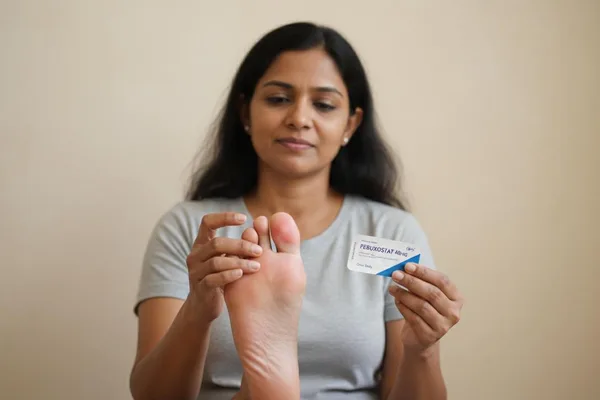
Do you sometimes wake up in the middle of the night with severe joint pain, especially in the big toe, accompanied by swelling? We usually call this condition Gout. This is a very painful experience. A special medicine that is given as a treatment for this is called Febuxostat. So, if your doctor has prescribed this medicine for you, it is very important to be fully informed about it. Today, let's talk about this Febuxostat medicine in a simple and friendly way.
What exactly is Febuxostat?
Simply put, gout occurs when our bodies build up too much of a chemical called uric acid. When this uric acid builds up in the body, it forms crystals or lumps and gets deposited in our joints, especially in places like the big toe, knee, and ankle. That's when the unbearable pain, swelling, and redness come.
Febuxostat does not relieve pain. It reduces the production of uric acid in our body. Over time, the amount of uric acid in the body decreases, and the recurrence of painful gout attacks is controlled. This means that this is a long-term medication.
Things you need to tell your doctor before starting medication
This is very important. The more your doctor has a complete picture of your health, the safer you can be treated. So, before starting Febuxostat, be sure to tell them if you have any of these conditions.
- Heart disease: If you have had a heart attack or stroke before, or if you have other heart disease.
- Kidney disease: If there is any problem with the functioning of the kidneys.
- Liver disease: If you have any liver disease.
- Other medications: If you are taking azathioprine or mercaptopurine . This is important to tell your doctor because taking Febuxostat with these medications can be extremely dangerous .
- Allergies: If you have an allergy to Febuxostat or any other medicine, food, or dye.
- Pregnancy: If you are pregnant, trying to get pregnant, or breastfeeding.
It's for your own safety to talk to the doctor without hiding these things.
How should I use the medicine?
This medicine is usually taken once a day. Take it exactly as prescribed by your doctor, at the right time.
- Swallow the pill with a glass of water.
- There is no problem taking it before or after meals, but it is best to get into the habit of taking it the same way every day.
- Never stop taking medication without your doctor's advice or take more than the prescribed dose.
- This medicine is not approved for use in children.
What to do if you take too much medicine? (Overdose)
If you think you have accidentally taken too much of this medicine, do not panic and take immediate action. If possible, call the National Poisons Information Centre at the Colombo National Hospital . Otherwise, go to the nearest hospital Emergency Unit (ETU) immediately. It is best if you can take the medicine packet with you when you go.
Most importantly: This medicine has been prescribed for you only. Do not give it to anyone else who has the same symptoms as you.
What to do if you miss a dose of medication?
Take the missed dose as soon as you remember. However, if it is almost time for your next dose, skip the missed dose and take your next dose at the scheduled time. Never take two pills at once to make up for a forgotten dose.
Other drugs that may interact with this medicine (Interactions)
Taking some medications together can change their effectiveness or cause dangerous side effects.
Medicines that should never be taken together:
- Azathioprine
- Mercaptopurine
Other medications that can cause problems:
- Theophylline / Aminophylline (a medicine used for conditions such as asthma)
- Pegloticase
- Raspberry
- Some drugs for cancer
This list is not complete. Therefore, tell your doctor about any other medications you are taking (including vitamins, herbal remedies, and supplements) . Also, tell your doctor if you smoke or drink alcohol.
Things to keep in mind while taking the medicine
- Regular check-ups: Your doctor will ask you to come in for check-ups at regular intervals. He or she will also order blood tests. Don't skip these. These are essential to see if the medicine is working properly for you and if there are any problems.
- Gout pain increases when starting: This is where many people get worried. Imagine that your gout pain increases a little when you start taking the medication. Don't worry, this is normal. It's called a 'gout flare'. It happens when the uric acid crystals that have been deposited in the body begin to dissolve. Do not stop taking the medication for any reason unless your doctor tells you to. He or she may prescribe a different painkiller for a short period of time to control the pain.
- Serious skin reactions: Although rare, this medicine can cause serious skin reactions. These can occur even weeks after starting the medicine.
- Keep out of reach of children.
- Store at room temperature (between 15-30 degrees Celsius).
- Keep in a dry place, away from direct sunlight and moisture.
- Throw away expired medicine.
- Febuxostat is a medicine that reduces uric acid levels, which are the cause of gout, and is not a painkiller that relieves acute pain.
- Before starting the medication, be sure to tell your doctor about all of your medical conditions and other medications you are taking.
- Never take Febuxostat with the medications Azathioprine or Mercaptopurine.
- Gout pain may increase when you first start taking the medication. This is normal. Do not stop taking the medication without your doctor's advice.
- Be on the lookout for serious skin conditions, chest pain, and signs of a stroke. If in doubt, seek medical advice immediately.
- This medicine is for you only. Never share it with others.
If you have symptoms like a fever or cold , such as red or purple spots on your skin that later turn into blisters and the skin looks like it's peeling , or if you notice swelling of your face, lips, or swollen lymph nodes in your neck or armpits , see a doctor immediately.
Side effects that may occur due to medication
As with any medication, there is a chance that Febuxostat may cause side effects. While most of these are minor, there are some things we should be especially aware of.
| Side effect | Description and what to do |
|---|---|
| Serious side effects that require immediate medical attention | |
| Severe allergic reaction | Skin rash, itching, swelling of the face, lips or tongue. Difficulty breathing. Go to the ETU immediately. |
| Chest pain | Chest tightness, pain, rapid or irregular heartbeat. |
| Symptoms of a Stroke | Sudden change in vision, difficulty speaking or understanding, numbness/weakness in the face, arm or leg, difficulty walking, dizziness. |
| Symptoms of liver damage | Dark yellow/brown urine, yellowing of the eyes or skin, pain in the upper right part of the stomach, nausea, loss of appetite, extreme fatigue. |
| Severe skin symptoms | Red/purple spots on the skin, blisters, peeling skin (even inside the mouth), fever, and swollen glands. |
| Side effects that are usually not serious, but should be reported to the doctor if they persist | |
| Nausea/vomiting | Stomach discomfort, nausea. |
| Joint pain | Minor joint pain. |
| Changes in appetite | Loss of appetite or feeling more hungry. |
How should you store your medicine?
To maintain the quality of medicines, they must be stored properly.




💬 Comments (0)
No comments yet. Be the first to share your thoughts here.
Add Your Comment