
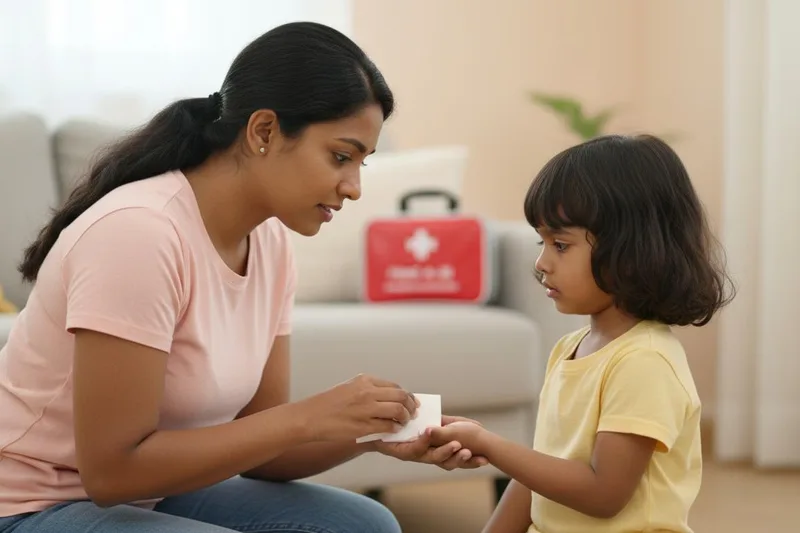
Imagine that someone suddenly falls while you are walking on the street, or a small child burns their hand at home. Many people get worried because they don't know what to do in such a situation, right? But if you have a good understanding of First Aid, you can be of great help in such a situation, and maybe even save a life. So today, let's talk about these first aid tips that everyone should know.
What exactly is First Aid?
Simply put, first aid is the immediate medical care or first aid given to someone in the event of an accident or illness before they can see a doctor. This can be as simple as cleaning a small cut and applying a plaster. Or it can be the rapid action taken to save a life in a life-threatening medical emergency.
We mainly expect several things from providing first aid:
- Saving lives: Helping to prevent death in an emergency.
- Limiting suffering: Working to reduce the victim's pain and discomfort.
- Preventing deterioration: Stopping the injury or illness from getting worse.
- Helping you recover faster: Proper first aid can speed up the healing process.
We usually see people like ambulance officers providing first aid. However, anyone can learn this and help someone else in a time of need.
What are the situations in which first aid can be given?
First aid is not just for life-threatening situations. First aid is also very important for small things that happen in everyday life. Let's see what are such situations.
| Situations where first aid is needed | |
|---|---|
| Non-Emergency situations | |
| Insect bites | Stinging animals such as wasps and hornets. |
| Minor burns | Superficial burns on an area smaller than the hand. |
| Nosebleed | Minor nosebleeds (Epistaxis). |
| Sprains and bruises | Sprains and Strains. |
| Minor skin injuries | Lacerations, contusions, or abrasions. |
| Emergencies where first aid is essential to save lives | |
| Severe allergy | Sudden, severe allergic reactions, such as anaphylaxis. |
| Asthma exacerbation | Sudden worsening of asthma. |
| Chest pain | Chest pain, which can be a symptom of a heart attack. |
| Head injuries | Concussions or Traumatic Brain Injuries. |
| Electric shock | Accidents caused by electrocution. |
| Loss of consciousness | Syncope or near loss of consciousness. |
| Low blood sugar | Hypoglycemia condition. |
| Fractures | Many fractures. |
| Convulsion | Having a fit (seizures). |
| Severe burns | Severe burns that went deep into the skin. |
| Stroke | Stroke or mini-strokes (TIAs). |
Skills we need to know when providing first aid
First aid is a big training. There are many things under this.
- Bandaging wounds: How to clean wounds and apply a bandage.
- CPR and artificial respiration: A life-saving method given to someone who has stopped breathing or whose heart has stopped beating.
- Helping someone with something stuck in their throat: Backslaps for a small child or the Heimlich maneuver for an adult.
- Stopping bleeding: Stopping bleeding by applying direct pressure to the wound.
- Treatment for burns: How to cool the burn.
- Putting someone in the Recovery Position: A way to safely turn someone who is unconscious but breathing onto their side. This prevents vomit from entering the lungs if it is swallowed.
- Using antiseptics: How to use antiseptics to clean wounds.
- Emergency use of injections: How to use auto-injectors (e.g. EpiPen) used in cases of severe allergic reactions (anaphylaxis).
The most important things to consider before giving first aid!
Before helping someone, it's very important that you keep these things in mind.
1. Stay Calm
This is the most important thing. If you are nervous, you will not be able to think clearly. So take a deep breath and calm down . If you remain calm, it will also encourage the injured person.
2. Get Help
Don't try to do everything yourself. Tell someone nearby to call 1990, the Sri Lankan emergency ambulance service, as soon as possible . If the situation is serious, every second counts.
3. Your safety is also important (Don't Endanger Yourself)
Don't put yourself in danger by going to help others. For example, if someone is lying in the middle of a busy road, don't go there until the traffic has stopped and it is safe. If you get into an accident, there will be no help for you or the other person.
4. Prioritize (The ABCs)
Decide what you want to do first. Remember the ABC rule for this.
- A - Airway: First, check to see if there is anything stuck in his mouth or throat or if his airway is blocked.
- B - Breathing: Next, check to see if he is breathing. See if his chest is rising and falling.
- C - Circulation: If not breathing, start CPR immediately. If there is severe bleeding, stop it first.
5. Do not move the injured person too much (Limit Movement)
Do not move the injured person for any reason , especially if there is a suspicion of an injury to the back, neck, or head. Doing so can cause even minor spinal injuries to become serious. The only time you should remove the person is if there is a risk of further injury, such as a fire or explosion.
Things to have in a First Aid Kit
A first aid kit is a must-have in every home, vehicle, and workplace. You can buy a pre-made one, or you can make one yourself using these items.
- Adhesive bandages of various sizes
- Sterile bandages/gauze
- Medical adhesive tape
- Antiseptic solution or wipes
- Alcohol-based hand sanitizer
- Small scissors (Shears/utility scissors)
- Tweezers
- Medical exam gloves
- Painkillers (e.g. Paracetamol)
- A sheet of paper with emergency telephone numbers (doctors, ambulance services - 1990)
If someone has ingested something poisonous, immediately call the National Poison Information Center at the Colombo National Hospital and seek advice.
First aid is a valuable skill that can save lives and health. You can learn about it in schools, workplaces, and through workshops organized by various organizations. That knowledge may one day help you save the life of someone you know or someone else in need.
Take-Home Message
- First aid is essential knowledge that can save a life in an emergency.
- Anyone can learn first aid. It's a great investment for you and for society.
- The first thing to do in an emergency is to stay calm and call for help. In Sri Lanka, call the 1990 ambulance service.
- Before helping others, always think about your own safety first.
- After administering first aid, be sure to refer the injured or sick person to a doctor for further treatment.
- Always keep a well-equipped First Aid Kit in your home and vehicle.


💬 Comments (0)
No comments yet. Be the first to share your thoughts here.
Add Your Comment