
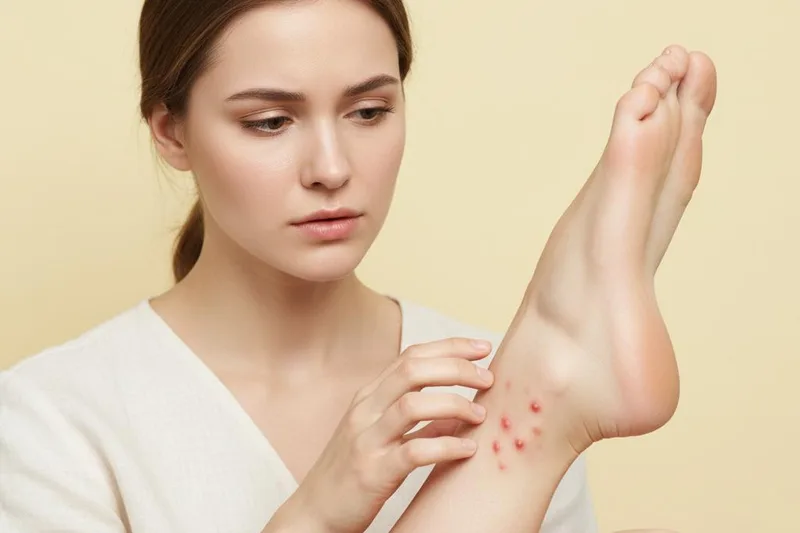
Have you ever noticed your pet dog or cat scratching itself constantly? Sometimes, you too may have small red blisters on your legs, especially around the ankles, and you may be scratching them uncontrollably? The cause of this could be a tiny animal you might not even think about, a flea. Although many people don't pay much attention to this, sometimes this little animal can cause big problems. So today, let's talk about all about flea bites.
Who is this flea?
Simply put, a flea is a very small, wingless insect. They are usually dark brown or black in color, and have a flat body. They have six legs. They use strong claws on the bottom of these legs to cling to the body of an animal, such as a dog or cat. Their mouths are designed to pierce the skin and suck blood.
Imagine, their back legs are longer than the other legs, and they're also stronger. That's why they can jump more than a foot. Like a little spring. There are more than 2,500 species of fleas in the world.
Usually, a flea bite doesn't cause much harm. It's just a minor itch and discomfort that goes away in a few days. However, it's important to be aware of this because fleas can sometimes transmit serious diseases .
Where are fleas most common?
Fleas are most active when the weather is a little warmer. Outside, they like to be in shady, slightly damp, cool places. They're found under trees, among leaf litter, in tall grass, and in bushes. So when your pet walks through these areas, fleas are more likely to jump on your body.
On dogs and cats, they are most often found around the ears, neck, back, and belly. Once inside the house, these fleas can jump off the animal and hide on the floor. They mostly hide in carpets, furniture like sofas, bedding, and small cracks in the floor.
Why do fleas bite us?
Both male and female fleas live by sucking blood. Female fleas lay eggs after they have taken a blood meal. In some flea species, the larvae feed on the feces of adult fleas, which contain blood.
Do fleas bite people too?
Yes, fleas bite people too. But the types of fleas that infect dogs and cats don't usually live on people. Think about it, dogs and cats have a lot more fur than we do. So fleas like animals with a lot of fur. Because they can easily hide behind that fur.
What really happens when a flea bites you? Why does it itch so much?
When a flea lands on your skin, it sucks blood by piercing the skin with a small needle-like part of its mouth (proboscis). At the same time, it injects its saliva into your blood.
This is where the problem begins. Your body's immune system recognizes this saliva as something foreign, harmful, an allergen . So in response, the body releases a chemical called histamine . It is because of this histamine that the area where the flea bite occurred becomes itchy, swollen, and red . This means that many people are allergic to flea saliva.
How do you distinguish flea bites from other insect bites?
It itches when you're bitten by a mosquito, an ant, or even a flea. So how do you know if it's really a flea bite? There are a few tricks to this.
Flea bites usually don't swell up as much as mosquito bites. They look like small, red blisters. Sometimes you can see a red ring around the blister.
Let's look at this table to explain this further.
| Insect | Nature of the bite | Most popular places |
|---|---|---|
| Flea | Several small, red blisters appear in clusters or rows. They itch violently. | Mostly in the legs, especially the ankles, calves, and feet. |
| Mosquito | Single, swollen, red blisters. They may look like a small dot in the center. | Anywhere not covered by clothing (arms, legs, face, neck). |
| Bed Bug | Similar to fleas, but often seen in a row or zigzag pattern. | Areas not covered by clothing during sleep at night (arms, legs, face, neck). |
If your pet is scratching more than usual, acting restless, and also has blisters like this on their legs, it's likely the work of fleas.
What can you do at home with this scrub?
The most important thing is to avoid scratching the skin, no matter how much it itches! If you scratch, you can break the skin, which can lead to bacteria entering and causing an infection. If you accidentally scratch, wash it well with soap and water and keep it clean.
You can try these things to reduce itching:
- Apply ice: Wrap some ice cubes in a clean cloth and place them on the itchy area for about 10 minutes. This will reduce swelling, pain, and itching.
- Aloe vera: Apply some aloe vera gel directly to the affected area. The natural properties of aloe vera help relieve pain and itching.
- Honey: Take some pure honey and apply it in a thin layer. Honey also has anti-inflammatory and anti-inflammatory properties. You can also apply it and put a bandage on it to prevent it from sticking.
- Oatmeal: Grind some oats in a blender until fine powder. Then add a little water to make a thick paste and apply it to the affected areas. Leave it on for 10-15 minutes and then wipe it off with a clean cloth.
- Chamomile tea: Steep a chamomile tea bag in hot water. Then, remove the tea bag, squeeze out the excess water, and apply it to the itchy area for about 10 minutes.
- Over-the-counter remedies: If the itching is severe, you can talk to your doctor about using an antihistamine or a topical cream like hydrocortisone. But never use these without medical advice.
To get rid of fleas, you first need to get rid of them from your home!
Treating the itching alone is not enough. The problem will not go away as long as the fleas are in the house. So do these things to get rid of fleas from your home.
1. Check your pet: First, you need to check your pet. Comb his fur and look closely at his skin. If he has fleas, they will look like small black dots.
2. Use a flea comb: The teeth on these combs are very close together. So when you comb your pet, the fleas get caught in the comb. Put the fleas that get caught in this way in a bowl of soapy water.
3. Bathe with flea shampoo: Ask your veterinarian for an appropriate shampoo and bathe your pet thoroughly with it.
4. Medications: Use oral or topical medications as directed by your veterinarian.
5. Wash bedding: Wash your pet's bedding, pillowcases, and all bedding thoroughly in hot water . Then dry them thoroughly in the sun or in the dryer on high heat.
6. Vacuum your home thoroughly: Use a powerful vacuum cleaner to vacuum all carpets, rugs, and sofas thoroughly. When you're done, take out the vacuum bag, seal it tightly, and put it in a trash can outside the house.
Can you get sick from eating fleas?
This is something we need to be concerned about. It usually happens rarely. But fleas are vectors . That is, organisms that can carry diseases from one animal to another or to humans. There are several diseases that can be transmitted by fleas.
- Plague: This is a very rare disease now. It has caused major epidemics throughout history. It is spread through fleas from infected animals such as rats. Symptoms can include fever, body aches, and difficulty breathing.
- Endemic murine typhus: This is also a disease that can be transmitted by inhaling or ingesting infected flea feces through a skin wound. Symptoms include fever, body aches, headache, and skin lesions.
- Cat Scratch Disease (CSD): This is a disease that is spread by cats. The bacteria `(Bartonella)` is transmitted to cats by fleas. People can then contract this disease when they are scratched or bitten by an infected cat. The scratched area may develop into a blister, and the armpits and groin may swell.
- Parasites: Parasites such as tapeworms sometimes live on fleas. These parasites can be ingested by accidentally swallowing an infected flea (especially when young children are playing on the floor).
These diseases are not common in Sri Lanka, but it is important to be aware that something like this can happen.
When should I see a doctor?
Usually, you don't need to see a doctor if you get bitten by a flea. However, you should definitely seek medical advice in the following cases:
- If the flea bite site seems infected (that is, if it is becoming increasingly red, swollen, painful, or pus is coming out).
- If you are showing severe allergic symptoms .
- If you develop other symptoms such as fever, body aches, headache, stomach aches, and vomiting a few days after eating fleas.
If you have severe allergic symptoms such as difficulty breathing, swelling of the face or lips, go to the nearest hospital emergency department (ETU) immediately. This is an emergency.
Take-Home Message
- Flea bites are small, red, itchy blisters that usually appear on the legs, in clusters or in a row.
- The most important thing is to avoid scratching. Scratching can damage the skin and lead to infection.
- There are simple things you can do at home to reduce itching, such as ice and aloe vera.
- To avoid fleas, it is essential to keep pets clean and to clean the house thoroughly.
- If you develop an infection from a flea bite, develop a severe allergic reaction, or develop other symptoms such as a fever, be sure to see your doctor.




💬 Comments (0)
No comments yet. Be the first to share your thoughts here.
Add Your Comment