
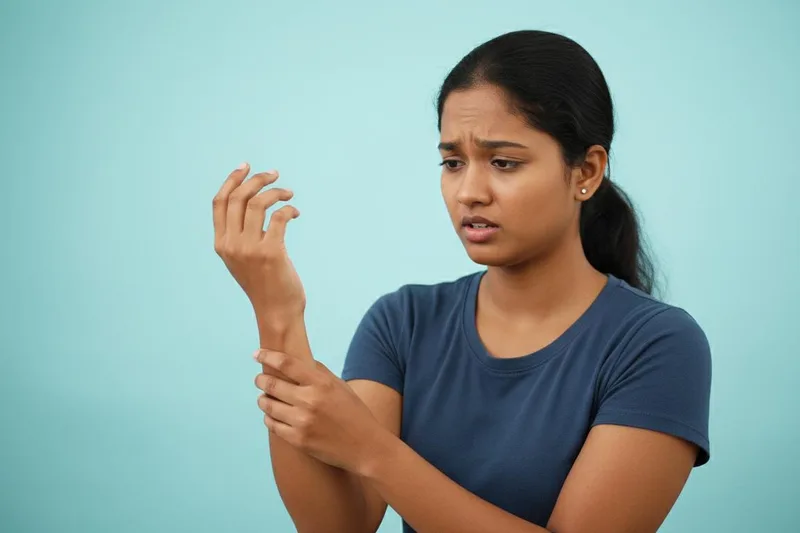
It is common to break a bone, such as an arm or a leg, at least once in our lives. When that happens, we quickly see a doctor, put on a plaster cast, and wait for it to heal. Most of the time, with proper treatment, these broken bones will heal nicely again. However, there are times when this healing process does not happen properly. That is when we have to talk about conditions called `(Malunion)` (misalignment) and `(Nonunion)` (failure to heal at all) . These can be a bit annoying, so it is very important to be aware of these.
What do these `(Malunion)` and `(Nonunion)` mean? Let's understand it simply, shall we?
Imagine that you have a broken bone in your arm or leg. The doctor has set it properly and put a plaster cast on it. Now, the two broken pieces of bone should come back together and fit exactly as they were.
- `(Malunion)` - Misunderstanding:
Simply put, `(Malunion)` means that the two broken bones have fused together, but not properly . That is, the bone may be misaligned, or slightly twisted, or shorter than it should be. It's like putting two broken pieces of pottery back together incorrectly. It's fused, but not quite right.
- `(Nonunion)` (Nonunion) - The loss of what is fitting:
``(Nonunion)`` is a slightly more serious condition. What happens here is that the two broken pieces of bone, even after a long time to heal, do not fit together at all . That is, even after months, a new connection has not been formed between the two bones. To be precise, the bone is still broken.
When bones don't heal properly, it can have a major impact on the stability of our body's skeleton and the functions that those bones perform. Imagine if a bone in your leg was misaligned, you could limp and experience pain when you walk, right?
Most of the time, fractures heal well with proper treatment. There are two reasons why this may not happen. One is a `mechanical issue` . This means that the two broken pieces did not fit together properly during healing. The other is a `biological issue` . This means that your body does not have the nutrients and blood supply that your bones need to heal. Doctors take both of these factors into account when treating these conditions.
What are the main types of nonunion fractures?
When doctors examine someone with a nonunion, they classify it into a type. This helps them understand why the bone is not healing and what factors are contributing to it. There are three main types:
What is `(Hypertrophic nonunion)`?
In this type, there are signs of new bone cells forming. That is, the body is trying to heal the bone. However, the ends of the two broken bone pieces are not properly connected. This means that the body has the biological resources, but the two broken pieces are not properly held together and not falling apart during the healing process. It is like there is cement, but the mortar is not properly bonded.
What is `(Atrophic nonunion)`?
In this case, there is no sign of new bone formation. Also, the bone does not have a good blood supply. This suggests that biological factors are preventing the bone from healing. Sometimes, an infection may have occurred in the bone, which may have disrupted the blood supply. A ``Nonunion`` with such an infection is also called ``Septic nonunion`` .
What is `(Oligotrophic nonunion)`?
In this type, some new bone has formed, but it is not complete. The two pieces of bone are not in exactly the right place. Perhaps the bone was not set properly when it was first set, or it was later dropped and shifted. Both stability factors and biological factors may be involved here.
How do you know if you have a `(Malunion)`? What are the symptoms?
If a bone is misaligned, called a ``malunion,'' you may see or feel things like this:
- Externally visible changes:
- Your bone looks stretched or crooked .
- The bone looks like it's twisted , or like it's spinning around .
- The bone may feel shorter than it used to be . For example, one leg may be slightly shorter than the other.
- Discomforts that arise when using that bone:
- There is pain in the bone.
- There is swelling there.
- Limping when walking (if it's a leg).
All the bones in our body are connected to each other. So, when a bone is weak in one place, it can put extra pressure on other bones. Therefore, even if there is no pain in the place where there is a ``malunion'', when that bone is used, it can cause pain in another part of the body.
- Nerve related problems:
Sometimes, a nearby nerve can become compressed or pinched by the misaligned bones. If this happens, you may experience symptoms such as:
- Numbness or a tingling sensation (`(Paresthesia)`) in that area.
- Muscle weakness , or more precisely, muscle atrophy.
- Nerve pain (Neuropathy).
What are the symptoms of a `(Nonunion)`?
If a bone does not fit together, that is, there is a ``nonunion'', you may see symptoms like these:
- There is deep, long-lasting pain where the bone is broken. This pain may continue even after the cast is removed.
- When using that bone, you feel weakness or limited movement .
- A visible change , for example, a bump or gap, may be visible on the outside, as if the bone has protruded.
Sometimes, if there is an infection in the bone, these symptoms may occur together or separately:
- Swelling
- Fever
- Feeling cold and having a cold (chills)
Why do fractures not heal properly and result in ``malunion`` or ``nonunion``? What are the causes?
There are many reasons why a bone may not heal properly. Some we can control, some we can't. Here are some of them:
- The nature and severity of the fracture:
There are some fractures that are a little harder to heal. For example, spiral fractures (those that break in a twisted manner) or comminuted fractures (those that break into many pieces) , are less likely to align properly. Also, if the blood supply to the bone is disrupted due to a major accident, that can also affect healing.
- How quickly and well the treatment was received:
If a bone is not treated quickly after a fracture, it can begin to heal improperly. Also, even after the bone is properly set and a cast is applied, it can still move out of place. This is more likely to happen if treatment is delayed or the method used (e.g., the strength of the cast) is not sufficient.
- Whether you rested properly and protected yourself during your recovery:
During the healing process, it is very important that the broken bone is immobilized and fixed in the correct position. Sometimes, it can take longer than usual to heal. In such cases, problems can arise if the doctor removes the cast too early or if you start using the bone too soon.
- Your overall health and the physical strength needed to recover:
When the healing process is slow, there is a greater chance of malunion or nonunion. Bone healing can be delayed or incomplete in people with aging , nutritional deficiencies (especially calcium and vitamin D), and metabolic conditions such as diabetes mellitus and thyroid disease . Tobacco and nicotine use are also major factors that weaken bones and delay healing.
How do doctors accurately identify these `(Malunion)` and `(Nonunion)` conditions?
If you think you have a problem like this, a doctor will first ask you about the accident and any other medical conditions you may have. Then, they will do a physical examination of the bone. They will look for any changes that may be visible on the outside, and they will ask you how you feel by moving the bone. They may ask you to walk, or they may measure the length of the bone.
After that, imaging tests of the bone are usually done. These may include:
- `(X-rays)` (X-ray): This is often the first thing you look at.
- `(CT scan)` (CT scan): Can obtain clearer, cross-sectional images of the bone.
- `(MRI)` (MRI scan): This helps to see if there is any damage to the soft tissues around the bones, such as nerves.
If the doctor finds that the bone has healed in a non-anatomical position, he or she will conclude that it is a ``malunion.`` If the bone has not started to heal or has not fully healed after a reasonable healing period, it is known as a ``delayed union`` or ``nonunion.`` The healing time can vary depending on the nature of the injury, the bone involved, and your health. Typically, it is called a ``nonunion`` if it has not healed after six, nine, or twelve months.
Can these `(Malunion)` and `(Nonunion)` conditions be cured? What are the treatments?
The good news is that not every malunion or nonunion needs to be "fixed." It depends on the bone involved, how much you use it, and how much it affects your daily life. However, some nonunions can limit your movement, cause pain, or lead to other complications. In those cases, surgery may be necessary to correct the problem. Doctors will try nonsurgical treatments first and then resort to surgery if they don't work.
Treatment for `(Malunion)` (Misaligned Bones)
- Non-surgical treatments:
- Bracing: You may be asked to wear a brace to help keep the bone in a better position when you use it.
- Orthotics: If one leg is shorter, you can use a special shoe insert to compensate for the difference.
- Physical therapy: This involves special exercises that can strengthen the relevant muscles and reduce pressure on the bone.
- Pain relievers: You can use over-the-counter pain relievers, such as NSAIDs (non-steroidal anti-inflammatory drugs), to reduce occasional discomfort.
- Treatment by surgery:
- Osteotomy: A surgeon may cut the bone and adjust its position.
- Limb lengthening surgery: If an arm or leg is severely shortened, surgery can be performed to lengthen it using a special device.
Treatment for `(Nonunion)` (bones that do not fit together)
- Non-surgical treatments:
- Medical therapy: If there is a disease that affects the whole body (e.g. diabetes), an infection, or malnutrition, that should be treated first.
- Orthoses: A brace, splint, or cast is used to help the bone heal and keep it from falling out.
- Bone stimulator: These are special devices that use either ultrasonic waves or electromagnetic waves to stimulate bone healing.
- Biological injections: Stem cells or platelet-rich plasma can be injected into the bone to stimulate healing and growth.
- Treatment by surgery:
- Debridement: The surgeon removes dead, non-healing tissue from the bone.
- Vascular surgery: If the blood supply is disrupted, vascular surgery can be performed to restore it.
- Bone grafting: The surgeon takes a piece of bone from another part of your body (such as your hip bone) or from a donor bone and implants it into the missing part. This gives a good start to new bone growth.
- Open reduction and internal fixation: The surgeon repositions the bone fragments and uses surgical screws, plates, or nails to hold them together.
How is the recovery after treatment?
Both non-surgical and surgical treatments have a high success rate in treating malunion and nonunion. That's good news. However, it can take some time to fully heal and get back to normal (rehabilitation). You may need to use a cane or walker to walk until you recover. You may also need physical therapy.
Sometimes treatment can fail. This can happen if the bone can't be held in the right position, or if doctors can't control the biological factors we talked about (like blood supply and nutrition).
The most important things we need to remember (Take-Home Message)
Breaking a bone can happen to anyone. Sometimes we don't even realize right away that we've broken a bone. However, if you have even the slightest suspicion that you might have, it's best to see a doctor right away and get checked out.
- Fractures heal better when they receive early, quality care .
- Your doctor will examine your wound and identify any factors that may be hindering healing.
- They will advise you on the best way to take care of yourself to prevent either `(Malunion)` or `(Nonunion). It is very important to follow those instructions carefully.
So, I hope this information is useful to you. If you have a broken bone, don't panic and don't forget to follow proper medical advice. This can often prevent complications like this from occurring.
` Fracture, malunion, nonunion, malunion, bone treatment, bone surgery


💬 Comments (0)
No comments yet. Be the first to share your thoughts here.
Add Your Comment