

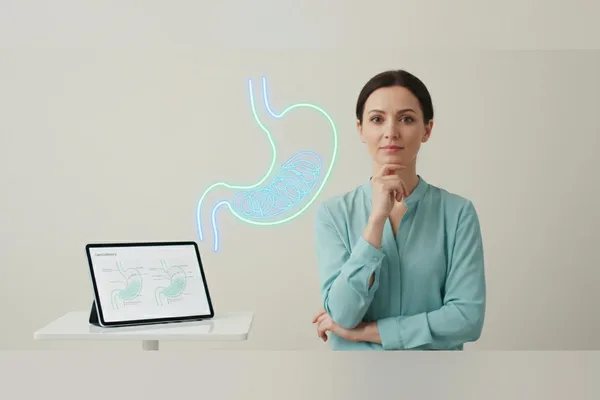
The stomach is one of the most important organs in our body that stores the food you eat and starts digesting it. But sometimes, especially if a serious condition like gastric cancer occurs, this stomach itself can harm our body. That is when doctors decide to surgically remove part or all of the stomach. This is what we call a `(Gastrectomy)`. Although this is a major surgery, did you know that you can live well without a stomach? Let's talk about this in detail.
What exactly is gastrectomy surgery?
Simply put, a gastrectomy is a surgical procedure that removes part or all of your stomach. The stomach stores the food we eat for a while, then sends it to the small intestine where it can be digested and absorbed.
There are two main types of this surgery:
- Total Gastrectomy: This involves removing your entire stomach.
- Partial Gastrectomy: In this, only part of the stomach is removed. These surgeries have different names depending on the amount removed. For example, in a ``Subtotal Gastrectomy``, about 80% of the stomach is removed. Also, ``Gastric Sleeve`` surgery, which is performed as a treatment for obesity, is also a type of partial gastrectomy.
Why do you do this kind of surgery?
This surgery is often done as a treatment for stomach cancer. It can help cure the cancer or stop it from spreading. It can also be used to control symptoms such as pain and bleeding when the cancer cannot be cured.
Gastrectomy is used for several other conditions besides cancer. It is usually performed as a last resort when medications and lifestyle changes have not helped.
| Medical condition | Description |
|---|---|
| Benign Tumors | To remove tumors that are causing symptoms or that may later become cancerous. |
| Gastritis | If you have severe stomach inflammation or ulcers that cannot be controlled with medication. |
| Peptic Ulcer Disease | If you have wounds that damage the stomach walls and do not heal. |
| Obesity | As a weight loss surgery (Bariatric Surgery) to control unhealthy levels of obesity. |
| Stomach injuries | If an accident has caused irreparable damage to the stomach tissue. |
| Hereditary cancer risk | This surgery is also performed to prevent the high risk of developing stomach cancer if a mutation in the CDH1 gene is inherited. |
How to prepare before surgery?
Since this is a major surgery, it is very important to prepare well for it.
- Talk to your doctor: Tell your doctor about your complete medical history, all medications, vitamins, and Ayurvedic remedies you are taking. Don't forget to tell them about any allergies you may have.
- Be healthy: It is important to be in as good a health as possible before surgery. Adjust your diet and exercise regimen according to your doctor's instructions.
- Avoid smoking: If you are a smoker, you should stop smoking completely a few weeks before the surgery. This will greatly improve the results of the surgery.
- Adjust your medications: You may need to temporarily stop taking medications such as blood thinners , pain relievers (NSAIDs), aspirin, and warfarin. Your doctor will tell you exactly which medications to stop and which to continue taking.
- Fasting: You will not be able to eat or drink anything for several hours before surgery. Follow the instructions carefully.
- Someone to help at home: You'll need someone to drive you home from the hospital. Also, it's a lot easier to have someone to help with household chores while you recover.
What happens during the surgery?
During the surgery, you will be under full anesthesia, which means you will not feel any pain or be unconscious.
1. Anesthesia: A medicine given into your vein will put you to sleep until the surgery is complete.
2. Catheterization: A catheter is inserted to collect urine. Also, a tube (`Nasogastric tube`) is inserted through the nose and into the stomach to remove the contents of the stomach. Later, medication and nutrition can be given through this tube.
3. Gastric bypass: The surgeon removes part or all of the stomach either through a large incision (Open Surgery) or through several small incisions using a camera (Laparoscopy). In the case of cancer, the lymph nodes around it are also removed to check if the cancer has spread.
4. Reconstruction of the digestive tract: This is the next most important step. The surgeon will re-construct your digestive tract. If part of the stomach was removed, the small intestine will be connected to the remaining part. If the entire stomach was removed, the small intestine will be connected directly to the esophagus.
5. Suturing: Finally, the incisions are closed with stitches.
This surgery can take about 5 hours, depending on the type of surgery you have.
What happens after the surgery and how long will it take to recover?
After the surgery, you will need to stay in the hospital for about a week or two. During this time, the medical staff will take good care of you.
- Eating: Initially, you will be fed through a vein or a tube placed in your stomach. As your wounds heal, you can start taking liquid foods by mouth. Then, you will gradually be introduced to soft foods like porridge, and then regular light meals.
- Pain control: Medication is given to control pain.
- Recovery time: This is a journey that will take months . It can take about two months for the wounds to heal. It can take 3-6 months or even longer for the body to regain strength and adjust to a new diet . Give your body the time it needs to heal, and be patient.
What are the risks and complications of this surgery?
As with any surgery, there are common risks such as infection, allergic reactions to anesthesia, and blood clots. In addition, there may be some complications specific to this surgery.
| Complication | Simple explanation |
|---|---|
| Anastomotic Leak | Food leaking from newly connected areas (seams). |
| Dumping Syndrome | Food moves too quickly into the small intestine before it is properly digested. This can cause bloating, nausea, stomach pain, and diarrhea. |
| Malnutrition | The body is unable to properly absorb the nutrients it needs, which can lead to conditions such as anemia. |
| Bile Reflux | Bile produced in the liver flows backward into the stomach or esophagus. |
| Internal Hernia | Parts of the small intestine protruding from another part of the abdomen. This can be a condition that requires emergency treatment. |
If you experience any discomfort like this, let your doctor know immediately.
Can you live a normal life after a gastrectomy?
Yes, you definitely can! You can live a healthy, normal life. But, you will have to get used to a "new normal" when it comes to your eating habits.
- Eat little and often: Instead of 3 large meals a day, eat about 6 small meals.
- Change your diet: Foods high in fiber (cereals, breads) and dairy products may be difficult to digest at first. Experiment to find out what works best for you.
- Vitamins and supplements: Without a stomach, it is difficult for the body to absorb certain nutrients, especially vitamin B12. Take the necessary vitamins and supplements as directed by your doctor.
- Rest and exercise: Get plenty of rest. Also, engage in light exercise like walking without straining your body. This can help prevent complications like blood clots.
When should I see the doctor?
Be sure to attend your post-surgery clinic appointments. In addition, if you have any of the following symptoms or they worsen, notify your doctor immediately.
- Nausea and vomiting
- Diarrhea
- Stomach pain or bloating
- Redness, swelling, warmth, or pus at the surgical wound site
- Fever
Take-Home Message
- Although gastrectomy is a major surgery, it is a very important treatment to save lives from diseases such as cancer.
- It is very important to be patient as it takes months to fully heal.
- After surgery, you will need to permanently change your eating habits. Get used to eating small, frequent meals.
- Always follow your doctor's advice regarding diet, vitamins, and exercise.
- Once you get used to these changes, you can live a completely healthy life.




💬 Comments (0)
No comments yet. Be the first to share your thoughts here.
Add Your Comment