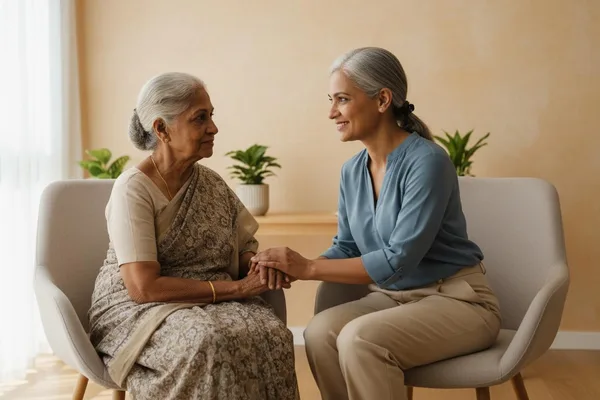
Are you concerned about the health of your aging parents? Who is a geriatrician?

Are you concerned about the health of your aging parents? Who is a geriatrician?

Think about an elderly person like your mother, father, grandmother, or grandfather at home. With all the discomfort they feel every day, the many medications they take for each and every illness... you must be wondering how to provide them with the best health care. A geriatrician is a specialist who comes to our aid at times like these. Today, let's talk about who they are and what help they can provide.

Who is a geriatrician?

Simply put, a geriatrician is a doctor who specializes in the health problems of older people. Just like a pediatrician is for young children, a geriatrician is a specialist for older people.

These doctors receive a general medical degree and receive specialized training in Family Medicine or Internal Medicine. They then receive additional specialized training in Geriatric Medicine, which focuses on the diseases, physical changes, and mental conditions that specifically affect older people.

Therefore, they have an amazing ability to manage the complex changes that occur in the body with aging, the presence of multiple diseases at the same time, and the use of multiple medications. They work in hospitals, private clinics, or places like nursing homes.

How can a geriatrician help you?

A geriatrician doesn't just look at you or your loved one as a disease. They look at you as a whole person . That means they pay attention to all of your physical, mental, emotional, and social needs. They use this information to plan treatment.

Imagine your mother is taking different medications for diabetes, high blood pressure, and arthritis. Sometimes, one medication can cause side effects for another condition. Or she may be experiencing memory loss. Below are some of the things a geriatrician might do in such a situation.

Task A Simple Explanation
Correct diagnosis of diseases The symptoms of aging are sometimes vague. These doctors have a special ability to accurately identify these.
Medication management We look into the possible side effects and interactions that may occur when taking several medications at the same time, and only prescribe the necessary medications.
Discussing the pros and cons of treatments If you are having surgery, we will explain to you and your family the risks and benefits of surgery as you age.
Working with other specialists For things like cancer and brain diseases, we refer you to other specialists and work with them to develop a treatment plan.
Giving advice about daily life They talk about things like whether it's dangerous to drive alone or stay home alone, and help you make the necessary changes in your life.

Most importantly, these doctors respect your wishes. Some people want to stay in their homes as long as possible. Others want to reduce their medication. They will talk to you about all of this and help you create a health plan that works best for you.

What is a 'Geriatric Care Team'?

Sometimes a geriatrician doesn't work alone. They work with a team of specialists. We call this a 'geriatric care team.' The goal of this team is to provide the complete service needed by an elderly person in one place.

In addition to the geriatrician, this team may include other people. For example:

  • Dietitians: Create a diet that is age-appropriate and helps control disease.
  • Occupational Therapists: Help you perform daily tasks with ease.
  • Physical Therapists: Treat problems like walking difficulties and joint pain through exercise.
  • Psychiatrists and Psychologists: Help with stress, depression, and memory problems.
  • Social Workers: Find necessary support services, housing, etc.
  • Speech and Hearing Specialists: Treat speech or hearing impairments.

It may be difficult to find such complete teams everywhere in Sri Lanka. However, your family doctor can refer you to various specialists as needed.

What is the best age to see a geriatrician?

Most people usually see a geriatrician after the age of 65, especially after 75. However, it depends on your health condition.

When you have more than one medical condition, your medical care becomes more complicated. This is when the help of a geriatrician becomes invaluable.

More than 50% of people over the age of 65 have three or more medical conditions that require treatment or regular follow-up . At times like these:

  • Check to see if the medications you are taking affect each other.
  • Assess how the risks of a treatment, such as surgery, affect a 70-year-old person versus a 40-year-old person.
  • Pay attention to problems that occur in the body as well as the mind (such as memory loss).

The expertise of a geriatrician is very helpful in all of this. However, if you do not have access to a geriatrician, it is also very important to talk to your family doctor (Primary Care Physician) about this.

Does my loved one need the help of a geriatrician?

If you are reading this article for your mother, father, or other elderly relative, there are several situations in which they may need the help of a geriatrician. You are the one who cares for them the most, so you may notice some changes quickly.

See if you have these symptoms. Why is that important?
Having more than one disease When you are receiving treatment from different doctors for different illnesses, a geriatrician can coordinate it all.
Taking large amounts of medication They help eliminate unnecessary medications, minimize side effects, and simplify the medication plan.
Memory problems They can accurately diagnose whether memory loss is a normal part of aging or a medical condition.
Frequent falls or difficulty walking We will investigate the cause and provide the necessary advice and treatment to prevent future accidents.
Recently hospitalized and recovering They help plan proper care and rehabilitation during the recovery period at home after the hospital.

If you see something like this in a loved one, talk to your family doctor first. Then, if necessary, you can refer them to a geriatrician.

Take-Home Message

  • A geriatrician is a doctor who specializes in the health of older people.
  • They do not just treat a disease, but focus on every aspect of the patient's physical, mental, and social well-being.
  • If your parents or an elderly relative are taking multiple medications for multiple conditions or have memory problems, they may benefit greatly from the help of a geriatrician.
  • The guidance they provide is very important in successfully facing the health challenges that come with aging and living a healthy life.
  • If you have any concerns about this, talk to your family doctor for further advice.

Geriatrician, Geriatrician, Elderly Care, Adult Health, Geriatric Medicine, Elderly Medicine, Aging

⚠️ Important: The medical articles and information on Nirogi Lanka are for general awareness only, and are by no means a substitute for professional medical advice, diagnosis, or treatment. For any medical problem you have, consult a qualified physician immediately.

💬 Comments (0)

No comments yet. Be the first to share your thoughts here.

Add Your Comment

Please calculate: 5 + 3 =
Are you concerned about the health of your aging parents? Who is a geriatrician?

Are you concerned about the health of your aging parents? Who is a geriatrician?

Think about an elderly person like your mother, father, grandmother, or grandfather at home. With all the discomfort they feel every day, the many medications they take for each and every illness... you must be wondering how to provide them with the best health care. A geriatrician is a specialist who comes to our aid at times like these. Today, let's talk about who they are and what help they can provide.

Who is a geriatrician?

Simply put, a geriatrician is a doctor who specializes in the health problems of older people. Just like a pediatrician is for young children, a geriatrician is a specialist for older people.

These doctors receive a general medical degree and receive specialized training in Family Medicine or Internal Medicine. They then receive additional specialized training in Geriatric Medicine, which focuses on the diseases, physical changes, and mental conditions that specifically affect older people.

Therefore, they have an amazing ability to manage the complex changes that occur in the body with aging, the presence of multiple diseases at the same time, and the use of multiple medications. They work in hospitals, private clinics, or places like nursing homes.

How can a geriatrician help you?

A geriatrician doesn't just look at you or your loved one as a disease. They look at you as a whole person . That means they pay attention to all of your physical, mental, emotional, and social needs. They use this information to plan treatment.

Imagine your mother is taking different medications for diabetes, high blood pressure, and arthritis. Sometimes, one medication can cause side effects for another condition. Or she may be experiencing memory loss. Below are some of the things a geriatrician might do in such a situation.

Task A Simple Explanation
Correct diagnosis of diseases The symptoms of aging are sometimes vague. These doctors have a special ability to accurately identify these.
Medication management We look into the possible side effects and interactions that may occur when taking several medications at the same time, and only prescribe the necessary medications.
Discussing the pros and cons of treatments If you are having surgery, we will explain to you and your family the risks and benefits of surgery as you age.
Working with other specialists For things like cancer and brain diseases, we refer you to other specialists and work with them to develop a treatment plan.
Giving advice about daily life They talk about things like whether it's dangerous to drive alone or stay home alone, and help you make the necessary changes in your life.

Most importantly, these doctors respect your wishes. Some people want to stay in their homes as long as possible. Others want to reduce their medication. They will talk to you about all of this and help you create a health plan that works best for you.

What is a 'Geriatric Care Team'?

Sometimes a geriatrician doesn't work alone. They work with a team of specialists. We call this a 'geriatric care team.' The goal of this team is to provide the complete service needed by an elderly person in one place.

In addition to the geriatrician, this team may include other people. For example:

  • Dietitians: Create a diet that is age-appropriate and helps control disease.
  • Occupational Therapists: Help you perform daily tasks with ease.
  • Physical Therapists: Treat problems like walking difficulties and joint pain through exercise.
  • Psychiatrists and Psychologists: Help with stress, depression, and memory problems.
  • Social Workers: Find necessary support services, housing, etc.
  • Speech and Hearing Specialists: Treat speech or hearing impairments.

It may be difficult to find such complete teams everywhere in Sri Lanka. However, your family doctor can refer you to various specialists as needed.

What is the best age to see a geriatrician?

Most people usually see a geriatrician after the age of 65, especially after 75. However, it depends on your health condition.

When you have more than one medical condition, your medical care becomes more complicated. This is when the help of a geriatrician becomes invaluable.

More than 50% of people over the age of 65 have three or more medical conditions that require treatment or regular follow-up . At times like these:

  • Check to see if the medications you are taking affect each other.
  • Assess how the risks of a treatment, such as surgery, affect a 70-year-old person versus a 40-year-old person.
  • Pay attention to problems that occur in the body as well as the mind (such as memory loss).

The expertise of a geriatrician is very helpful in all of this. However, if you do not have access to a geriatrician, it is also very important to talk to your family doctor (Primary Care Physician) about this.

Does my loved one need the help of a geriatrician?

If you are reading this article for your mother, father, or other elderly relative, there are several situations in which they may need the help of a geriatrician. You are the one who cares for them the most, so you may notice some changes quickly.

See if you have these symptoms. Why is that important?
Having more than one disease When you are receiving treatment from different doctors for different illnesses, a geriatrician can coordinate it all.
Taking large amounts of medication They help eliminate unnecessary medications, minimize side effects, and simplify the medication plan.
Memory problems They can accurately diagnose whether memory loss is a normal part of aging or a medical condition.
Frequent falls or difficulty walking We will investigate the cause and provide the necessary advice and treatment to prevent future accidents.
Recently hospitalized and recovering They help plan proper care and rehabilitation during the recovery period at home after the hospital.

If you see something like this in a loved one, talk to your family doctor first. Then, if necessary, you can refer them to a geriatrician.

Take-Home Message

  • A geriatrician is a doctor who specializes in the health of older people.
  • They do not just treat a disease, but focus on every aspect of the patient's physical, mental, and social well-being.
  • If your parents or an elderly relative are taking multiple medications for multiple conditions or have memory problems, they may benefit greatly from the help of a geriatrician.
  • The guidance they provide is very important in successfully facing the health challenges that come with aging and living a healthy life.
  • If you have any concerns about this, talk to your family doctor for further advice.

Geriatrician, Geriatrician, Elderly Care, Adult Health, Geriatric Medicine, Elderly Medicine, Aging

⚠️ Important: The medical articles and information on Nirogi Lanka are for general awareness only, and are by no means a substitute for professional medical advice, diagnosis, or treatment. For any medical problem you have, consult a qualified physician immediately.

💬 Comments (0)

No comments yet. Be the first to share your thoughts here.

Add Your Comment

Please calculate: 5 + 3 =