
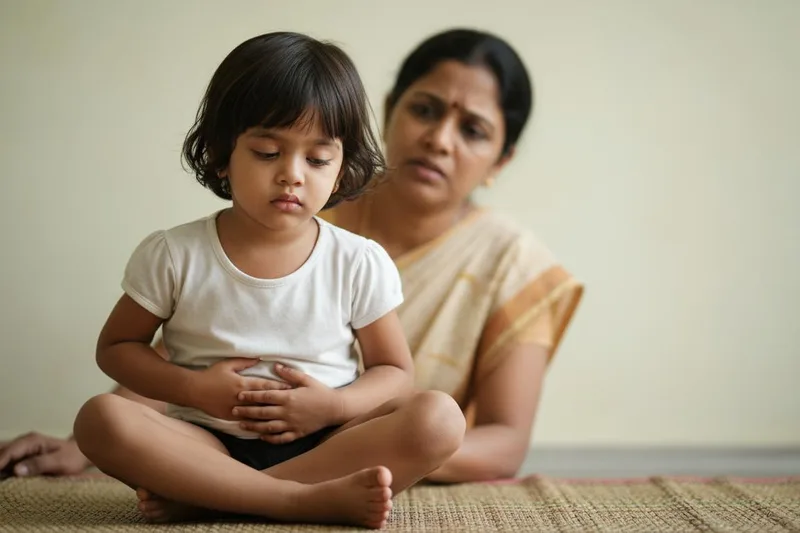
Does your little one always feel tired and lethargic? Does your child stand a little to the side when other children of the same age are running around and playing? Or does your child suddenly turn pale, sweat, and shiver during meals? As a parent, it is normal for you to feel very scared when you see these things. Although there can be many reasons for such symptoms, today we are going to talk about a very rare but very important condition that causes such symptoms. That is Glycogen Storage Disease, or (GSD) for short.
Simply put, what is Glycogen Storage Disease (GSD)?
Okay, let's understand this very simply. Imagine that our body is like a car. A car needs gasoline to run. Similarly, our body needs energy to do all of these things, to run, jump, think, and pray. The main source of energy in our body is glucose , which is simply sugar. We get this glucose from the carbohydrate foods we eat, such as rice, bread, and potatoes.
Now, when we eat, our body gets more glucose than it needs for energy at that moment. So what does our smart body do? It stores that extra glucose for later use. It's like keeping a power bank charged on our phone. This way of storing glucose is called glycogen . This glycogen is mostly stored in our liver and muscles .
When we don't eat, or when we expend a lot of energy, such as during exercise, our body converts that stored glycogen back into glucose and uses it as energy.
Here's this whole process, that is, to convert glucose into glycogen and glycogen back into glucose, our body needs a special type of protein. We call them enzymes . It's like having workers to work in a factory.
Glycogen Storage Disease (GSD) is a condition that occurs when one or more of these enzymes are missing or not working properly in our body. This means that the body is unable to properly store glycogen or use the stored glycogen when needed. This can lead to problems such as dangerously low blood sugar levels (hypoglycemia) and muscle weakness.
How many types of GSD are there?
Yes. As we discussed earlier, there are many types of enzymes involved in glycogen metabolism. So, there are many types of GSD depending on the deficiency of each of those enzymes. More than 19 types have been identified so far. While we don't know much about all of them, we do have a good understanding of some of the main types.
These types of GSD mainly affect the liver or muscles . However, some types can also cause problems in other parts of the body. Doctors name these types after the enzyme involved or the scientist who first discovered the disease. The most common of these is GSD type I, also known as von Gierke disease.
This is a very rare condition. Approximately one in 100,000 births develops the most common type, GSD type I. So don't be afraid.
What are the main symptoms of GSD? How do we recognize it?
GSD symptoms can vary depending on the type of disease and even between individuals with the same type. The most common type of GSD, type I, usually begins to appear when the baby is three to four months old . However, some types can present with symptoms much later, sometimes even in young adulthood.
The two main and most common symptoms are:
1. Low blood sugar levels (hypoglycemia)
2. Getting tired easily while exercising or playing (exercise intolerance)
Let's look at these symptoms in a little more detail.
| Symptom category | Symptoms that indicate |
|---|---|
| Symptoms of low blood sugar (Hypoglycemia) |
|
| Other Common GSD Traits |
Why does GSD develop? Is it a hereditary disease?
Yes, GSD is a completely hereditary disease . This means that the disease is caused by mutations in genes that are inherited from parents to children.
Most GSDs are inherited in an autosomal recessive pattern. Simply put, this means that for a child to develop the disease, both parents must inherit the mutated gene for the disease. If the gene is inherited from only one parent, the child will be a carrier and will not show symptoms.
However, a few very rare types, such as GSD type IX, are inherited in a pattern called X-linked inheritance . This means that the gene for the disease is on the X chromosome. If a boy inherits this gene, he will definitely develop symptoms.
How does the doctor diagnose this disease exactly?
Because GSD is a rare condition, it can take a while to diagnose. The doctor will first need to make sure that there are no other common conditions. After asking about your child's symptoms and examining your child, the doctor will often recommend several tests.
These may include:
- Fasting blood sugar test: Checking blood sugar levels before breakfast. If the sugar level is very low, it may be a sign of GSD.
- Ketone blood test: When the body can't use glucose for energy, it burns fat for energy. At that time, chemicals called ketones are produced. Ketone levels in the blood may be elevated in children with GSD.
- Checking blood cholesterol (Lipid panel) and uric acid levels: These levels are often elevated in children with GSD.
- Liver function tests: These tests help determine if the liver is damaged.
- Abdominal ultrasound: This helps to determine if the liver is enlarged (hepatomegaly).
- Genetic testing: This is the best way to confirm the disease. A blood sample is taken to check for mutations in the genes that produce enzymes related to GSD.
In some cases, to be 100% certain of the diagnosis, the doctor may recommend taking a small piece of tissue from the liver or muscle for examination (biopsy) .
What are the treatments for this? Is it completely curable?
Unfortunately, there is no cure for GSD yet. But don't worry. There are very effective treatments that can help control the symptoms and help the child live a normal life . Treatments vary depending on the type of disease.
The main goal is to prevent blood sugar levels from dropping dangerously low and maintain them at a stable level.
Here are some treatment methods:
1. Feed frequently: Especially young children, they try to keep their blood sugar levels stable by feeding them every few hours.
2. Use of Uncooked Cornstarch: This is a very important treatment method used in the management of GSD. Cornstarch is a complex carbohydrate that is difficult for our body to digest. Therefore, when a little cornstarch is dissolved in water and drunk, it slowly releases glucose into the blood. This can keep the blood sugar level stable for several hours. This method is very helpful in preventing low blood sugar especially during the night .
3. Treat hypoglycemia immediately: As soon as symptoms of hypoglycemia appear, glucose tablets or a sugary drink should be given to quickly restore blood sugar levels. Delaying this can lead to serious conditions such as seizures.
4. Treatment for other complications: For conditions such as high cholesterol levels (hyperlipidemia) and high uric acid levels (hyperuricemia), the doctor will prescribe the necessary medications (e.g. allopurinol, statins).
5. Enzyme Replacement Therapy (ERT): For some types of GSD, such as Pompe disease, there is a treatment that replaces the missing enzyme through an IV infusion. This is still being studied.
6. Liver Transplant: In cases where the liver is severely damaged due to GSD, a liver transplant may be necessary as a last resort.
The most important thing is to follow the instructions given by your doctor and dietitian exactly. Maintaining the exact timing and amount of meals and cornmeal is essential for the health of the child.
What complications can arise when living with this condition?
If the disease is not diagnosed early and managed properly, various complications can occur. These also vary depending on the type of disease. For example, untreated GSD type I can cause problems such as:
- Weakening of bones and easy breakage (osteoporosis)
- Delayed puberty
- Gout
- Kidney disease
- Non-cancerous liver tumors (hepatic adenomas)
- Polycystic Ovary Syndrome (PCOS)
- Frequent low blood sugar levels can affect brain function.
But remember, many of these complications can be prevented with early diagnosis, proper treatment, and management.
What is the life expectancy of someone with a GSD?
This depends on the type of disease, how early it is diagnosed, and how well it is managed. Some severe types can be fatal in infancy. But in most types, with proper treatment, a normal lifespan is possible. Your doctor will be able to give you the best explanation for your child's condition.
When should we see a doctor?
If your child is constantly showing the symptoms of low blood sugar that we discussed earlier (shaking, sweating, paleness), or if you feel that your child is not growing well or has weak muscles, be sure to see a pediatrician.
Because GSD is a complex condition, it is important to seek treatment from a doctor who has specialized knowledge in this area. Your child's medical team will support you in every way possible during this journey.
Take-Home Message
- Glycogen Storage Disease (GSD) is a rare, inherited condition that causes the body to be unable to properly store or use glucose (sugar).
- Frequent low blood sugar levels (hypoglycemia) and rapid fatigue during exercise are the main symptoms.
- Although this cannot be completely cured, by changing the diet (especially using corn flour) and proper medical treatment, the symptoms can be controlled and a normal life can be led.
- If your child has these symptoms, it is very important to consult a pediatrician as soon as possible without being unnecessarily alarmed.
- Many complications can be prevented by early diagnosis and proper management of the disease.


💬 Comments (0)
No comments yet. Be the first to share your thoughts here.
Add Your Comment