
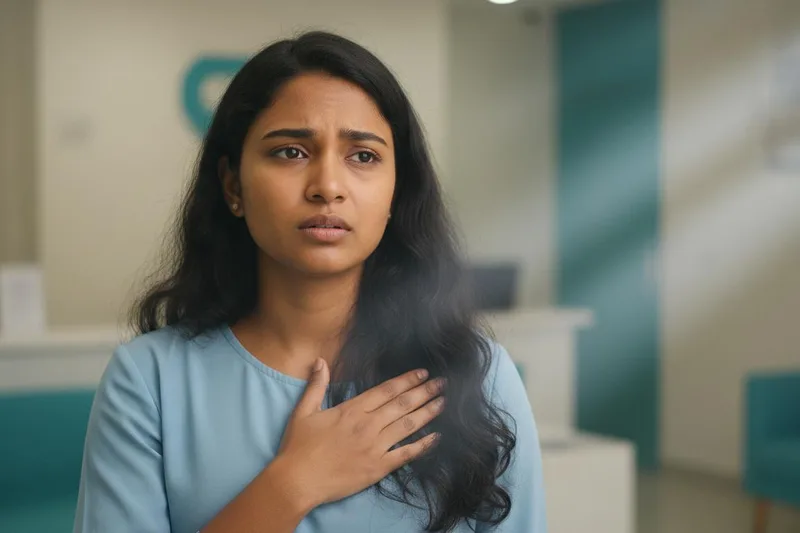
Do you sometimes feel like your heart is beating faster? Or do you feel like your heart is skipping a beat, like something is spinning inside your chest, or like it's moving violently? This is what we call 'Heart Palpitations' or the feeling of your heart beating abnormally. In fact, this is something that most people experience at some point in their lives. So don't panic right away, let's talk about this in detail and simply.
What are Heart Palpitations?
Simply put, 'Heart Palpitations' are when you feel a change in the way your heart beats. Normally, we are not particularly aware that our heart is beating, it just happens. But in this case, you suddenly feel your heart:
- It's like running very fast (`Racing`)
- Like being hit in the chest very hard (`Pounding`)
- It's like a heartbeat has been missed (`Missing a beat`)
- Like having an extra beat.
- Feeling like something is flipping inside the chest (`Flip-flopping`)
- Fluttering , like a butterfly fluttering slowly and strangely .
You may feel this abnormal heartbeat not only in your chest, but sometimes in your throat or neck area. This can happen at any time, even when you are just sitting, working, or sleeping. It is normal to feel a little startled and scared when you suddenly feel this. But most of the time, this is not serious and is not harmful . However, in rare cases, this can be a sign of an abnormal heart rhythm. In such cases, it is important to seek medical advice.
Who is most affected by this condition? How common is it?
In fact, anyone can experience this abnormal heartbeat. However, research has found that women are more likely to experience this condition . Also, it can be experienced at different times in life. For example, you can experience this type of heartbeat during adolescence, during pregnancy, or during menopause.
It's so common, one study found that 16% of people visit their primary care provider to discuss their palpitations. In fact, heart palpitations are the leading reason patients see cardiologists. So you can imagine how common this experience is.
How long can a heartbeat last?
Usually, this heartbeat doesn't last long. Most of the time, it lasts for a few seconds or a few minutes . However, sometimes it can last a little longer, even for several minutes.
What causes this heart palpitations?
Okay, now let's see why the heart starts beating strangely like this. There are actually many reasons that can affect this. Some of them are:
- Mental states:
- Severe anxiety
- Stress
- Sudden fear or shock (`Fear`)
- Uncontrollable panic attack (`Panic attack`)
- Lifestyle related things:
- Exercising (especially when you suddenly start strenuous exercise)
- Pregnancy
- Excessive consumption of beverages containing caffeine (coffee, tea, some soft drinks)
- Use of tobacco containing nicotine
- Alcohol use
- Use of certain drugs (e.g., `Cocaine`, `Amphetamines` (speed))
- Medical reasons:
- Overactive thyroid (Hyperthyroidism)
- Low blood sugar (Hypoglycemia)
- Decreased potassium or oxygen levels in the blood
- Decreased carbon dioxide levels in the blood
- Fever
- Anemia (blood deficiency)
- Excessive loss of water from the body (`Dehydration`)
- Massive bleeding (`Blood loss`)
- Medicines and other substances:
- Some types of inhalers used for asthma (`Asthma inhalers`)
- Some beta-blockers (medicines used for high blood pressure or heart disease) (especially when stopping their use or changing the dose)
- Drugs used for thyroid diseases
- Medicines used for irregular heartbeats (Antiarrhythmic medicines)
- Some cold/cough medicines (especially those containing `decongestants`)
- Some herbal and nutritional supplements
Imagine, if you eat a very spicy dish, drink a cup of coffee afterwards, and are a little nervous, you can still get a heart attack like this!
When can this heartbeat be felt more?
This heart palpitations can occur at various times in life. Let's look at some examples:
- When anxiety increases: As we mentioned before, when you feel anxious, afraid, or worried, this heart rate can occur as the body's way of responding to it.
- After eating: Some people feel their heart racing after eating. This can happen especially after eating spicy, oily, or spicy foods , or after drinking caffeinated beverages (such as coffee or tea), or after drinking alcohol.
- At night: This heart palpitations can occur both during the day and at night. However, it is more likely to be felt at night because we are not engaged in other activities and the surroundings are quiet.
- When lying on your side: Sometimes when you lie on your side, especially when sleeping on your left side, the pressure inside the body can increase and cause a rapid heartbeat.
- All day: Usually, palpitations are short-lived. However, if you have palpitations all day long , you should definitely seek medical advice.
- During pregnancy: This is something that many people experience during pregnancy. This is because your heart rate and the amount of blood circulating in your body increase to provide the baby with the nutrients and oxygen it needs. This is usually not harmful. However, you can ask your doctor about taking a safe medication during pregnancy.
How does a doctor diagnose this?
When you go to see a doctor about this heart murmur, he will first listen to your heart and lungs with a stethoscope. In addition, he will ask you about the following:
- Your complete medical history ( previous illnesses, medications, etc.).
- What symptoms you are currently experiencing ( such as just palpitations, or are there other symptoms as well?)
- Your diet ( such as what you eat, caffeine, and alcohol consumption).
- Medications and herbal products you are currently using .
Also, it would be helpful if the doctor could tell you the following details about your heartbeat:
- When and how often does this happen?
- How long has it been ?
- What kind of feeling do you get when this happens (like feeling dizzy, dizzy)?
- What were you doing when this started?
- What makes you feel good and relieved when you do it ?
You may miss this heartbeat when you go to see the doctor. If that happens, the doctor may ask you to tap your fingers on the table to show the rhythm.
What kind of tests will be done?
To find the exact cause, the doctor may also order some tests. Some of them are:
- Blood tests: Check for things like anemia, thyroid problems, and electrolyte imbalances.
- Urine tests: If necessary.
- Electrocardiogram (ECG/EKG): This records the electrical activity of the heart. If there is a heartbeat at that time, it is recorded.
- Stress test (Exercise ECG): An ECG is taken while you run on a treadmill or ride a bike to see how your heart responds.
- Echocardiogram: This is an ultrasound scan of the heart. It can look at things like the structure of the heart and the function of the valves.
- Holter monitor: This is a small device that you wear for 24 or 48 hours, or even longer. It continuously records your heart's ECG. It also asks you to record when you feel your heartbeat.
- Electrophysiology study (EPS): This is a more complex test. It looks at the heart's electrical system in detail to find areas where abnormal rhythms are occurring.
- Cardiac catheterization: If necessary, this test is performed to check for blockages in the blood vessels of the heart.
You may also need to see an electrophysiologist, a doctor who specializes in abnormal heart rhythms (arrhythmias).
What is the treatment for this? (`Treatment`)
The best treatment for you will depend on the cause of your palpitations. You may not need any treatment at all . For example, if your palpitations are triggered by coffee or anxiety, you may be able to avoid those things.
However, if you are diagnosed with heart disease or an abnormal heart rhythm, you may need to take medication, have a procedure, have surgery, or have a device like a pacemaker to control your heart rate . The most important thing is to follow all of your doctor's instructions and go to follow-up appointments.
What can I do to stop the heartbeat?
If your heart palpitations are caused by anxiety or stress, you can:
- Do yoga .
- Do meditation .
- Do a mindfulness exercise that focuses on breathing .
- Engage in other activities that calm the mind.
Also, if you think this is caused by caffeine, you will need to limit or completely stop drinking caffeinated beverages like coffee and tea.
Will this heartbeat go away?
In most cases, if your heart palpitations are caused by something you eat or do (e.g., smoking, alcohol, caffeine, spicy foods, excessive exercise), avoiding those triggers can help them go away without medical treatment .
But, as mentioned before, if there is an underlying heart condition or an abnormal heartbeat, it definitely needs to be treated.
How to prevent heart attack? (Prevention)
Depending on the cause of your heart palpitations, you can reduce the frequency of these conditions by following these tips:
- Reduce your stress . Try things like deep-breathing exercises, relaxation exercises, yoga, tai chi, guided imagery, or biofeedback techniques.
- Avoid or limit the amount of alcohol you drink.
- Avoid or limit the amount of caffeine in your diet.
- Do not use tobacco or products containing nicotine .
- Exercise regularly . But before you start, ask your doctor what exercises are right for you.
- Avoid foods, drinks and activities that increase heart rate.
- Control your blood pressure and cholesterol levels .
Is heart palpitations dangerous? Is this normal?
No, most of the time, palpitations are not dangerous . This is very common. Most of the time, this is just a normal response of the body to stress or anxiety. People with this condition can go about their normal lives as usual.
When should you see a doctor?
This is very important. Even if it is a normal heartbeat, in some cases you should seek immediate medical attention.
Call 1990 (Sri Lankan Ambulance Service) immediately or go to the nearest hospital if the heartbeat does not stop, or if it is accompanied by these symptoms:
- Passing out or fainting .
- Severe pain, pressure, or tightness in your chest, neck, jaw, arm(s), or upper back .
- Severe trouble breathing / Shortness of breath .
- Severe dizziness or lightheadedness .
If you have occasional palpitations but don't have any of the severe symptoms mentioned above, see your family doctor. Also, if your palpitations get worse or suddenly start happening more frequently , be sure to let your doctor know.
When should you be concerned about a heart attack?
Although heart palpitations are usually not dangerous, if they are accompanied by these symptoms, it could be a sign of a serious health problem. So be aware of these:
- Feeling dizzy, confused, or lightheaded.
- Chest pain or pressure.
- Shortness of breath.
- Unusual sweating.
- If the heart palpitations are getting worse or are occurring more frequently.
What questions should you ask the doctor?
When you go to see the doctor, you can ask these questions. This will help you get a better understanding of the situation:
- "Doctor, why is my heart palpitations?" (`What's causing my heart palpitations?`)
- "Do I need treatment for my heart palpitations?"
- "How long will I have heart palpitations?"
- "What changes do I need to make in my lifestyle?"
- "What symptoms should I be especially aware of?"
So, the most important things to remember are:
Heart palpitations (meaning rapid, irregular, or fluttering heartbeats) are not something we usually feel, so when we suddenly feel them, they can be a little startling and frightening. However, most of the time, they are not harmful . Most of the time, they are caused by things like stress, anxiety, and the foods we eat.
However, if you experience other severe symptoms such as dizziness, chest pain, shortness of breath, or fainting when your heart palpitations occur, it could be a sign of a serious medical problem . In such a case, it is important to seek medical advice immediately without wasting any time .
Don't be afraid, but take care of your body. Because your health is very important to you!
` Heartbeat, heart pounding, chest pain, abnormal heartbeat, heart palpitations, anxiety, stress


💬 Comments (0)
No comments yet. Be the first to share your thoughts here.
Add Your Comment