

Have you ever heard the word `Hemangioblastoma`? It may sound a bit complicated, but it is a type of small tumor that can develop in our body, especially in the brain, spinal cord, or inside the eye. Don't worry, we will talk about it simply, in a way that you can understand.
Is this cancer?
Many people immediately get scared when they hear the word 'tumor', thinking, "Oh, I don't know if this is cancer." I'm happy to tell you, this `Hemangioblastoma` is not cancer. Medically speaking, these are benign or "non-malignant" tumors. That means they don't spread to other parts of the body like cancer.
However, even though these are not cancerous, they can cause some minor problems. One is that sometimes more than one of these tumors can be present in the body. The other reason is that as this tumor gradually grows, it starts to press on the important tissues and nerves around it. That's when all sorts of symptoms start to appear. It's like having a large object in a small room and there's not enough room for the rest of it.
Who is more likely to develop this?
Now you may be wondering, "Who is more likely to develop this?" Actually, a condition called `Hemangioblastoma` can develop in anyone, at any age. However, according to doctors' observations, this condition is more common among young adults .
In addition, there is another special case. That is the genetic disease called `Von Hippel-Lindau (VHL) disease`. This is a rare, hereditary condition. People with `(VHL)` disease are much more likely to develop `Hemangioblastoma` tumors than others. Just think, according to statistics, about 60% of people with `(VHL)` disease can develop these tumors inside the eye. Also, about 80% are said to have the possibility of developing these tumors in the brain or spinal cord. So, there is a big connection between `(VHL)` disease and `Hemangioblastoma`.
How does a hemangioblastoma affect the body?
Now let's see how this tumor affects our body. Its effect is mainly determined by the location of the tumor and its size.
In particular, if this tumor develops in the brain or spinal cord, it can block the flow of `Cerebrospinal fluid (CSF)`, which is essential for our brain and spinal cord. This `(CSF)` is, simply put, a clear, water-like liquid that surrounds our brain and spinal cord, providing them with cushioning and nourishment. If this `(CSF)` flow is obstructed by a tumor, the pressure inside the brain can increase, causing symptoms such as severe headaches. Also, depending on the location of the tumor, the nerves in the area may be compressed, causing the nerves to function.
How common is this?
Actually, `Hemangioblastoma` is not a very common type of tumor. If we take the total number of tumors that develop in the brain, `Hemangioblastoma` accounts for 0.5% of them, which is a very low percentage, about one in two hundred. If we take the types of tumors that develop in the spinal cord, it is about 2%. If we look at the statistics in a country like America, it is said that about 24 out of 100,000 adults have some type of tumor in the brain or nervous system. So `Hemangioblastoma` is a very small percentage of them. Therefore, this is not a disease that affects everyone.
What are the symptoms?
The symptoms of this `Hemangioblastoma` tumor may vary slightly depending on where it develops. Let's see how that works.
If you have a spinal cord hemangioblastoma:
If this tumor develops in your spinal cord, the nerve cord inside your spine, you may experience symptoms like these:
- Constipation or fecal incontinence.
- Difficulty urinating (urinary retention) or inability to control urination (urinary incontinence).
- A feeling of numbness or tingling in the limbs or parts of the body.
- Muscle weakness , sometimes making it difficult to walk.
If you have a Hemangioblastoma in the brain:
If a tumor like this develops inside the brain, it is considered a brain tumor. Then you may see symptoms like:
- Balance problems, like a drunk person, may occur.
- Frequent headaches , sometimes worse in the morning.
- Nausea or vomiting , especially in the morning.
If you have a hemangioblastoma in the retina:
If a tumor develops in the retina, the layer of tissue at the back of the eye that records the images we see, it is considered an eye tumor. Here are some things that can happen:
- Retinal detachment , which can lead to loss of vision.
- Gradual or complete loss of vision .
- Eye pain and swelling .
What are the reasons?
In most cases, it is difficult to find a clear, specific cause for the development of `Hemangioblastoma`. That is, they can occur without a specific cause (sporadic). However, as mentioned earlier, it has been found that about one in four patients has a genetic condition called `Von Hippel-Lindau (VHL)` that causes this tumor. That is, people with `(VHL)` are at higher risk of developing this tumor.
How do you recognize this? (Diagnosis)
If you have one or more of the symptoms mentioned above, when you see a doctor, he or she will first ask you about your symptoms. He or she will also ask about your other medical conditions and whether anyone in your family has had similar conditions (family history). Then, several tests may be done to confirm the diagnosis and determine the location and size of the tumor.
- CT scan (Computed Tomography scan): This uses a series of X-rays and a special computer to take cross-sectional images of various tissues inside the body.
- MRI (Magnetic Resonance Imaging): This uses strong magnetic fields and radio waves to produce very clear, detailed pictures of organs and soft tissues inside the body. This is a very important test for diagnosing conditions such as hemangioblastoma.
- Angiography: This involves injecting a special dye into a blood vessel to make tumors like hemangioblastoma in the blood vessels more visible on an X-ray or MRI/CT scan. Because these tumors grow in blood vessels (vascular tumors), this test can also give a good idea of their blood supply.
What is the treatment?
Okay, now let's see what treatments are available for `Hemangioblastoma.` The treatment method is determined by many factors, such as the size of the tumor, its location, and your overall health.
- Surgical resection: This is the method most often recommended by doctors. In this, the doctor or nurse makes an incision in the skin and uses surgical instruments to remove the tumor. The main goal here is to remove as much of the tumor as possible while minimizing damage to surrounding healthy tissue, especially nerves.
- Radiation therapy: Sometimes, if surgery cannot completely remove the tumor, or if the tumor has come back, radiation therapy is used. This involves using very precisely targeted, powerful radiation beams to destroy tumor cells or shrink the tumor. There are special methods for this called stereotactic radiosurgery. How long and how much radiation therapy is given depends on factors such as the location of the tumor and your past medical history.
- Observation: Sometimes, if the tumor is very small, there are no symptoms, or if the location of the tumor makes it too risky to remove it surgically, doctors may recommend that you do nothing for now, but keep an eye on it with regular MRI scans and follow-up visits. This is to see if the tumor is getting bigger or if you have new symptoms. If you have multiple tumors and they are growing steadily and slowly, you may want to consider this approach.
- Drug treatment: Research is currently underway to find drugs that can stop the growth of these tumors or shrink them. Especially for those with `(VHL)` disease, a drug called `(Belzutifan)` is currently showing successful results for `(VHL)` related tumors, including `Hemangioblastoma`. However, these are still new treatments, they are not suitable for everyone, and should be taken only on the advice of a doctor.
Can it be cured completely?
This is an important question for many people. Every patient with `Hemangioblastoma` is different, so it is difficult to give a single answer for everyone.
Imagine, if a person has only one `Hemangioblastoma` tumor, and it can be completely and safely removed with surgery, the chances of it growing back in the same place are very low. That means there is a high chance of recovery.
But some people may have more than one tumor (especially those with VHL). Or, the tumor may be located deep in the brain or in a sensitive area that is difficult to remove. In such cases, talking about a complete recovery is a little more complicated. Therefore, it is important to talk to your medical team about what to expect based on your situation.
Are there other risk factors?
Yes, as we have said many times before, if you have the genetic condition `Von Hippel-Lindau (VHL)` disease, your risk of developing `Hemangioblastoma` is significantly higher. So, if a doctor diagnoses `Hemangioblastoma`, especially if you are young or have multiple tumors, they may also test for `(VHL)` disease.
What is the prognosis for recovery?
The prognosis for a hemangioblastoma is generally good, especially if the medical team is able to completely remove the tumor. Also, if the tumor has not caused long-term symptoms, such as permanent nerve damage, the chances of recovery are high.
Even after the tumor is removed, you will still need to see your doctor for regular check-ups . These check-ups may include things like an MRI scan. Doing this will help to identify and treat any recurrences (especially in people with VHL) early on. So, following your doctor's instructions exactly and going to the clinics on time is very important for your well-being.
What questions should you ask the doctor?
If you have a hemangioblastoma, or think you might have one, it's a good idea to ask your doctor questions like these:
- "What is the most likely cause of my symptoms?"
- "What is the chance that I have another underlying medical condition (for example, VHL disease) that caused me to develop a `Hemangioblastoma`?"
- "What are the treatment options for my `Hemangioblastoma`? What are the pros and cons of each treatment?"
- "What side effects can I expect after these treatments?"
- "What is the chance of a `Hemangioblastoma` developing again after the tumor is removed?"
- "How often should I come for check-ups?"
It will be very helpful for you to get a clear understanding of your condition by asking these questions. Don't be afraid to talk to your doctor about everything that is on your mind, no matter how small. Only then will you be able to get the best treatment.
Remember as a summary (Take-Home Message)
Okay, so let's summarize what we've talked about.
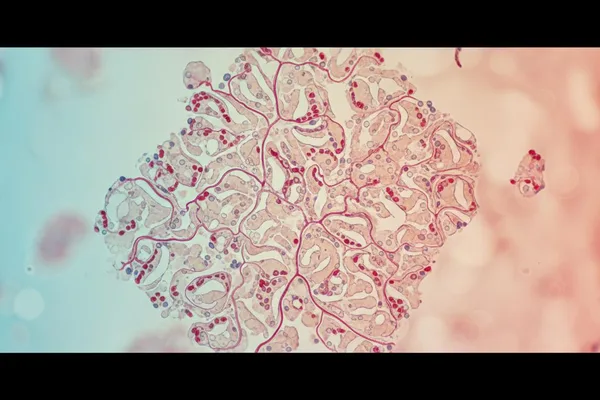
Hemangioblastoma is a non-cancerous (benign) tumor that forms from blood vessels. They are most commonly found in your brain, spinal cord, or retina .
As this tumor grows, it can push on the surrounding tissue and cause neurological symptoms.
Most often, doctors will remove the tumor with surgery. If the tumor is completely removed, the chances of it coming back are low . However, people with genetic conditions like `Von Hippel-Lindau (VHL)` are at higher risk of developing these tumors, possibly even multiple tumors, and are more likely to come back.
Therefore, if you have any of the symptoms mentioned in this article, especially if they persist or worsen, it is best to see a doctor as soon as possible for advice. Remember, the earlier the diagnosis, the more likely it is that treatment will be successful. Don't worry, with proper medical treatment and guidance, these conditions can be managed and lived successfully.
` hemangioblastoma, brain tumors, spinal cord tumors, eye tumors, Von Hippel-Lindau, benign tumors, blood vessel tumors




💬 Comments (0)
No comments yet. Be the first to share your thoughts here.
Add Your Comment