

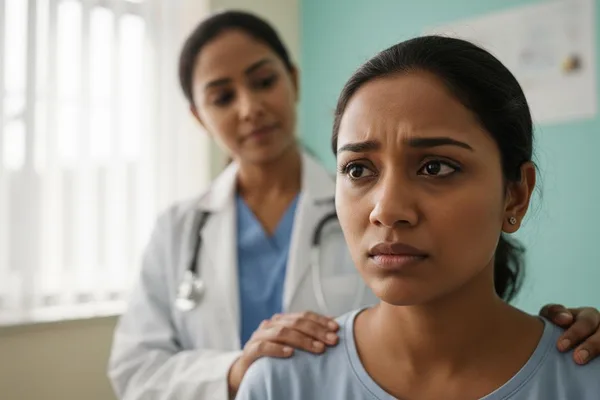
Has your doctor told you that you need to have breast surgery? When you hear that news, a lot of things come to mind, right? "Is it scary?", "Will it hurt a lot?", "What will my life be like after the surgery?" You probably have a lot of questions running through your mind. It's actually normal to have such thoughts. So don't be afraid or upset. Let's talk about this in a very simple way that you can understand. You will find answers to all your questions in this article.
Why would someone want to have breast surgery?
When people think of breast surgery, they think of it as being done for breast cancer. That's true, these surgeries are done for cancerous conditions. However, breast surgery isn't just about cancer. There can be many other reasons.
Simply put, these surgeries are performed to treat things like breast lumps or to change the appearance of the breasts. Here are some reasons why you might need surgery:
- Breast Cancer: This is the main and most common cause. Surgery is necessary to remove the cancer cells.
- Having a Noncancerous Lump: Sometimes, not all lumps that develop in the breast are cancerous. However, if such lumps cause pain, discomfort, or if you want to confirm whether they are cancerous or not, they may be removed surgically.
- Having a higher risk of developing breast cancer: Some people have a higher risk of developing cancer in the future if someone in their family (such as a mother or sister) has had breast cancer, or if they have certain mutations in the BRCA1 or BRCA2 genes. In such cases, mastectomy can be done as a precautionary measure before cancer develops.
- Pain due to breast enlargement: Some women experience long-term pain in the neck, back, and shoulders due to breast enlargement. Breast reduction surgery can be performed to relieve this pain.
- Changing the appearance based on personal preference: Someone who is not satisfied with the appearance of their breasts can undergo cosmetic surgeries to change their size or shape.
What are the main types of breast surgery?
Breast surgery can be divided into two main categories. One is surgery to treat cancer and other medical conditions. The other is surgery for cosmetic reasons. Let's look at these two separately.
| Surgeries for cancer and diseases | |
|---|---|
| Name of the surgery | Simply explained |
| Breast Biopsy | Taking a small piece of tissue from a lump or suspicious area in the breast and examining it under a microscope to see if it is cancerous or not. |
| Lumpectomy | Removing only the cancerous tumor and a small amount of tissue around it. The entire breast is not removed. |
| Mastectomy | Surgical removal of the entire breast. This decision is made depending on the extent of the cancer's spread. |
| Axillary Lymph Node Dissection | Removing some or all of the lymph nodes in the armpit to see if the cancer has spread or to remove cells that have spread. |
| Prophylactic Mastectomy | Removing the breast as a precautionary measure in someone at high risk, before cancer develops. |
| Surgeries performed for cosmetic reasons | |
|---|---|
| Name of the surgery | Simply explained |
| Breast Augmentation | Insertion of implants to increase breast size. |
| Breast Reduction | Breast reduction surgery removes excess tissue, fat, and skin to eliminate the pain and discomfort caused by large breasts. |
| Breast Reconstruction | A mastectomy is a surgery to reconstruct the shape of a breast after a breast has been removed due to cancer. This can be done using implants or tissue taken from elsewhere in the body. |
What happens before the surgery?
No matter what type of surgery you're going to have, you'll need to meet with your surgeon before it happens. What happens there may vary slightly depending on the purpose of your surgery.
If you have cancer surgery...
- They look at all your medical records to determine exactly what the size and location of the cancer is.
- We will explain your treatment options, including what type of surgery is best for you and how long it will take to recover after surgery.
- You will be informed about the possible side effects and complications of the surgery.
- Perhaps, if the breast is removed, we can also talk about breast reconstruction surgery afterwards.
- Your breasts will be measured and pictures taken. These pictures are taken to monitor your healing after surgery. These are kept very confidential and only the medical team treating you will have access to them.
If you have cosmetic surgery...
- Your health will be checked to make sure you are physically fit enough to undergo this type of surgery.
- We will talk to you about why you are considering this type of surgery . It is important to understand what your expectations are.
- Explains what the results will be like after surgery.
- We are talking about the possible side effects and risks of this surgery.
- Also, measure your breasts and take pictures .
This is the best time to ask your doctor all your questions and fears. Don't hold back, even the smallest ones. Ask anything, like "What will my breasts look like after surgery?", "Will they change over time?", "Will I be able to breastfeed?"
What happens during the surgery?
Although each surgery has its own unique steps, these things generally occur in all breast surgeries.
1. Anesthesia
Before the surgery begins, you will be given anesthesia to prevent you from feeling any pain. This can be done in two ways.
- General Anesthesia: This is where you are completely asleep. You will not feel anything during the surgery. This method is used for major surgeries (such as mastectomy, breast augmentation).
- Local Anesthesia: This method numbs only the area of the breast where the surgery is being performed. You are conscious. This method is used when doing something small, like a biopsy.
2. Incisions
The surgeon makes an incision in the skin of the breast. This incision is made to reach the tissue inside the breast. Through it:
- Take a piece of tissue to check.
- Removing a cancerous tumor.
- Breast tissue is removed.
- An implant is inserted.
After the surgery is complete, this incision is closed with stitches. It is then covered with a clean gauze bandage.
3. Surgical Drains
After some major surgeries, blood and other body fluids can collect inside the incision. If fluid collects in this way, the wound is more likely to become infected. To prevent this, the surgeon may insert a thin tube (drain) that comes out of the incision. This tube allows the extra fluid to drain out. These are usually inserted after surgeries such as `Mastectomy`, `Breast Reconstruction` and `Breast Reduction`.
Are there any risks with these surgeries?
Like any major surgery, breast surgery carries some risks. However, these risks vary depending on the type of surgery you are having. Your doctor will explain the specific risks to you clearly. The most common risks are:
- Complications due to anesthesia.
- Excessive bleeding.
- Feeling more pain than expected.
- Scarring at the surgery site.
- Infection of the wound.
What to expect after surgery?
The medical team will give you lots of advice to help you recover quickly after surgery. They know it can be hard to remember all of this at once, so don't hesitate to ask again if there's anything you don't understand.
For example, they will tell you these things:
- What kind of special bra or bandage should I wear after surgery?
- How to care for the incision (wound) after going home.
- If a surgical drain has been placed, how to remove the fluid that collects in it.
During the early stages of recovery, you will need to rest a lot. Your medical team will also tell you what not to do. For example, you may be told not to drive for a few weeks.
It takes time for the body to fully recover after breast surgery. This time varies depending on the type of surgery you had. For example, it can take about a month to fully recover from breast reconstruction surgery. However, it can take even longer, sometimes several months, to recover from a mastectomy.
When should I call the doctor immediately?
It is very important to inform your doctor immediately if you develop any risk symptoms after you go home. If you have any of the symptoms in the table below, do not ignore them.
| Risk symptoms that require immediate medical attention | |
|---|---|
| Risk characteristic | Description |
| Heavy bleeding | If the wound is bleeding more than expected. |
| Opening of the wound | If the stitches break and the wound opens (this is called Wound Dehiscence ) |
| Fever | If the body temperature is 38.3 degrees Celsius (101 Fahrenheit) or higher. |
| Constant pain | If the pain persists despite taking painkillers. |
| Redness and swelling of the wound | If the skin around the wound is red, or there is swelling in the arm, under the armpit, or near the wound. |
| Pain when touching the wound | If the area around the wound hurts badly when touched. |
Do men also have breast surgery?
Yes. Although many people don't know it, there are times when men also have to undergo breast surgery. Men can also develop breast cancer. At such times, they also need to undergo surgery. In addition, surgery is sometimes performed for a condition called `Gynecomastia`, which is the abnormal enlargement of the breasts in men.
Finally, breast surgery is an experience that affects both the body and the mind. You may experience a variety of emotions. It is normal to feel sadness, fear, and anger. The medical team treating you will understand those feelings. So, if you need help or support during this journey, never hesitate to ask for it.
Take-Home Message
- Breast surgery is not only performed for cancer. It is also performed for a variety of reasons, such as non-cancerous tumors, pain relief, and cosmetic reasons.
- Before your surgery, openly discuss all your fears and concerns with your doctor. Don't hold anything back.
- Understand well what kind of surgery you are going to have and what to expect from it.
- It takes time to heal after surgery. Be patient with your body. Get the rest you need.
- Be aware of potential risk symptoms (fever, excessive bleeding, swelling) after surgery. If you notice any of these symptoms, notify your doctor immediately.




💬 Comments (0)
No comments yet. Be the first to share your thoughts here.
Add Your Comment