
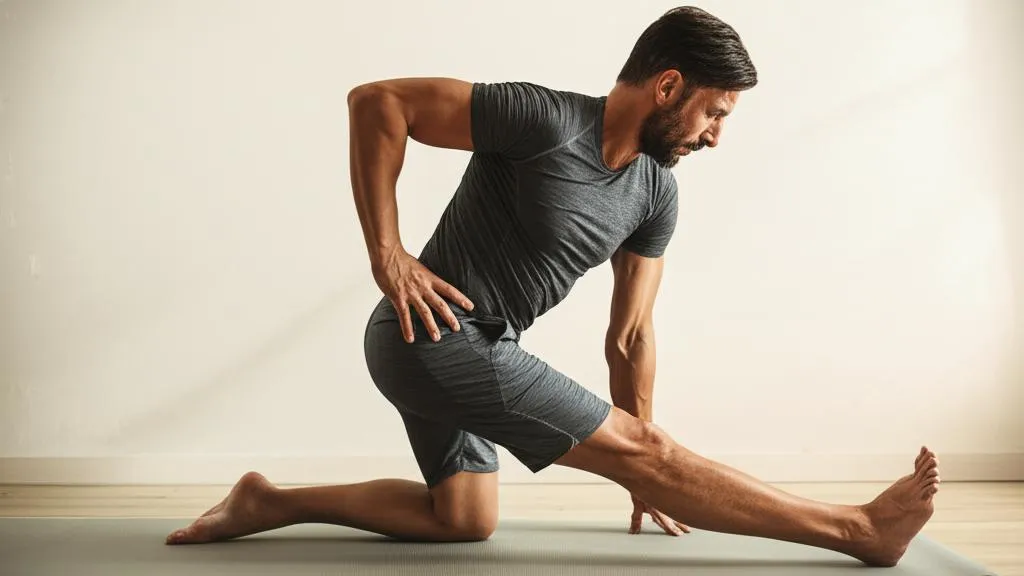
Do you wake up every morning with a stiff back and dull pain that makes it hard to start your day? Or maybe you notice a deep, nagging ache in your hips and buttocks that never quite goes away. You might think this is just normal soreness from a busy work week or a tough workout. However, these signs could point to a specific condition known as ankylosing spondylitis.
Simply put, ankylosing spondylitis is a type of inflammatory arthritis that targets your spine and large joints, such as your hips. Over time, this ongoing swelling and irritation can make your spine and hips feel rigid, making it harder to bend or twist freely. While hearing this diagnosis can feel overwhelming, you do not have to let it control your life. One of the best ways to manage your symptoms, protect your joints, and stay active is through targeted, gentle exercise.
🌿 Key Takeaways for Managing Ankylosing Spondylitis
- Ankylosing spondylitis causes inflammation in your spine and hips, leading to stiffness and pain.
- Gentle hip-strengthening exercises improve your balance, reduce fall risks, and protect your joints.
- Always talk to your doctor or physical therapist before starting any new workout routine.
- Consistency is key. Slow, steady, and daily movement yields the best long-term results.
- Never push through sharp pain. Listen to your body and rest when you need to.
Know your body mass index (BMI) and weight classification
Why Hip-Strengthening Exercises Matter So Much
If you live with ankylosing spondylitis, keeping your hip muscles strong is vital for your daily mobility. This condition often affects your hip joints, causing pain and reducing how far you can move your legs. Adding the right exercises to your routine does more than just control your symptoms. It brings powerful benefits that protect your overall physical health.
Before you begin any physical routine, you must talk to your doctor or a licensed physical therapist. They will check your specific health needs and make sure these movements are safe for you. They can also show you how to perform each movement correctly to avoid injury.
Let us look at the main benefits you gain from regular hip exercises:
| Main Benefit | What It Means For You |
|---|---|
| Lower Risk of Falls and Fractures | Strong hip muscles improve your balance and stability. This lowers your chances of tripping, slipping, or falling unexpectedly. |
| Better Joint Movement | Active stretching increases your hip range of motion. Walking, sitting, and standing become much easier with less stiffness. |
| Healthier Walking Posture | Pain and stiffness often change how you walk. Strong hips give you the support you need to walk tall and evenly. |
| Reduced Back Pain | Your hips and back work closely together. Strengthening your hips takes excess pressure off your spine to ease back pain. |
Effective Exercises to Strengthen Your Hips
You can easily perform these exercises right in the comfort of your home. Remember to listen to your body at all times. Never force a movement if you feel sharp pain. Start slowly and build up your confidence over time.
1. Seated Leg Press and Inner Thigh Stretch
This gentle movement helps stretch the muscles along your inner thighs and groin.
- Sit upright on a sturdy chair or on a comfortable exercise mat on the floor.
- Bring the soles of your feet together, drawing your heels as close to your groin as comfortable.
- Gently press your knees downward using your hands to feel a mild stretch in your inner thighs.
- Hold this stretch for fifteen to twenty seconds while breathing smoothly.
- Release your hands slowly and return to your starting seated position.
2. Glute Bridge
This classic exercise strengthens your buttocks, lower abdominal muscles, and lower back. Because it places very little stress on your knee joints, it is ideal if you have knee discomfort.
- Lie flat on your back on an exercise mat with your knees bent and feet flat on the floor.
- Keep your feet spaced about shoulder-width apart and your arms resting flat by your sides.
- Press down firmly through your feet and shoulders, then lift your hips toward the ceiling until your body forms a straight line.
- Squeeze your glute muscles gently at the top and hold for two to three seconds.
- Lower your hips back down to the floor in a slow, controlled motion.
- Repeat this movement for ten to fifteen repetitions per set.
3. Clamshell Exercise
This exercise targets the outer hip muscles, improving how your hip and knee joints work together.
- Lie on your side on the mat with your knees stacked and bent at about a forty-five-degree angle.
- Rest your head comfortably on your lower arm and keep your upper body relaxed.
- Keep your feet pressed firmly together as you lift your upper knee as high as you can.
- Make sure your pelvis and hips do not roll backward while you lift your leg.
- Keep your lower leg resting flat on the floor.
- Hold your top knee open for one to two seconds, then lower it slowly back down.
- Complete fifteen repetitions on one side before turning over to repeat on the other side.
- For an extra challenge, place a light resistance band just above your knees.
4. Plank Exercises for Core and Hip Stability
Planks build total body strength, focusing heavily on your core muscles to support your spine and hips.
- Side Plank: Lie on your side, prop yourself up on your forearm, and lift your hips off the floor. Keep your body in a straight line, hold for twenty to thirty seconds, and switch sides.
- Side Plank with Abduction: Get into a standard side plank position. While keeping your body stable, lift your top leg straight up toward the ceiling. Hold this position for a few seconds before lowering your leg.
- Side Plank with Leg Raises: Hold a side plank and slowly raise and lower your top leg in a controlled motion without touching your bottom leg. Complete ten to twelve repetitions per side.
Add these movements to your weekly routine. Even if they feel difficult at first, regular practice will increase your strength, flexibility, and balance. You will soon notice a remarkable drop in your daily joint stiffness.
🚨 When to Call Your Doctor Right away
While exercise is fantastic for ankylosing spondylitis, certain warning signs require immediate medical attention. Call your doctor or seek urgent medical care if you experience a sudden, severe spike in pain, a high fever, sudden numbness or weakness in your legs, or loss of bladder control. If you experience a traumatic fall or severe injury, call emergency services at 911 (US/Canada) or 999 (UK) or go to your nearest Emergency Department right away.
💡 Take-Home Message
Living with ankylosing spondylitis can feel challenging, but proper management makes a huge difference. Regular exercise is one of the most powerful tools you have.
- Ankylosing spondylitis is manageable with the right daily care and exercise plan.
- Strengthening your hips reduces pain, improves balance, and makes daily tasks easier.
- Always consult your doctor or physical therapist before starting any new physical program.
- Listen closely to your body and avoid any movement that triggers sharp pain.
- Consistency brings success, so stick with your routine and enjoy the long-term benefits.






No comments yet. Be the first to share your question or experience below.