
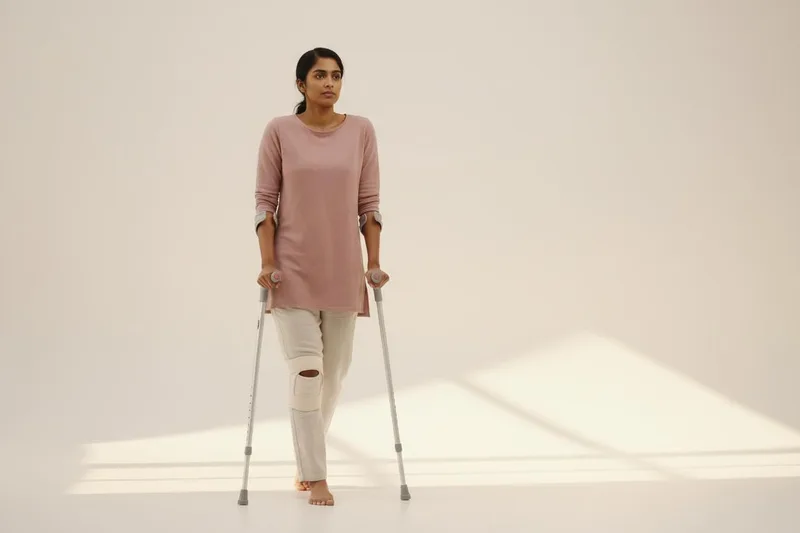
How to use crutches correctly? Let's learn everything!

How to use crutches correctly? Let's learn everything!

It's very common to have to use crutches for a while after an injury to your leg or surgery. Although it may seem a little awkward and annoying at first, once you learn how to use them properly, you'll find them very comfortable. Crutches are like your best friend, helping you get up, walk, and do your daily activities without putting any weight on your healing leg, knee, or ankle, giving it the rest it needs. So, don't worry. In this article, we'll talk about how to use crutches correctly and safely.

What are the types of crutches?

There are several types of crutches that your doctor can recommend. But there is one that is the most popular and commonly seen among us in Sri Lanka. Let's see what it is.

Type of crutch Simply a description
Underarm/Axillary crutches This is the type that we are all familiar with and most commonly used. It has a padded section to place under the armpit, a handgrip, and two straight poles.
Forearm crutches Some people also call these elbow crutches. These are usually shorter than the above type. They have a cuff that fits over the upper arm, just above the elbow, and a handle to hold onto.
Gutter crutches This type is less common than the other two. It has a padded pocket-like part on top of a straight pole that can be used to hold the forearm. It has a handle on the front.

Your doctor will decide which type is right for you and how long you should use it. A physiotherapist will also teach you how to use them properly.

How much weight can you put on the bad leg?

This is a very important question. Your doctor will decide how much weight you can put on your healing leg. He or she may use words like this when talking to you about this.

  • No weight bearing: This means that you should not put any weight on your affected leg or put any weight on it . You should keep that leg fully elevated while walking.
  • Toe touch for balance only: This means that you can lightly touch your big toe to the ground just to maintain balance. Don't put any weight on it. It's like placing an egg on the ground and holding it there until it breaks.
  • Partial weight bearing: Here the doctor will tell you that you can bear about 50% of the weight. This is not an exact number of kilos. Imagine that you are walking normally, now mentally reduce the weight by about half of that weight, and bear that amount of weight.
  • Weight bearing as tolerated: This means that you can walk with as much weight as you want as long as you don't feel any pain or discomfort. However, if you feel any pain, don't force yourself to put weight on it.

How to adjust crutches to your height

Before using crutches, it is essential to adjust them to your height. Failure to do so can cause discomfort and other problems.

  • Height adjustment: Many crutches have a mechanism that allows you to adjust the height. Ask your doctor or physical therapist for help in getting it right.
  • The right measurement: When you're standing straight, the top pad of the crutch should be about two inches (two finger widths) below your armpit . That means it shouldn't be right under your armpit.
  • Handgrip: The handgrip should be in line with your hip. It should be at the level where your arm is just bent at the elbow.

The most important thing: Always support your body weight by holding the handles of the crutches with both hands, and then using your arms. Never hang with your weight in your armpits. Doing so can compress the nerves and blood vessels under your armpits, causing numbness, pain, and other complications. Also, you will feel tired more quickly when you put weight in your armpits.

How to do daily work

Now let's see how to stand up, sit down, and walk with crutches. The most important thing is to do all of this slowly, without rushing, and with balance .

How do you get up from a chair?

1. First, sit a little forward in the chair.

2. Do not hold both crutches in the hand on the side of your bad leg. Hold them in the other hand, that is, the hand on the side of your good leg .

3. Now keep one hand on the chair and the other hand on the handles of the crutches.

4. Put your weight on your good leg and stand up slowly with the help of both hands.

5. After standing up, balance yourself well, then place the crutches under your armpits.

How do you sit on a chair?

1. Walk up to the chair you are going to sit in, with your back to the chair. Step back until you feel the edge of the chair behind your legs.

2. Now put weight on your good leg, remove both crutches from under your armpits, and hold the hand on the side of your bad leg .

3. Reach behind you with the other hand (the hand on the side of your good leg) and grab the edge of the chair.

4. Now, Venerable Sir, sit down in your chair with control.

How to walk?

1. First, stand up straight and establish balance.

2. Now, put both crutches and your weak leg forward at the same time.

3. Apply equal weight to the handles of the crutches with both hands.

4. Next, bring your good leg forward, cross the two crutches, and place it on the ground.

5. Before taking the next step, regain your balance.

If you are walking with a boot or cast on your leg, do the same. But do not put more weight on your leg than the doctor has told you to.

How do you go up and down stairs?

Using stairs with crutches can be a bit of a challenge, so you need to do this very carefully and slowly. If possible, have someone help you.

Remember this secret method: When going up stairs, "Up with the Good" - that is, put your good foot on the top step first. When going down stairs, "Down with the Bad" - that is, put your bad foot on the bottom step first.

How to climb stairs

  • If there is a handrail:

1. Stand near the first step.

2. Hold the handle firmly with one hand.

3. Place both crutches under the armpit of the other hand.

4. Now, put the good leg on the top step.

5. Next, with the help of the handrail and crutches, lift the affected leg up.

  • If there is no help:

1. Stand near the first step.

2. Put the weight on the good leg and place the good leg on the step.

3. Then, take both crutches to the upper step.

4. Finally, take the difficult leg up.

How to go down the stairs

  • If there is a handrail:

1. Stand at the top of the stairs.

2. Hold the handle firmly with one hand.

3. Place both crutches under the armpit of the other hand.

4. Now, place the affected leg and the two crutches on the lower step.

5. Next, with the help of your hand, lower your good leg to the lower step.

  • If there is no help:

1. Stand at the top of the stairs.

2. First, place the two crutches on the lower leg.

3. Next, take the difficult leg to the lower step.

4. Finally, put weight on the crutches and lower the good leg .

Warning: If you are uncomfortable or afraid of stairs, the safest way is to go up and down the stairs while sitting. That is, sit on one step and use your hands and good leg to push yourself up to the next step.

Important points for safety

Your safety comes first when using crutches. Always be aware of these things.

Safety advice Why is that important?
Check the rubber tips. Check to see if the rubber feet on the bottom of your crutches are well-drained and worn. If these are worn, you are more likely to slip and fall.
Be careful of wet ground. Be very careful when walking on wet surfaces, such as bathrooms and tiled areas. The rubber soles of crutches can be slippery when wet.
Keep the area around the house clean. Remove items such as blankets, rugs, toys, and wires from the floor to reduce the chances of tripping and slipping.
Use as directed by the doctor. Even if you feel better quickly, continue to use crutches until your doctor tells you to stop. If you stop too soon, you may re-injure the wound or surgical site.

It's normal to need crutches after an injury or surgery. The most important thing is to move slowly and steadily, without rushing. Never be afraid to ask for help. Your doctor and physical therapist will give you all the guidance you need.

Take-Home Message

  • Before using crutches, adjust them to your height. There should be two fingers' space under the armpits.
  • You should always support your body weight on the handgrips of the crutches, with both hands. Never hang with your weight on your armpits.
  • When walking, sitting, or standing up, do not rush, but do so slowly and with good balance.
  • When climbing stairs, put the "good leg" first. When descending stairs, put the "bad leg" first.
  • No matter how quickly you feel better, don't stop using crutches until your doctor tells you to.

crutches, crutches, how to use crutches, broken leg, operation, crutches use sinhala, how to use crutches

Frequently Asked Questions (FAQ)

How do you get up from a chair?

1. First, sit a little forward in the chair.

How do you sit on a chair?

1. Walk up to the chair you are going to sit in, with your back to the chair. Step back until you feel the edge of the chair behind your legs.

How to walk?

1. First, stand up straight and establish balance.

⚠️ Important: The medical articles and information on Nirogi Lanka are for general awareness only, and are by no means a substitute for professional medical advice, diagnosis, or treatment. For any medical problem you have, consult a qualified physician immediately.

💬 Comments (0)

No comments yet. Be the first to share your thoughts here.

Add Your Comment

Please calculate: 3 + 6 =
How to use crutches correctly? Let's learn everything!
SymptomsJuly 7, 2026

How to use crutches correctly? Let's learn everything!

It's very common to have to use crutches for a while after an injury to your leg or surgery. Although it may seem a little awkward and annoying at first, once you learn how to use them properly, you'll find them very comfortable. Crutches are like your best friend, helping you get up, walk, and do your daily activities without putting any weight on your healing leg, knee, or ankle, giving it the rest it needs. So, don't worry. In this article, we'll talk about how to use crutches correctly and safely.

What are the types of crutches?

There are several types of crutches that your doctor can recommend. But there is one that is the most popular and commonly seen among us in Sri Lanka. Let's see what it is.

Type of crutch Simply a description
Underarm/Axillary crutches This is the type that we are all familiar with and most commonly used. It has a padded section to place under the armpit, a handgrip, and two straight poles.
Forearm crutches Some people also call these elbow crutches. These are usually shorter than the above type. They have a cuff that fits over the upper arm, just above the elbow, and a handle to hold onto.
Gutter crutches This type is less common than the other two. It has a padded pocket-like part on top of a straight pole that can be used to hold the forearm. It has a handle on the front.

Your doctor will decide which type is right for you and how long you should use it. A physiotherapist will also teach you how to use them properly.

How much weight can you put on the bad leg?

This is a very important question. Your doctor will decide how much weight you can put on your healing leg. He or she may use words like this when talking to you about this.

  • No weight bearing: This means that you should not put any weight on your affected leg or put any weight on it . You should keep that leg fully elevated while walking.
  • Toe touch for balance only: This means that you can lightly touch your big toe to the ground just to maintain balance. Don't put any weight on it. It's like placing an egg on the ground and holding it there until it breaks.
  • Partial weight bearing: Here the doctor will tell you that you can bear about 50% of the weight. This is not an exact number of kilos. Imagine that you are walking normally, now mentally reduce the weight by about half of that weight, and bear that amount of weight.
  • Weight bearing as tolerated: This means that you can walk with as much weight as you want as long as you don't feel any pain or discomfort. However, if you feel any pain, don't force yourself to put weight on it.

How to adjust crutches to your height

Before using crutches, it is essential to adjust them to your height. Failure to do so can cause discomfort and other problems.

  • Height adjustment: Many crutches have a mechanism that allows you to adjust the height. Ask your doctor or physical therapist for help in getting it right.
  • The right measurement: When you're standing straight, the top pad of the crutch should be about two inches (two finger widths) below your armpit . That means it shouldn't be right under your armpit.
  • Handgrip: The handgrip should be in line with your hip. It should be at the level where your arm is just bent at the elbow.

The most important thing: Always support your body weight by holding the handles of the crutches with both hands, and then using your arms. Never hang with your weight in your armpits. Doing so can compress the nerves and blood vessels under your armpits, causing numbness, pain, and other complications. Also, you will feel tired more quickly when you put weight in your armpits.

How to do daily work

Now let's see how to stand up, sit down, and walk with crutches. The most important thing is to do all of this slowly, without rushing, and with balance .

How do you get up from a chair?

1. First, sit a little forward in the chair.

2. Do not hold both crutches in the hand on the side of your bad leg. Hold them in the other hand, that is, the hand on the side of your good leg .

3. Now keep one hand on the chair and the other hand on the handles of the crutches.

4. Put your weight on your good leg and stand up slowly with the help of both hands.

5. After standing up, balance yourself well, then place the crutches under your armpits.

How do you sit on a chair?

1. Walk up to the chair you are going to sit in, with your back to the chair. Step back until you feel the edge of the chair behind your legs.

2. Now put weight on your good leg, remove both crutches from under your armpits, and hold the hand on the side of your bad leg .

3. Reach behind you with the other hand (the hand on the side of your good leg) and grab the edge of the chair.

4. Now, Venerable Sir, sit down in your chair with control.

How to walk?

1. First, stand up straight and establish balance.

2. Now, put both crutches and your weak leg forward at the same time.

3. Apply equal weight to the handles of the crutches with both hands.

4. Next, bring your good leg forward, cross the two crutches, and place it on the ground.

5. Before taking the next step, regain your balance.

If you are walking with a boot or cast on your leg, do the same. But do not put more weight on your leg than the doctor has told you to.

How do you go up and down stairs?

Using stairs with crutches can be a bit of a challenge, so you need to do this very carefully and slowly. If possible, have someone help you.

Remember this secret method: When going up stairs, "Up with the Good" - that is, put your good foot on the top step first. When going down stairs, "Down with the Bad" - that is, put your bad foot on the bottom step first.

How to climb stairs

  • If there is a handrail:

1. Stand near the first step.

2. Hold the handle firmly with one hand.

3. Place both crutches under the armpit of the other hand.

4. Now, put the good leg on the top step.

5. Next, with the help of the handrail and crutches, lift the affected leg up.

  • If there is no help:

1. Stand near the first step.

2. Put the weight on the good leg and place the good leg on the step.

3. Then, take both crutches to the upper step.

4. Finally, take the difficult leg up.

How to go down the stairs

  • If there is a handrail:

1. Stand at the top of the stairs.

2. Hold the handle firmly with one hand.

3. Place both crutches under the armpit of the other hand.

4. Now, place the affected leg and the two crutches on the lower step.

5. Next, with the help of your hand, lower your good leg to the lower step.

  • If there is no help:

1. Stand at the top of the stairs.

2. First, place the two crutches on the lower leg.

3. Next, take the difficult leg to the lower step.

4. Finally, put weight on the crutches and lower the good leg .

Warning: If you are uncomfortable or afraid of stairs, the safest way is to go up and down the stairs while sitting. That is, sit on one step and use your hands and good leg to push yourself up to the next step.

Important points for safety

Your safety comes first when using crutches. Always be aware of these things.

Safety advice Why is that important?
Check the rubber tips. Check to see if the rubber feet on the bottom of your crutches are well-drained and worn. If these are worn, you are more likely to slip and fall.
Be careful of wet ground. Be very careful when walking on wet surfaces, such as bathrooms and tiled areas. The rubber soles of crutches can be slippery when wet.
Keep the area around the house clean. Remove items such as blankets, rugs, toys, and wires from the floor to reduce the chances of tripping and slipping.
Use as directed by the doctor. Even if you feel better quickly, continue to use crutches until your doctor tells you to stop. If you stop too soon, you may re-injure the wound or surgical site.

It's normal to need crutches after an injury or surgery. The most important thing is to move slowly and steadily, without rushing. Never be afraid to ask for help. Your doctor and physical therapist will give you all the guidance you need.

Take-Home Message

  • Before using crutches, adjust them to your height. There should be two fingers' space under the armpits.
  • You should always support your body weight on the handgrips of the crutches, with both hands. Never hang with your weight on your armpits.
  • When walking, sitting, or standing up, do not rush, but do so slowly and with good balance.
  • When climbing stairs, put the "good leg" first. When descending stairs, put the "bad leg" first.
  • No matter how quickly you feel better, don't stop using crutches until your doctor tells you to.

crutches, crutches, how to use crutches, broken leg, operation, crutches use sinhala, how to use crutches

Frequently Asked Questions (FAQ)

How do you get up from a chair?

1. First, sit a little forward in the chair.

How do you sit on a chair?

1. Walk up to the chair you are going to sit in, with your back to the chair. Step back until you feel the edge of the chair behind your legs.

How to walk?

1. First, stand up straight and establish balance.

⚠️ Important: The medical articles and information on Nirogi Lanka are for general awareness only, and are by no means a substitute for professional medical advice, diagnosis, or treatment. For any medical problem you have, consult a qualified physician immediately.

💬 Comments (0)

No comments yet. Be the first to share your thoughts here.

Add Your Comment

Please calculate: 3 + 6 =