
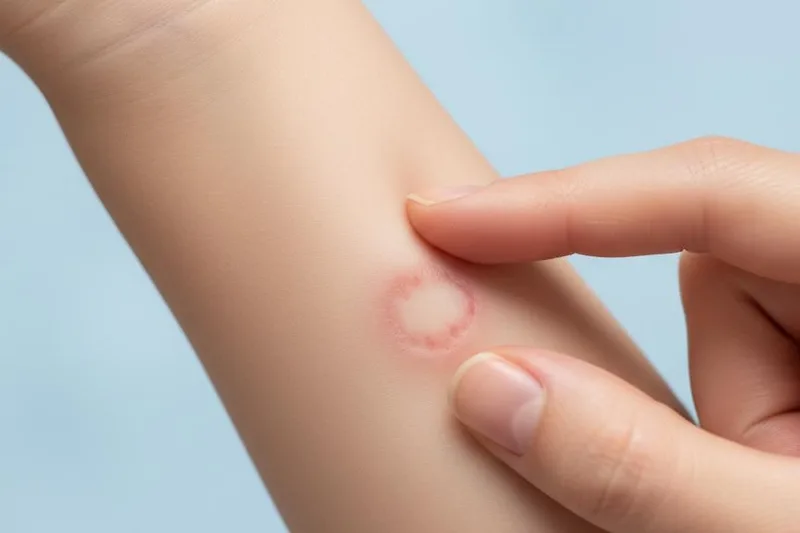
Imagine your little one coming home from school biting his hand and crying. Or maybe he got into a little fight with his friends and got injured by biting his hand. It's a little scary to hear things like this, isn't it? Is being bitten by a human more dangerous than being bitten by an animal? In fact, because of the germs in our mouths, such an injury can be more dangerous than expected. Let's talk about this in detail today.
What is this human bite?
Simply put, a 'Human Bite' is when one person's teeth hit the skin of another. There are two main types. It's important to know the difference between the two, as the potential damage can vary.
| Chewing type | How does that happen? |
|---|---|
| Direct chewing (Occlusion Bites) | This is the type we see most often. Someone directly bites another person intentionally. Just like little children bite other children when they are angry. This is often common among young children. They behave this way when they cannot express their feelings like anger or sadness in words. |
| Clenched/Closed Fist Bites | This happens in a roundabout way. Imagine when someone punches someone else, the hand hits the other person's teeth. Then a cut is made on the skin of the hand. This is often seen in fights. This is very dangerous, because it can go deep into the teeth and damage the tendons and joints in the hand. |
Most of the time, people don't get seriously hurt when they bite. Our teeth aren't as sharp as animals'. So, usually, all that happens is a cut or a small scratch. However, if the bite has broken the skin, meaning the skin is broken and bleeding, you should definitely seek medical attention. This is because of the risk of infection.
Is it really dangerous for people to chew?
Yes, sometimes it can be more dangerous than we think. The problem is not the sharpness of the teeth, but the bacteria in the saliva in our mouths. Millions of different types of bacteria live inside our mouths. If these bacteria enter the body through a wound, they can cause serious infections.
Although the wound may appear small from the outside, the germs that have entered can cause severe infections and even lead to the loss of a limb.
What are the symptoms of this injury?
These symptoms are usually seen at the bite site. There are also separate symptoms that appear if an infection occurs. It is very important to distinguish between the two.
| Characteristic type | Things to see |
|---|---|
| Symptoms that occur during chewing |
|
| Symptoms of wound infection |
|
What if you bite your finger and get injured?
If you bite down on a specific area, such as a finger, you may damage the tendons or nerves inside. If this happens, you may experience symptoms such as:
- Loss of feeling in the fingertips.
- Difficulty bending or fully extending the finger.
Who is at higher risk of infection?
Not everyone gets infections the same way. Some people are more at risk. This depends on your overall health and the location of the wound. If these factors apply to you, don't ignore even a small wound.
- If the wound is on an area such as the arm, leg, face, scalp, or a sensitive joint .
- If you are taking medications that suppress your immune system (e.g., medications for cancer or transplants).
- If you have diabetes .
- If you are addicted to drugs or alcohol .
- If you have vascular disease .
- If you are over 50 years old .
What first aid should you do at home after being bitten?
If something like this happens suddenly, there are a few things you can do at home before going to a doctor.
1. Stop the bleeding: If the wound is bleeding heavily, place a clean cloth over the wound and press firmly.
2. Wash the wound thoroughly: Wash the wound gently with warm water and mild soap. If possible, use a syringe to inject a stream of water. This will help reduce the number of germs inside the wound. But don't rub the wound too hard and damage it further.
3. Clean: If there is any dead skin or other debris around the wound, gently remove it.
4. Apply medicine: Gently wipe the wound with a clean cloth, pat it dry, and apply an antibacterial ointment to prevent infection.
5. Cover the wound: Finally, cover the wound with a clean bandage.
Most importantly: If the bite hasn't broken the skin , meaning it's just a bruise and not a scratch, you don't need to see a doctor. But keep an eye on the wound. Look for signs of infection, such as redness and swelling.
When should you definitely see a doctor?
This is the most important part. It's best to see a doctor within 24 hours of any 'human bite' wound that breaks the skin and is bleeding. Especially if it's on a sensitive area like the hands, face, or neck.
In addition, if any of the following conditions occur, immediately go to the nearest hospital's Emergency Department (ETU).
- If the bleeding cannot be stopped even after applying pressure for a few minutes.
- If you see the wound is red, swollen, and pus is coming out .
- If you see red streaks rising from the wound.
- If the wound is very large or deep .
- If bones or flesh are visible from inside the wound.
- If you feel like the wound needs stitches .
- If you have not had a tetanus shot within the last 5 years or are unsure about it.
What kind of treatment does the doctor provide?
When you go to the hospital, the doctor will examine the wound and begin the necessary treatment. These are the steps that are usually followed:
- Cleaning: The doctor will once again thoroughly clean the wound using special fluids. He will also check for any damage to the nerves, tendons, or bones inside.
- Tests: A small sample of the wound (tissue culture) may be taken and sent to a lab to determine the exact bacteria causing the infection. Blood tests or X-rays may also be done if there is a suspicion of joint damage.
- Treatment plan: Treatment is determined by the nature of the injury.
- Deep wounds can be sutured .
- If there is a severe infection, surgical removal of dead tissue (debridement) may be necessary.
- Surgery may also be necessary if there is a fracture, joint damage, or a severe infection.
- If your tetanus vaccination is not up to date, you will definitely be given a tetanus shot .
- Antibiotics are prescribed to prevent or treat infection. Most often, a drug like ``Amoxicillin`` is given. Other drugs like ``Clindamycin`` are prescribed for people who are allergic to penicillin.
After treatment, they will ask you to come back to see the wound in a day or two. If there are signs of infection, they will ask you to come back earlier.
Are there any possible side effects from this?
Yes. If not treated properly, serious complications can occur. Injuries to areas such as the hands, nose, and earlobes are especially at risk of complications.
- Bone infection (Osteomyelitis)
- Infection of the joints (Septic arthritis)
- Tenosynovitis (infection of the tendon sheath)
These infections can sometimes cause permanent damage to the affected part of the body. In the most severe cases, if the infection cannot be controlled, the part may even need to be surgically removed (amputation). This is why prompt treatment is important.
Although there have been reports of people contracting diseases like HIV/AIDS and Hepatitis B through chewing, they are extremely rare and the likelihood of occurrence is very low. There is no need to worry too much about it.
Take-Home Message
- Never think that biting a human is a small thing, especially if the skin is broken and injured.
- Wash the wound thoroughly with soap and clean water as soon as possible. This is the best first step to preventing infection.
- See a doctor within 24 hours of any broken skin wound. Don't rush.
- If the wound becomes red, swollen, pus appears, or there are symptoms such as fever, go to the hospital immediately.
- Always make sure your tetanus vaccination is up to date.


💬 Comments (0)
No comments yet. Be the first to share your thoughts here.
Add Your Comment