

Have you ever heard of a small, but very important bone in your neck? This one is a little special, because it's the only 'floating' bone in our body. Today we're going to talk about this amazing hyoid bone. Don't worry, we'll simply talk about what it is, what it does, and what kinds of problems it can cause.
What is the Hyoid Bone?
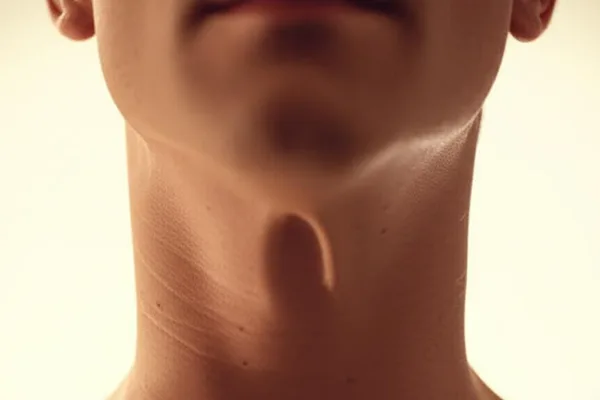
Okay, so first let's look at what the hyoid bone is. It's a small, crescent-shaped bone at the front of your neck. It's located below your mandible and above the thyroid cartilage that covers your vocal cords. You can place your fingers where your chin meets your neck and swallow a little saliva. That's when you can feel the hyoid bone.
The most unique thing about this is that the hyoid bone is the only 'floating' bone in our body. That is, it is not directly connected to any other bone. So how is it held in place? It is held in place by ligaments, muscles, and cartilage. Imagine, it is like hanging from a rope.
What are the functions of the hyoid bone?
Now let's see what happens to this little bone. Just imagine, this is small but it does a very important job.
- Helps with speech: This helps with the movements of the tongue when we speak. It is also involved in the movements of the larynx.
- Helps with swallowing: This hyoid bone moves up and down when you swallow food and drink, which is what helps with the swallowing process. You will feel it moving up and down when you swallow food.
- Helps with breathing: It also plays a role in breathing, especially in keeping the airways open.
Not only that, but the hyoid bone also acts as a support for several other important things around it. For example:
- To your tongue
- To the muscles at the bottom of your mouth
- Your larynx or voice box - that is, the box that makes the voice
- Epiglottis - This is the small door-like part that prevents food from entering the windpipe when we swallow.
- Your throat (Pharynx)
Another thing is that the hyoid bone is connected to three major ligaments and numerous muscles in the neck, and also acts as an attachment point for them.
Where is the hyoid bone located?
We mentioned earlier that this is located in the front of your neck, below the mandible and above the thyroid cartilage. To explain a little more, the hyoid bone 'floats' in front of the fourth cervical vertebrae in your spine.
What does the hyoid bone look like?
The hyoid bone is shaped like the letter 'U' . It has three main parts:
- Main body: This is the front and thickest part of the hyoid bone. It is usually about 2.5 centimeters wide and about 1 centimeter thick. However, it can be slightly larger in men.
- Greater horns or greater cornua: These are the long, arm-like parts of the hyoid bone on either side of the letter 'U'.
- Lesser horns or lesser cornua: These are the two small bony projections near the beginning of the greater horns. This is where the stylohyoid ligament attaches.
It's amazing that when a baby is born, the hyoid bone is three separate bones. As we get older, usually between the ages of 40 and 60, these three bones fuse together to form a single, solid, horseshoe-shaped structure. But some people don't fuse together like this. It's not a problem if they don't fuse. It's just a small change in the normal structure, and it doesn't cause any problems.
What conditions affect the hyoid bone?
There are several health conditions that can affect the hyoid bone. But don't worry, these are usually very rare .
- Hyoid bone syndrome: This is an inflammation of the muscles and ligaments around the hyoid bone. This can be caused by tendonitis or neck injuries (such as whiplash, a sudden neck injury).
- Broken hyoid bone / Hyoid fracture: Hyoid bone fractures are very rare. They account for about 0.002% of all human fractures. This is because this bone is well hidden and protected where the chin and neck meet, so it does not break easily. Most often, the hyoid bone breaks in violent crimes such as strangulation . Apart from that, it can also be caused by things like hanging, gunshot wounds, and serious car accidents.
- Osteoradionecrosis (ORN): This is a more serious condition. It is a bone death caused by exposure to radiation. This risk is especially high in people receiving radiation therapy for head and neck cancer. It most often affects the mandible, but it can also affect the hyoid bone.
- Chondrosarcoma of the hyoid bone: This is an extremely rare type of cancer . Chondrosarcoma is a rare bone cancer that starts in the cartilage. It is very rare to develop this type of cancer in the head and neck. According to medical records, only 23 cases of chondrosarcoma of the hyoid bone have been reported in the world so far. The most common symptom seen among people with this condition is a lump that grows larger and larger in the neck.
Common symptoms of hyoid bone conditions
Conditions involving the hyoid bone can cause similar symptoms. Some of these include:
- Pain in the face for no reason.
- Neck pain.
- Sore throat (possibly a long-term throat infection - like chronic pharyngitis ).
- Voice changes, speech difficulties (voice disorders).
- Feeling of something stuck in the throat.
- Feeling pain when swallowing food and drink.
- Obstructive sleep apnea .
- Bruising in the neck area.
- A sound or sensation as if bones are rubbing together ( crepitus ).
- Difficulty breathing ( dyspnea ).
- Sores or ulcers in the mouth or throat.
Important: Some symptoms of hyoid bone can be very similar to those of temporomandibular joint (TMJ) disorders . This can sometimes lead to misdiagnosis. If you are receiving treatment for a TMJ condition and are not getting better, ask your doctor if it could be related to the hyoid bone.
What tests help diagnose hyoid bone diseases?
Doctors use various tests to see if there is a problem with your hyoid bone. Some of these include:
- X-rays
- CT scan (CT - computed tomography scans)
- PET scan (positron emission tomography scans)
These tests can give doctors a good idea of the condition of your hyoid bone, whether there is any damage, or if there are other problems.
What are the common treatments for diseases of the hyoid bone?
This will vary depending on your condition, but here are some common treatments:
- Pain and swelling reducing drugs ( NSAIDs - nonsteroidal anti-inflammatory drugs )
- Antibiotics - if there is an infection.
- Steroid injections - reduce inflammation.
- Analgesic medications
- Tracheostomy - A minor surgical procedure performed in the neck to relieve breathing difficulties in some severe cases.
- Surgery - May be necessary in cases such as a broken bone or cancer.
Your doctor will determine the best treatment for you, so it is important to seek medical advice if you have symptoms.
Can damage to the hyoid bone be prevented?
In fact, conditions related to the hyoid bone are very rare, and they are often caused by factors beyond our control. For example, it is difficult for us to prevent a fracture from an accident. So it is a bit difficult to say that this is 'preventable'.
But, the most important thing is to recognize the symptoms and seek treatment early . If you have persistent neck or throat pain, difficulty swallowing, a change in your voice, difficulty breathing, or any of the symptoms we discussed earlier, don't ignore them . Be sure to see your doctor. They can quickly find the cause and start the treatment you need.
Is the hyoid bone also called the Adam's apple?
No, that's a misconception. Your Adam's apple, or as we call it in English, your laryngeal prominence , is part of your thyroid cartilage . Remember, we said earlier that the hyoid bone sits above the thyroid cartilage. So even though these two structures are close together, they are two different parts of your body, and they both perform different functions. The Adam's apple is often more visible in men.
The most important things we need to remember
Okay, so let's remember this as a summary of the hyoid bone we talked about today:
- The hyoid bone is a small, 'floating' bone in the front of your neck that is not connected to any other bone.
- This is very important for speaking, swallowing, and breathing, as well as supporting parts like the tongue and larynx.
- The conditions that affect this are generally rare , so don't be unnecessarily alarmed.
- However, if you experience symptoms such as persistent pain in the neck/throat, difficulty swallowing, or a change in voice, do not ignore them . It is wise to seek medical advice immediately.
- The hyoid bone is not the Adam's apple . They are two different structures.
Even if your hyoid bone is small and hidden behind your lower jaw, it still does a lot of work. So it's important to be aware of it and take action if there's a problem. Always remember, if you're feeling unwell, doctors are there to help you.
` Hyoid bone, Hyoid bone, neck bone, swallowing, speaking, sore throat, hyoid syndrome




💬 Comments (0)
No comments yet. Be the first to share your thoughts here.
Add Your Comment