
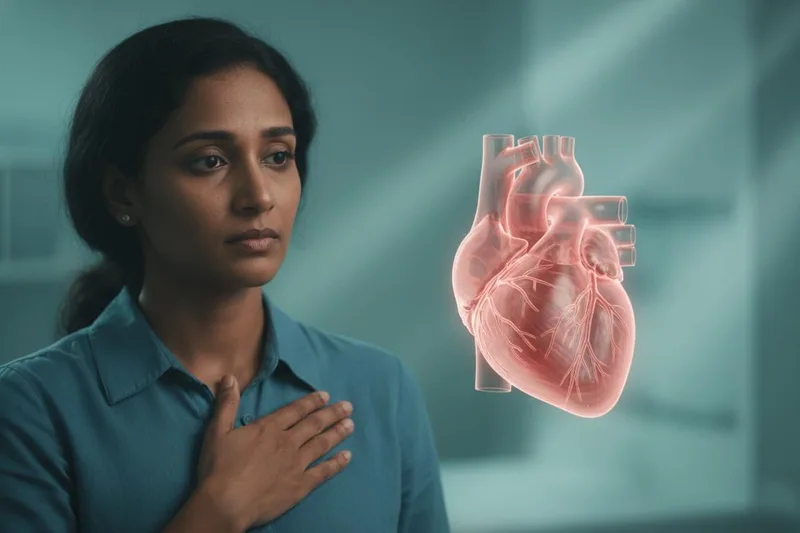
For many of us, 'pressure' or high blood pressure has become a very common thing. But did you know that if this pressure is not properly controlled, it can gradually cause great damage to our heart over the years? In this way, we medically call 'Hypertensive Heart Disease' a collection of heart conditions caused by uncontrolled high blood pressure.
Simply put, what is 'hypertensive heart disease'?
Imagine that the pressure in the water pump pipes in your home is too high. What happens then? The pump has to work harder to pump the water. Over time, the pump weakens and the pipes can become damaged. Our hearts are just like that.
When blood pressure is high (usually above 120/80 mmHg) for a long time, our heart has to work harder to pump blood around the body. This extra strain can cause the heart muscle to thicken and weaken over time. Eventually, this can lead to a serious condition like heart failure.
Similarly, high blood pressure also thickens the walls of our blood vessels. When cholesterol starts to accumulate inside these thickened blood vessels, the situation becomes even worse. Then the risk of heart attack and stroke increases significantly.
Remember, high blood pressure often doesn't show any symptoms in the early stages. That's why we call it the 'silent killer'.
What are the main types of this condition?
There are two main ways that high blood pressure affects the heart.
1. Coronary Artery Disease: This occurs when cholesterol and other substances build up inside the main blood vessels that supply blood to the heart (coronary arteries) (we call this ``Atherosclerosis``), narrowing the arteries. This reduces the amount of oxygen and nutrients that the heart needs.
2. Left Ventricular Hypertrophy: The left ventricle is the main blood-pumping part of the heart. As it struggles to pump blood against high pressure for a long time, the muscles in this part thicken. Just like the muscles of a weightlifter get bigger. But this is not good for the heart. This can lead to impaired heart function.
What other complications can this cause?
If left untreated, hypertensive heart disease can lead to a number of other serious health problems. Let's take a look at the table below.
| Complication | Simple explanation |
|---|---|
| Heart Failure | The heart is unable to pump enough blood to the body. |
| Heartbeat irregularities (Arrhythmia) | Irregular heartbeat. For example, `(Atrial Fibrillation)`. |
| Stroke | Impaired blood flow to the brain. |
| Ischemic Heart Disease | Conditions caused by a decrease in the amount of blood supplied to the heart. |
| Sudden Cardiac Death | Sudden cessation of cardiac function. |
| Chronic Kidney Disease | Kidney damage due to high blood pressure. |
Who is most at risk?
Check these points to see if you are at risk.
- If you have high blood pressure .
- If you are someone who doesn't exercise .
- If you have diabetes .
- If the blood cholesterol level is high .
- If you are over 45 years old.
- If you are overweight (obese).
- If you smoke or use other tobacco products.
- If you add too much salt to your food.
- If you drink alcohol .
If one or more of these points apply to you, you definitely need to take extra care of your health.
What are the symptoms of this?
The biggest problem here is that, like high blood pressure, hypertensive heart disease may not have any symptoms in the early stages. Symptoms only begin to appear after the heart has been damaged to some extent.
These are the symptoms that may appear:
- Chest pain
- Shortness of breath
- Palpitations (feeling like your heart is beating fast)
- Dizziness
- Fainting
- Symptoms of a stroke (e.g., mouth drooping, loss of a limb)
- Sudden Cardiac Death
If you experience any of these symptoms, it is very important to seek medical advice immediately .
How do you find this, Doctor?
When you go to see the doctor, he will first ask you a few questions.
- Your medical history.
- Does anyone in your family have heart disease?
- Then you will be physically examined.
In addition, several tests are recommended to confirm the condition and assess the damage to the heart.
- Blood tests: Check things like cholesterol and sugar levels.
- Urine tests: Check kidney function.
- ECG test (Electrocardiogram): Look at the electrical activity of the heart.
- Echocardiogram: Look at the structure of the heart, the thickness of the muscles, and how it pumps blood.
How is it treated? And what should we do?
The main goal of treatment is to control your blood pressure and stop the damage that has already been done to your heart from getting worse. There are two main ways to do this.
1. Lifestyle changes
This is the most important part. Along with taking medication, it is essential to change your lifestyle to a healthy one.
- Stop smoking and drinking alcohol: Both of these directly damage the heart and blood vessels.
- Exercise: Engage in exercise, such as walking or running, for at least 30 minutes a day.
- Control salt: Reduce the amount of salt added to food. Stay away from things like pickles, dried fruits, sauces, and artificial flavors.
- Healthy diet: Eat more vegetables, fruits, legumes, and fiber-rich foods. Reduce foods high in oil, sugar, and flour.
- Control your weight: Try to maintain a healthy weight for your height.
2. Medicines (medicines)
Along with lifestyle changes, your doctor will prescribe medications to control your blood pressure. There are different types of medications, such as diuretics, beta-blockers, and ACE inhibitors.
The most important thing is to never stop taking the medication your doctor has prescribed, at the right dose and at the right time . If you have a problem with a side effect, talk to your doctor and resolve it. Never stop taking your medication on your own.
Take-Home Message
- High blood pressure is a 'silent killer.' Even if there are no symptoms, it can cause long-term damage to your heart.
- Check your blood pressure regularly. If you are over 18, it is a good idea to have it checked at least once a year.
- A healthy lifestyle (good diet, exercise, and avoiding smoking and alcohol) is essential for heart health.
- Take the medicine exactly as prescribed by your doctor, at the right time, and in the right dosage. Never stop or change your medication on your own.
- Your heart is your responsibility. Take care of it. If you have any problems, see a doctor and get advice.


💬 Comments (0)
No comments yet. Be the first to share your thoughts here.
Add Your Comment