

Is your skin always dry? Does it sometimes peel and itch? Many of us think that this is just dry skin. But sometimes it can be a little more serious. That's the condition we're going to talk about today, called Ichthyosis Vulgaris.
What is Ichthyosis Vulgaris?
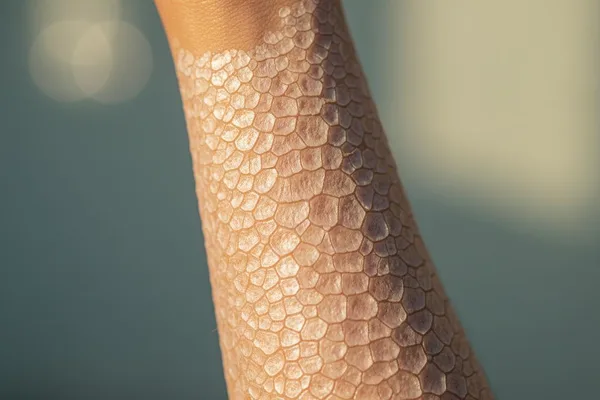
Simply put, Ichthyosis Vulgaris is a skin condition in which our skin becomes excessively dry, thick, and scaly. As you can imagine, the word 'Ichthyosis' means 'fish scales'. 'Vulgaris' means 'common'. This means that this is the most common type of 'ichthyosis'.
Who can develop this condition?
Actually, this condition called Ichthyosis Vulgaris can develop in anyone. Most of the time, it starts in childhood. That means it can start in babies from about 2 months to about 5 years old, or even in young adults. However, there are cases where it can start after adulthood.
How common is Ichthyosis Vulgaris?
We've already said that this is common. There are actually more than 20 types of 'ichthyosis'. Of these, Ichthyosis Vulgaris is the most common. Imagine, roughly one in every 250 people may have this condition.
What are the symptoms of this?
Symptoms of Ichthyosis Vulgaris may be very mild for some people, but for others they can be quite bothersome. Your skin may look like this:
- Rough, blister-like growths (we also call this `(Keratosis Pilaris)`)
- A skin rash
- Cracked, scaly skin
- Dry skin
- Itching
- A rough nature
- Thickening of the skin
- Scaly appearance
Often , white, gray, or brown scales can be seen on the front of the legs, the back of the arms, the scalp, the back, and the stomach. If scales appear on the face, they are most often on the forehead and cheeks. Sometimes the edges of these scales are folded up, making the skin feel very rough. You may also see many deep wrinkles on the palms and soles of the feet.
It is common to see symptoms of Ichthyosis Vulgaris increase in the winter and decrease in the summer .
What causes Ichthyosis Vulgaris?
In most cases, the main cause of Ichthyosis Vulgaris is a genetic variation . This can be inherited or it can happen randomly during the embryonic stage.
This genetic mutation causes a defect in the production of a protein called `(Filaggrin)`. `(Filaggrin)` is a protein that holds our skin cells together and creates a protective barrier for the skin. So when this is not produced properly, dead skin cells do not shed properly. That's when those scales form.
However, sometimes Ichthyosis Vulgaris can occur with other medical conditions. For example:
- Cancer
- Kidney failure
- `HIV` (that stands for Human Immunodeficiency Virus)
- Lupus
- Sarcoidosis
Very rarely, this condition can also be caused by the use of certain medications. For example:
- `Cimetidine`
- `Clofazimine`
- `Nicotinic acid` (this is a type of B vitamin)
Is this a contagious disease?
No, not at all. Ichthyosis Vulgaris is not a contagious disease. It is not spread from one person to another through skin-to-skin contact. So there is nothing to worry about.
How is Ichthyosis Vulgaris diagnosed?
Ichthyosis Vulgaris can sometimes be difficult to diagnose, as many people with mild cases of the condition think they just have dry skin. If your skin is not getting better even after using moisturizers, you may have Ichthyosis Vulgaris.
A dermatologist can diagnose this condition. He or she will ask you about your symptoms, examine your skin, and ask if your symptoms are getting worse or better. They will also ask if anyone in your family has had this type of skin condition and what medications you are taking.
Most of the time, Ichthyosis Vulgaris is diagnosed clinically, that is, based on symptoms. No special tests are needed. However, sometimes the doctor may take a small piece of skin and look at it under a microscope (a skin biopsy). Or they may do a blood or saliva test to see if there is a mutation in the filaggrin gene.
Can Ichthyosis Vulgaris be cured?
To be honest, there is currently no permanent cure for Ichthyosis Vulgaris. Treatment is mainly aimed at reducing symptoms and preventing skin infections. This requires taking good care of your skin at home. This means regularly moisturizing, exfoliating, and moisturizing.
If Ichthyosis Vulgaris is caused by another medical condition, your doctor will treat that condition. If a medication is causing the skin problem, you may want to consider stopping the medication or switching to an alternative medication.
In severe cases that cannot be controlled with skin care, your doctor may prescribe oral medications called retinoids, such as acitretin or isotretinoin.
If the skin breaks and becomes infected, the doctor may prescribe antibiotics.
Are there ways to prevent this?
In most cases, especially those caused by genetic factors, there is no way to prevent Ichthyosis Vulgaris. However, the symptoms can be controlled. That is why, as we mentioned earlier, it is important to regularly moisturize the skin, remove dead skin cells, and moisturize.
Are there other conditions associated with Ichthyosis Vulgaris?
Many people with Ichthyosis Vulgaris may have one or more of the following conditions:
- Allergic rhinitis (hay fever)
- Asthma
- Eczema
- Food allergies
Scientists are still researching the relationship between these conditions.
What to expect when living with Ichthyosis Vulgaris?
Ichthyosis Vulgaris can be a somewhat annoying condition. However, it rarely has a major impact on general health. And it does not shorten life expectancy.
The prognosis for this condition is generally very good, especially in cases of genetic causes. Hereditary forms of ichthyosis vulgaris often improve over time, and may even go away completely. In cases of acquired forms, the prognosis depends on the nature of the underlying disease.
What treatments can be done at home?
These home remedies are very important to control Ichthyosis Vulgaris:
- Soak: Bathe at least once a day. Use mild cleansers. Soaking in salt water for a while can help soften the scales and help them come off. After bathing, pat dry. Sometimes, your doctor may recommend adding a small amount of bleach to the water (as directed by your doctor) to help prevent skin infections.
- Exfoliate: Gently remove dead skin cells, scales, and rough areas. This will help your moisturizers absorb better. Once your skin is dry, use a pumice stone or a slightly rough sponge to exfoliate. You can also use products that contain salicylic acid, glycolic acid, lactic acid, alpha hydroxyl acid, or urea. Be careful when using these, especially on young children, and do not use them without medical advice.
- Moisturize: Apply lotions or creams to your skin immediately after bathing. It's best to use thick emollients, such as petroleum jelly. If you have skin lesions, your dermatologist may recommend applying an emollient before bathing. It's also a good idea to use a humidifier to reduce the dryness of the surrounding environment.
- Avoid irritants: Avoid products that can cause skin irritation, such as artificial colors and fragrances. Wear clothes made from soft, moisture-wicking fabrics.
When should you seek medical advice?
If Ichthyosis Vulgaris is bothering you a lot, or if you are showing signs of a skin infection , see a doctor immediately. Watch out for symptoms like these:
- Fever
- Fluid or pus draining from the skin
- Pain or swelling that doesn't go away
- Red streaks on the skin
- Yellow crust forming on the affected areas
How to cope with Ichthyosis Vulgaris mentally?
Some people with Ichthyosis Vulgaris may feel embarrassed or anxious about their appearance. If this is causing you emotional or social distress, talk to your doctor about it. This condition can sometimes cause depression.
Ichthyosis Vulgaris is more than just scaly, dry, and itchy skin. It can also affect your self-esteem. Remember, there is no permanent cure, but there are treatments that can help manage the condition. If you think you may have Ichthyosis Vulgaris, see a healthcare provider, such as a dermatologist. They can diagnose the problem, help reduce severe symptoms, and prescribe medications to help prevent infection.
Take-Home Message
- Ichthyosis Vulgaris is a common condition that causes dry, scaly skin. Don't worry, it's not contagious.
- Most often, this is due to genetic causes, specifically a defect in a protein called ``Filaggrin''.
- Although there is no permanent cure, symptoms can be well controlled with proper skin care and, if necessary, medical treatment.
- It is essential to moisturize the skin well, gently exfoliate, and apply moisturizers daily.
- If you have signs of a skin infection (fever, pus, redness, pain), see a doctor immediately.
- If you feel emotionally uncomfortable, embarrassed, or anxious about this situation, talk to a doctor or a loved one about it. You are not alone.
` Ichthyosis Vulgaris, Skin Diseases, Dry Skin, Coral, Filaggrin, Genetic, Skin Care, Dermatology




💬 Comments (0)
No comments yet. Be the first to share your thoughts here.
Add Your Comment