

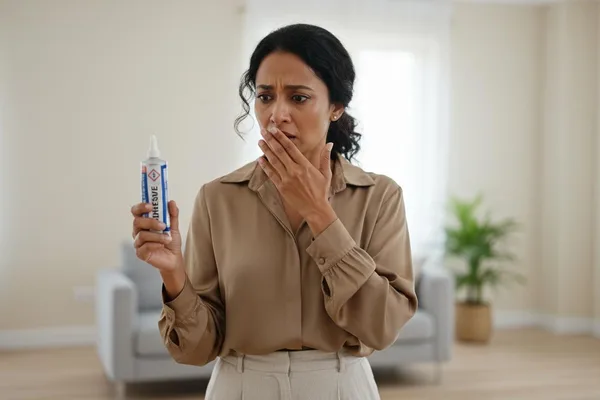
Have you noticed an unfamiliar, strange chemical smell coming from your child's room? Or have you noticed a sudden change in their behavior, speech, and behavior that is a little unclear? They may have fallen into a habit that you may not even realize is much more dangerous and deadly than you think. That's what we're talking about today.
Simply put, what are these inhalants?
Inhalants are, simply put, chemicals that are inhaled to produce a feeling of pleasure, relaxation, or "high." The most dangerous part of this is that these chemicals are found in everyday objects, not just in our homes and workplaces. When we inhale the fumes, the chemicals are quickly absorbed into our brains, causing an immediate "high."
Imagine how dangerous this is. If you continue to indulge in this habit, you can experience severe side effects that can never be reversed. Permanent brain damage, coma, and even instant death can occur.
Although we can generally sniff other types of drugs, the word 'inhalants' specifically refers to substances that are used to get high by simply sniffing them. These are used by various names such as 'huffing', 'bagging', and 'dusting'.
How to use these?
People who use these things inhale them through their noses or mouths in various ways. Imagine, some people do things like this:
- Inhaling directly from a can: opening something like a paint can or a bottle of gum and inhaling the vapor directly into your nose.
- Spray directly into the nose/mouth: Sprays such as deodorant sprays and air fresheners directly into the nose or mouth.
- Using a cloth: Soak a cloth in these chemicals, hold it over your nose and mouth, and breathe in.
- "Bagging" method: Some people take a plastic or paper bag, put these chemicals in it, put the bag over their mouth and nose, and inhale the air inside. This is a very dangerous method.
- Putting it on clothes: Some people put a little of this stuff on their shirt collars or sleeves and smell it from time to time.
The "high" from these inhalants only lasts a few minutes. Therefore, users continue to do this for hours to maintain that high. This is what increases the risk of death.
Who is most susceptible to these?
This is something we all need to pay attention to. Young children and young adults are the most vulnerable to this. There are several main reasons for this.
1. Easy to find: You don't need to go to a special place to get these. You can easily find them in your kitchen, bathroom, garage, or even a store.
2. Cheap: It doesn't cost a lot of money like other drugs.
3. Easy to hide: No one will suspect you if you keep a bottle of gum or a bottle of Tipex nearby.
4. Legal: Buying these products is not prohibited by law.
For these reasons, young children often try these inhalants first before turning to other harder drugs. According to surveys, their use peaks at the age of 14-15. But consider that there are cases where children as young as 5-6 years old are also exposed to these.
This habit usually subsides by the age of 17-19, but some people continue to use these substances into adulthood. This habit is more common among boys than girls.
Also, there is a higher tendency to resort to this habit among people who have experienced the following:
- Those who have been physically or sexually abused
- People with criminal behavior
- People with mental health problems such as depression
- People with thoughts of harming themselves
- Those who grow up in a family environment of conflict and violence
- People addicted to other drugs
Additionally, this condition is more common in low-income families, communities with high rates of mental health problems, and rural areas.
What are the types of inhalants? What are the things we have in our homes?
There are over 1,000 products in our daily lives that we can use as inhalants. These can be divided into four main categories. Take a look at this table, and you'll see how familiar these are to us.
| Inhalant category | Examples in our homes |
|---|---|
| Volatile Solvents Liquids that evaporate easily at room temperature. |
|
| Aerosols Sprays in pressurized cans. | |
| Gases Types of gases used in medical and domestic applications. | |
| Nitrites Special chemical compounds. These are also called "Poppers". |
How do these affect the body? - Short-term effects
When these chemicals enter the body, the way they affect each person can vary. This depends on many factors, including your health, body weight, and whether you are using other drugs at the time.
Many inhalants directly affect our central nervous system . This means they immediately reduce the activity of our brain. This can cause short-term effects such as:
- Loss of control: Shame and fear disappear, leading to the temptation to take risky actions.
- Speech becomes unclear: words get tangled, speech becomes slurred.
- Loss of body control: inability to walk properly, difficulty controlling limbs.
- Feeling instant pleasure: A "high" for a very short time, meaning a feeling of great pleasure.
- Dizziness (vertigo) and lightheadedness: Feeling like your head is spinning.
- Nausea and headache: Feeling like vomiting, head aches.
- A runny nose and eyes: the nose and eyes are red, and the throat is sore.
- Confusion and hallucinations: Loss of consciousness, seeing and hearing things that are not really there (Hallucinations).
Fatal Risk: Overdose and Long-Term Effects
This is something we need to seriously consider. Since the intoxication from these substances lasts for a few minutes, it is extremely dangerous to continue inhaling for hours with the intention of prolonging it. It can lead to loss of consciousness and even death.
Even a single use can cause instant death in a healthy person. This is called "Sudden Sniffing Death".
The main cause of this sudden death is a sudden irregular heartbeat, leading to a heart attack. This risk is particularly high when using butane, propane, and aerosol sprays.
In addition, death can occur in other ways:
- Asphyxiation: When inhaled continuously, the lungs fill with these toxic gases instead of the oxygen they need. This causes the body to starve and die.
- Suffocation: When a person inhales a plastic bag over their head, the air from outside stops flowing and they die from suffocation.
- Choking: If you vomit after being intoxicated, the vomit can get stuck in your airway and cause suffocation.
What happens in the long run?
If you become addicted to this habit, the damage it will do to your body over time is unimaginable.
- Permanent brain damage: memory loss, inability to concentrate, learning disabilities.
- Mental problems: Frequent anger, depression.
- Physical changes: Acne around the mouth, pale skin, weight loss, constant fatigue, excessive thirst (polydipsia).
- Damage to the senses: Loss of smell and hearing (anosmia), irregular heartbeat, and severe damage to the liver and kidneys.
- Other severe conditions: Tremors, heart muscle damage, delayed behavioral development in children and adolescents, coma, and death.
The dangerous condition called Hypoxia
Yes, using inhalants can cause a condition called Hypoxia . Simply put, this is when these toxic gases replace the oxygen in our lungs. Then our body tissues do not get the oxygen they need. Oxygen is essential for every cell and organ in our body to function. When oxygen is lost, cells, especially brain cells, begin to die. This is irreversible damage.
Can you get addicted to these?
Yes, it definitely can. When you continue to use these, your body quickly becomes dependent on these chemicals. Then, using these things becomes more important to you than anything else in your life (school, work, friends).
Over time, the body becomes accustomed to the substance (tolerance). Then, it needs to inhale more and more to get the same high it once did. This is called addiction. This condition is medically called inhalant use disorder .
How to get help?
If you are reading this article, or if someone you know is addicted to this habit, please remember that it is possible to recover from it . This is not a moral issue, but a medical condition that needs to be treated.
- Talk to a trusted adult: Talk to a parent, teacher, or any adult you trust about this.
- See a doctor: This is the best thing you can do. See your doctor or physician and talk about this. He or she can guide you in the right direction regarding the counseling and treatment methods needed to overcome this addiction.
- In an emergency: If someone becomes unconscious or has difficulty breathing after using these, it is a medical emergency. Immediately take them to the nearest hospital Emergency Treatment Unit (ETU). If you suspect that a toxic substance has been ingested, immediately call the National Poisons Information Centre at the Colombo National Hospital for advice.
Don't forget, asking for help is not a sign of weakness. It's one of the strongest steps you can take to save your life.
Take-Home Message
- Inhalants are not something to do for fun, they are extremely toxic chemicals.
- These dangerous things are not found anywhere else, but in the items we see and use every day in our homes.
- Even if used only once in a lifetime, it can cause instant death.
- Long-term use causes irreversible damage to the brain, liver, kidneys, and heart.
- If you or someone you know is suffering from this problem, please don't suffer alone. Seek help from a doctor. It is a treatable condition.




💬 Comments (0)
No comments yet. Be the first to share your thoughts here.
Add Your Comment