
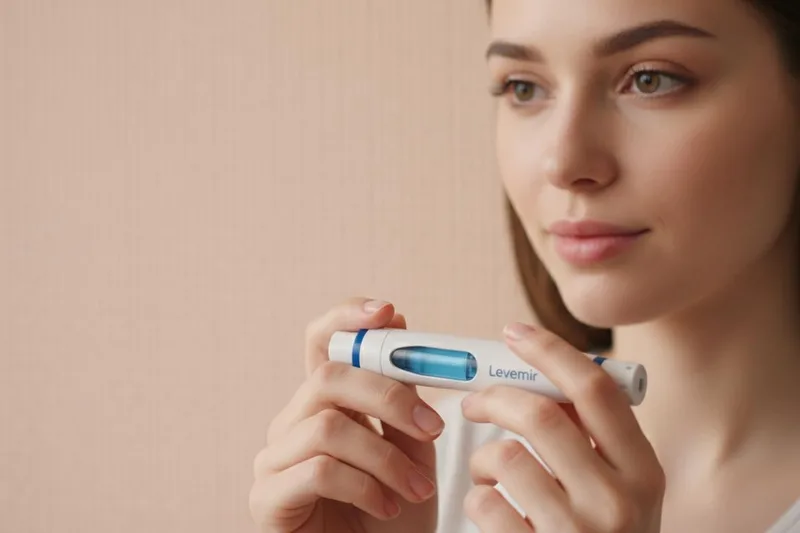
Using insulin for diabetes can sometimes seem a bit complicated. There are different types of insulin. Today we're talking about one of them, Insulin Detemir. Your doctor may have told you to use this. It also goes by the brand name Levemir. So, let's take a look at what it is, how exactly it's used, and what you need to be aware of.
What is Insulin Detemir?
Simply put, Insulin Detemir is a type of insulin used to treat diabetes. Specifically, it is a long-acting insulin . It is sometimes called 'basal insulin'.
What does that mean? When you take this injection, it doesn't work all at once. Instead, it releases insulin into your body gradually over a period of hours. This helps to control and stabilize your blood sugar levels throughout the day and night, just like the insulin our bodies produce naturally.
The important thing is that insulin alone is not enough. Diet and exercise, as advised by your doctor, are also part of this treatment.
Things you need to tell your doctor before starting this medication
When discussing this medication with your doctor, it is very important to give a complete description of your health condition. Be sure to mention the following:
- If you have frequent episodes of low blood sugar .
- If you have any eye disease or vision problems.
- If you have kidney disease .
- If you have liver disease .
- If you have had an allergic reaction to insulin, other medications, foods, dyes, or preservatives in the past.
- If you are pregnant, or are expecting a baby .
- If you are a breastfeeding mother .
Based on this information, the doctor will determine the most suitable treatment for you.
How do I give this injection correctly?
This is an injection under the skin. Your doctor or nurse will show you exactly how to give it.
- On time: It is very important to take the injection at the same time every day.
- Do not mix: Never mix Insulin Detemir with any other insulin in the same syringe.
- Do not shake: Do not shake the insulin vial or pen vigorously before use.
- Check the appearance: Always check the appearance of the insulin before using it. It should be a clear, colorless liquid, like water . Do not use it if it looks cloudy, thickened, discolored, or has particles in it.
- Removing the needle: If you are using an insulin pen, remember to remove the outer needle cover before taking your dose.
- Disposing of needles: Do not throw used needles and syringes in the trash. They should be placed in a sharps container. If you do not have one, ask your doctor about how to obtain one.
What to do if you miss a dose?
It is very important not to miss a dose. But if you do, your doctor will have given you instructions on what to do in such a case. Follow that plan. Never take a double dose to make up for a forgotten dose.
What if the dose is increased?
If you think you have taken too much medicine, take immediate action. You can call the National Poisons Information Centre at the Colombo National Hospital , or go to the Emergency Treatment Unit (ETU) of the nearest hospital.
Other things that may interact with this medicine
It's very important to tell your doctor about all the medications you take, vitamins, herbal products, everything. Because some things can affect the way insulin works. That means your blood sugar levels can get too low or too high.
The table below shows some of the things that could conflict with that.
| Drug/substance category | Examples and what to know |
|---|---|
| Other diabetes medications | Medications like Glyburide, Glipizide, and Metformin. Taking these together increases the risk of low blood sugar. |
| Alcohol | Alcohol can cause unexpected changes in blood sugar levels. Ask your doctor about this. |
| Blood pressure/heart disease medication | Medications such as beta-blockers (e.g. Metoprolol, Propranolol) can help prevent symptoms of low blood sugar (palpitations). |
| Painkillers | NSAIDs (e.g., Ibuprofen, Naproxen), medications like aspirin. |
| Steroids | Medications like Prednisone and Cortisone can increase blood sugar levels. |
| Other | Birth control pills, thyroid hormones, some medications for mental illness, and some cold/cough syrups. |
This list is not complete, so tell your doctor about all the medications you are taking.
Things to be careful about when using insulin
- Regular check-ups: Visit your doctor on scheduled days to check your condition. He or she will do a blood test called HbA1C every 2-3 months to see how well your sugar is being controlled.
- Test your blood sugar: Learn how to test your blood sugar at home. Know the symptoms of hypoglycemia and hyperglycemia, and what to do about them.
- Keep some sugar nearby: Always keep a toffee, sugar cube, or glucose tablet nearby to eat quickly in case you experience symptoms of low blood sugar.
- Never share: Never share your insulin pen or cartridge with anyone else. Even if you change the needle, you can still spread viruses like Hepatitis or HIV.
- Medical ID: Wearing or carrying a medical ID bracelet or card that lists your medical condition, medications, and dosage is very important in an emergency.
What are the possible side effects of this?
Like any medicine, this one can cause some side effects.
| Side effects that you should report to your doctor immediately | |
|---|---|
| Allergic reactions | Skin rash, itching, swelling of the face, lips, tongue or throat. |
| Low blood sugar (Hypoglycemia) | Trembling, sweating, restlessness, cold skin, dizziness, rapid heartbeat. |
| Decreased potassium levels | Muscle pain or stiffness, unusual weakness, irregular heartbeat. |
| Things that are usually not serious, but should be reported to the doctor if they persist | |
| Injection site changes (Lipodystrophy) | Thickening of the tissue under the skin, scarring, or lumps at the injection site. |
| Pain at the injection site | Redness, pain, or slight swelling at the injection site. |
| Weight gain | Some people may notice weight gain. |
How should I store the medicine?
Insulin is a medication that must be stored properly, otherwise it may lose its effectiveness.
Unopened Vials and Pens
- Best practice: Store in the fridge door. But never in the freezer. Do not use frozen insulin.
- Room temperature: If you can't refrigerate it, you can store it at room temperature (below 30 degrees Celsius). However, if you do, you should remove it after 42 days .
- If the expiration date has passed, discard it without using it.
In-use Vials and Pens
- Keep a vial or pen that you have just started using at room temperature . Do not put it back in the refrigerator after use.
- Keep away from direct sunlight and excessive heat.
- Most importantly: You should throw away a vial or pen you have started using after 42 days . It doesn't matter if there is medicine left in it.
Take-Home Message
- Insulin Detemir is a long-acting insulin that controls your blood sugar levels throughout the day.
- Take the prescribed dose exactly as your doctor tells you, at the prescribed time. Never double the dose.
- Tell your doctor about all other medications you take, even vitamins.
- Be aware of the symptoms of low blood sugar (hypoglycemia). Always keep something like a candy bar nearby.
- Never share your insulin pen or syringe with anyone else.
- Store insulin properly. Discard within 42 days of use.
- If you have a problem or issue, don't be afraid to discuss it with your doctor.


💬 Comments (0)
No comments yet. Be the first to share your thoughts here.
Add Your Comment