

We all know how important it is to breathe. But there are many things inside our body that help us breathe. That's why there is a special group of muscles between our ribs called 'Intercostal Muscles'. You may not have heard this name before. But these are an indispensable part of our body. Let's talk about these intercostal muscles simply today.
What are Intercostal Muscles?
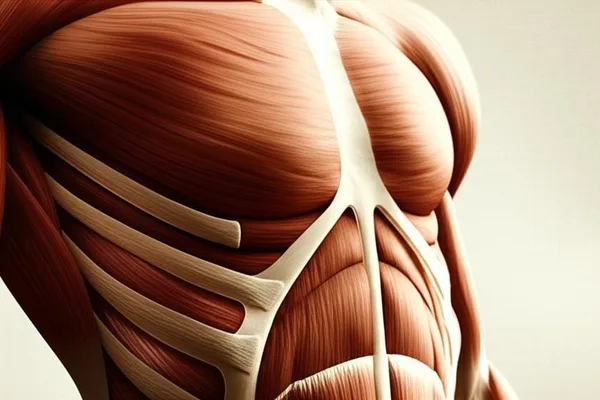
Simply put, you have a rib cage, which is made of ribs. That rib cage connects one rib to the next rib on the other side, and these intercostal muscles are like bridges between the ribs. These muscles help the rib cage move, that is, expand and contract, when we breathe. The spaces between these ribs are called 'Intercostal Spaces'. Inside these spaces are the blood vessels and nerves that these muscles need. That is, they get the nutrition and messages that the muscles need to work.
So what happens to these intercostal muscles?
The main function of these muscles is to expand and contract the space inside our chest cavity, that is, the space where the lungs are. It's like a balloon. It expands when you inflate it, and it contracts when you deflate it. There are three types of intercostal muscles. All of them work together to do this job.
What are the types of intercostal muscles?
Let's look at what these three types of muscles are and what happens to them.
- External Intercostal Muscles: These are the muscles that primarily help when we inhale, that is, when we inhale.
- Internal Intercostal Muscles: These mainly help when we exhale, that is, when we exhale.
- Innermost Intercostal Muscles: These help the inner intercostal muscles when we exhale. They act like a support group.
How do these muscles help with breathing?
Think of it this way: the external and internal intercostal muscles work together like two teams of rowers. When you inhale (inhale), the external intercostal muscles contract, pulling your rib cage up and out, making it bigger. This increases the space inside your rib cage. That increases the space inside your lungs, which reduces the pressure inside your lungs, and allows air to flow in from the outside, much like drawing medicine from a syringe.
Next, when you exhale (exhale), the internal intercostal muscles are at work. They pull the rib cage down and inward, squeezing it. This reduces the space inside the rib cage, causing the lungs to expand and expel the air inside.
The most important thing is that these muscles work in perfect harmony, which is why we can breathe effortlessly.
There are some breathing patterns that rely almost entirely on these intercostal muscles. Also, these muscles work in conjunction with other muscles. For example, when you take a deep breath, these intercostal muscles work in conjunction with your diaphragm.
Not only this, these intercostal muscles also contribute to the actions that force air out of the lungs, such as when we breathe in and cough.
Where are the intercostal muscles located?
These muscles get their name from the Latin word 'intercostal', which means 'between the ribs'. We have 12 ribs in our chest. These intercostal muscles are located in the 11 spaces between those ribs. Each of your ribs is like a curved rod, which is located all the way around your rib cage (that is, your chest, the sides, and the back).
Most intercostal muscles are attached to two ribs, one above and one below. And each of these three types of muscles is located at specific points between those ribs.
- External Intercostal Muscles (11 pairs): These are the most anterior of the intercostal muscles.
- Internal Intercostal Muscles (11 pairs): These are located underneath the external intercostal muscles, but they are only present on the front of the body.
- Innermost Intercostal Muscles: This layer of muscles attaches to the back surface of both ribs. Sometimes, they may attach to one rib as well.
What are the common conditions and disorders that affect the intercostal muscles?
These muscles, which are so important for breathing, can also be affected by various medical conditions and accidents. Sometimes these muscles are directly affected, other times they are indirectly affected. Let's look at a few examples:
- Muscle injuries: Muscle strains, muscle tears, muscle spasms or cramps, and hernias. Imagine you suddenly pull a muscle in your chest while lifting something heavy.
- Bone injuries: Fractured ribs. When a rib is broken, the adjacent intercostal muscles can also be damaged.
- Conditions that disrupt signals from the brain: For example, diseases like ALS (Amyotrophic Lateral Sclerosis - ALS). In such diseases, the messages from the brain to the muscles do not get through properly, which can lead to muscle weakness.
- Paralysis caused by spinal cord injuries or nerve damage .
- Some medical procedures: For example, a thoracostomy, a surgical procedure that places a tube in the chest, can also affect these muscles.
Sometimes, your doctor may suspect other causes of chest muscle pain. An example is a condition called costochondritis. Although it does not directly affect the intercostal muscles, the symptoms can be very similar. Costochondritis affects the costochondral joints, which are located near the intercostal muscles.
What are the common symptoms of a problem with the intercostal muscles?
If there is a problem with your intercostal muscles, you may experience symptoms like these:
- Musculoskeletal Chest Pain: This is the most common symptom. This pain may worsen when breathing, coughing, or moving the body.
- Swelling: The affected area may swell.
- Bruises: Bruise marks may be visible in some accidents.
- Weakness or paralysis: If the muscles are not working properly, you may feel weak and have difficulty breathing.
- Intercostal Retractions: This is a medical emergency . This is when the skin between the ribs pulls inward while breathing. This is common in young children. If you see this happening, you should see a doctor immediately.
What are the common tests to check the intercostal muscles?
Doctors can get an idea of these intercostal muscles during your physical exam. They will feel your chest and watch how you breathe.
In addition, you can also do tests like these to find out more information:
- Imaging Tests: Either an ultrasound or an MRI can be used to look at the condition of the muscles.
- Nerve conduction studies: A nerve conduction study and/or electromyography (EMG) may be performed to check whether the signals from the nerves are being transmitted to the muscles properly.
In addition to these, other tests may be performed depending on the nature of your condition. Your doctor is best able to advise you on which tests are most appropriate for you.
What are the common treatments for problems related to the intercostal muscles?
Treatment options for intercostal muscle conditions vary widely. There are several factors that influence this. For example, what underlying condition you have and how it has affected your muscles.
The best part is, most conditions that affect these intercostal muscles don't require any special treatment and will heal on their own. Some other minor conditions, such as a minor muscle strain, can be managed at home. Things like resting, taking painkillers, and applying ice can help.
However, remember, some intercostal muscle conditions can be more serious and require medical attention.
Therefore, your doctor is the best person to explain what treatment you need and what your options are. They will assess your condition and provide you with the most appropriate treatment plan.
Things you need to remember from this article (Take-Home Message)
You're probably reading this while you're breathing right now. That means your intercostal muscles are working right now! These muscles help you inhale and exhale with every breath you take. We don't think much about them until they're working properly, do we? But it's only when something interferes with their function that we realize how important they are.
So, if you have any symptoms related to these intercostal muscles, for example, chest pain, difficulty breathing, or if you have any doubts about whether these muscles are working properly, please see a doctor. They can then find out exactly what is wrong with you and tell you what treatment is needed. Don't worry, most of the time these can be simple things, but it's important to know exactly.
` Intercostal muscles, chest pain, breathing, inhalation, exhalation, ribs, muscle disorders




💬 Comments (0)
No comments yet. Be the first to share your thoughts here.
Add Your Comment