

Have you ever heard the word intersex somewhere and wondered what it really means? You might feel a bit unsure or wonder if it is some kind of medical problem. In truth, the reality is very different. Today, we will talk about what intersex means in a very simple way that makes sense to you.
Understanding your body and how humans grow is a journey. Everyone's body is unique, and learning the facts helps us all care for one another with respect. Let us explore this topic step by step in clear, everyday language.
Key Takeaways.
- Intersex is a natural form of human body diversity, not an illness or disease.
- It can involve variations in chromosomes, hormones, or reproductive structures.
- Medical treatments or surgeries should ideally wait until you can give informed consent.
- Being intersex does not determine your sexual orientation or personal identity.
- Support groups and trusted doctors can offer wonderful guidance and community.
What Does Intersex Mean?
Simply put, being intersex means having reproductive parts or sex traits that do not fit neatly into typical male or female categories. For some people, these traits are visible right at birth. For others, these traits become clear during puberty, young adulthood, or even later in life.
The amazing thing is that some people never even know they are intersex. They might only find out later in life if they have a scan or another medical test for a different reason. In the past, doctors called this differences of sex development or DSD.
The most important thing to know is that being intersex is not a sickness, disease, or medical flaw. Being intersex does not mean you need special medical fixes just because of your traits. It is simply a natural part of human variety.
An intersex trait can involve several parts of your body:
- Your genitals.
- Your chromosomes.
- Your hormones.
- Your reproductive system.
- Your gonads, such as your ovaries or testes.
How Common Is Intersex?
You might think this condition is extremely rare. However, experts estimate that about one in every 100 people has intersex traits. Across the entire world, roughly two percent of the population shows some form of intersex variation.
Because of this, it is far more common than many people realize. It is a normal variation in how human bodies develop.
What Causes Intersex Traits?
Experts do not have just one single cause for intersex traits. However, some intersex traits run in families through genetics. There are a few different factors that can play a role:
- Changes in the gene that handles androgen hormone receptors.
- Exposure to natural or artificial hormones during early pregnancy development.
- The absence or unusual placement of the SRY gene that helps determine sex traits.
- Other genetic conditions that change hormone levels related to organ growth.
These various factors explain why someone might be born with intersex traits or discover them later.
How Does Intersex Affect the Body?
Intersex traits can show up in your body in many different ways—roughly forty different ways, in fact. Every person's experience is completely unique. Here are some of the most common ways intersex traits appear:
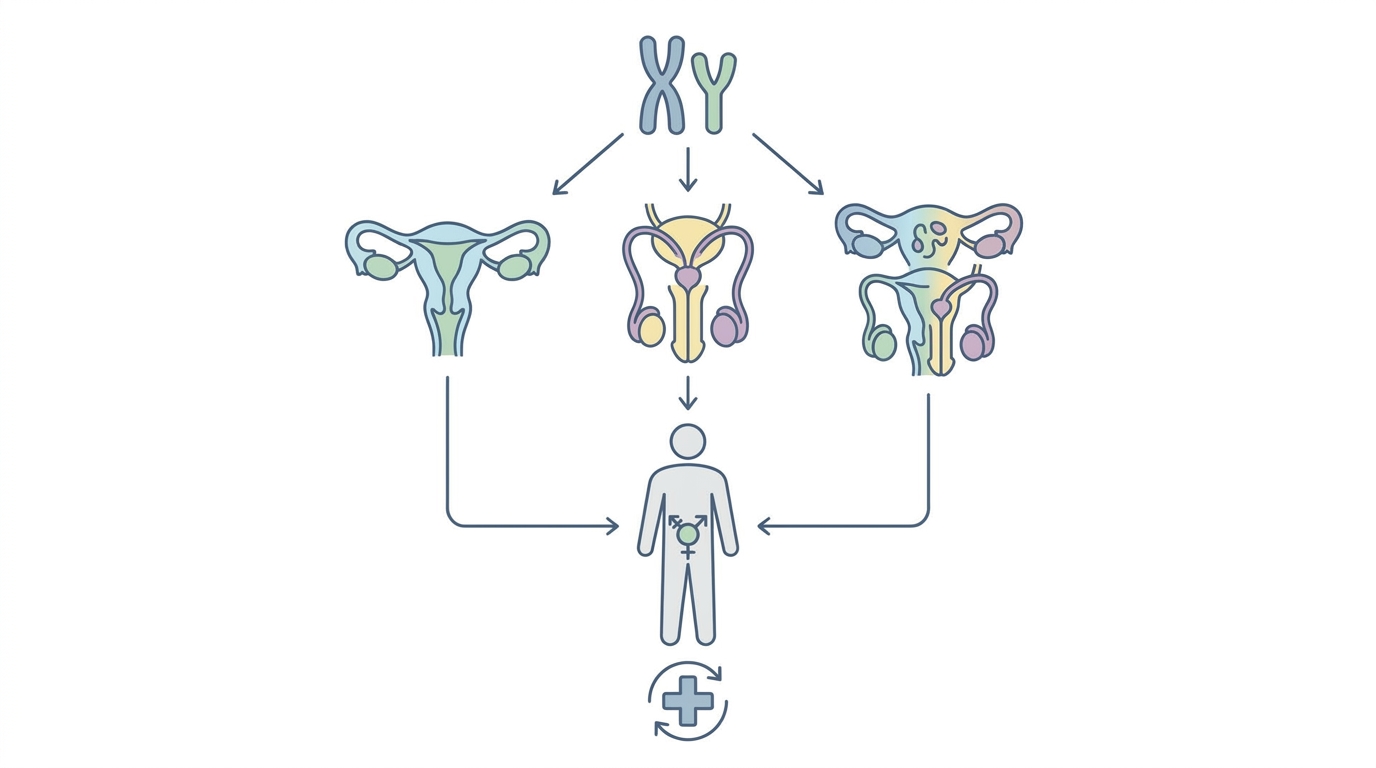
- Chromosome Mixes: We all inherit sex chromosomes from our biological parents. Males typically have XY chromosomes, and females typically have XX chromosomes. An intersex person might have a mix of these chromosomes, such as XXY. In some cases, certain cells might be XY while other cells are XX, or a person might have just one X chromosome.
- Mixed Reproductive Organs: An intersex person might have both ovarian and testicular tissue, known as ovotestes. For instance, you might have external body parts that look male while your internal organs or hormone levels lean female.
Imagine someone named Niluka. When she was born, everyone thought she was a girl. As she grew up, her period did not start. When doctors checked her, they found she had both ovarian and testicular tissue inside her body. She is intersex.
Does Being Intersex Affect Sexual Orientation?
This is a question many people ask. No, being intersex has no effect on your sexual orientation. Whether you are attracted to people of the opposite sex, the same sex, multiple genders, or no one at all is entirely separate.
Your personal gender identity and your sexual orientation are completely different from your intersex traits.
Is an Intersex Person a Hermaphrodite?
No, that is a common misconception. True hermaphrodites do not exist in humans. That term is very old and no longer used in modern medicine.
The old term suggested someone was fully male and fully female at the same time, which is biologically impossible. Many people in the intersex community view that old word as hurtful or offensive. The correct terms are intersex and intersex person.
Do Intersex People Need Surgeries or Treatments?
If you are intersex, you generally do not need any surgery unless you choose to have it yourself. Your body does not require fixing just because it is unique.
In the past, doctors often performed surgeries on babies born with intersex traits. These surgeries tried to make their genitals match the sex listed on their birth certificate or removed internal reproductive tissues like gonadal tissue. Many of these surgeries happened before a child turned two years old.
In recent times, intersex people and advocates have spoken out strongly against these early procedures. They argue that these surgeries are unnecessary and often harmful. Their view is that children should be allowed to grow up and make their own choices about their bodies—giving informed consent when they are old enough to understand.
Organizations like the American Academy of Family doctors support the right of intersex people to make their own choices about their bodies. This means waiting until a person is old enough to give thoughtful, informed consent.
What Are the Risks of Intersex Surgeries?
Early childhood surgeries can carry serious risks:
- Lowered sexual function later in life.
- Infertility or the inability to have children.
- Scarring and chronic pain.
- Urinary incontinence or trouble controlling urine.
- Frequent urinary tract infections or UTIs.
Are There Health Issues Connected to Intersex?
Most intersex people live healthy, active lives. However, in rare cases, an intersex condition can connect to certain health concerns. A few examples include:
- Bone health concerns, such as osteopenia or osteoporosis, where bones become weaker.
- A higher risk for certain rare tumors.
- Congenital adrenal hyperplasia or androgen insensitivity syndrome.
- Hypospadias, where the urinary opening is not at the tip of the penis, or a missing urinary opening.
- Klinefelter syndrome, where a male has an extra X chromosome.
- Mayer-Rokitansky-Küster-Hauser syndrome, where the uterus and vaginal canal do not develop as expected.
- Swyer syndrome, where sex glands do not develop properly.
These conditions do not happen to every intersex person, but they can occur in some cases. That is why regular visits with a trusted doctor are so important.
How Do I Know If I Am Intersex?
If your genitals did not show clear differences at birth, you might grow up without knowing you are intersex. Later in life, you might notice signs such as:
- Puberty not starting or taking an unusual path, such as periods not starting when expected.
- Changes during puberty that do not match the sex listed on your birth certificate, like a boy developing breast tissue.
- Trouble getting pregnant or facing fertility challenges.
If you notice any of these signs, visiting a doctor to get professional guidance is the best step to take.
Does Being Intersex Affect Fertility?
If you are intersex, your ability to have children depends on many different factors. Some intersex people can have children naturally, while others cannot.
Even so, many intersex people build families using assisted reproductive technology. This can include in vitro fertilization, donor eggs, donor sperm, embryos, or using a gestational carrier.
Finding out you are intersex can bring up many questions. You might feel shy, worried about your appearance, or stressed about fitting in with peers. Connecting with others who understand what you are going through helps a lot. Talk with your doctor about local support groups and helpful resources.
When to Call Your Doctor.
If you experience sudden pelvic pain, severe hormonal changes, signs of infection, or emotional distress about your body, reach out to a doctor right away. In case of a serious emergency, call 911 (US/Canada), 999 (UK), or visit your nearest emergency department right away.
Take-Home Message.
While intersex is a detailed topic, understanding it is very important. Always keep these core points in mind:
- Intersex is not a sickness; it is a normal part of human diversity.
- Many intersex people live healthy and successful lives.
- If you are intersex, you are never alone, and supportive communities exist to help you.
- You have the sole right to make choices about your own body, especially regarding medical procedures.
We hope this information helps you feel more confident about understanding intersex traits. If you have more questions, never hesitate to ask a trusted doctor.
| What to Do. | What to Avoid. |
|---|---|
| Talk openly with your doctor about any body changes. | Do not rely on myths or outdated terms like hermaphrodite. |
| Seek out supportive communities and counseling if needed. | Avoid rushing into irreversible surgeries without clear consent. |
| Learn about your body and embrace your unique identity. | Do not let fear stop you from asking important medical questions. |
A Note from Nirogi Lanka.
Paying close attention to your health and understanding your body is vital. If you or a loved one has questions about intersex variations, consulting an experienced doctor is always the best path forward. Getting accurate information helps you make confident, informed choices.


💬 Comments (0)
No comments yet. Be the first to share your thoughts here.
Add Your Comment