

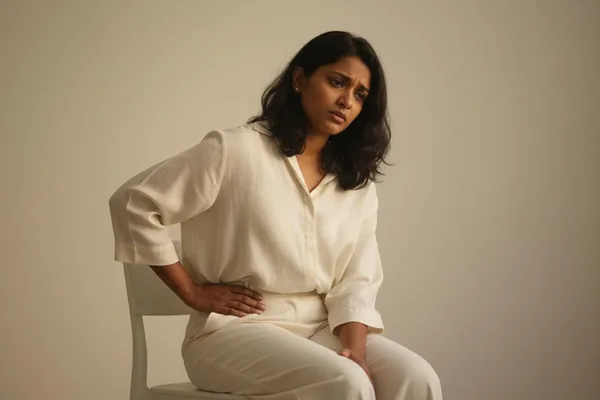
Do you sometimes feel a strange pain or aching in your buttocks, when you sit or in certain positions? To be precise, this pain occurs in the area where the two bones touch the ground when you sit. This may be a more common condition than you think. Today we are going to talk about a condition called Ischial Bursitis , which can cause such pain. Don't worry, it is not that difficult to manage if you are properly informed about it.
What is Ischial Bursitis?
Simply put, Ischial Bursitis is an inflammation, or pain, of the soft tissue cushions around your buttocks, especially the two bones that press into the ground when you sit (also known as the "sit bones" or "ischia"). Think of it this way: the two "U"-shaped bones at the bottom of your pelvis are called the sit bones. We sit on these two bones.
Now, around these bones, to protect them, like a cushion, there are small , fluid-filled sacs called bursae . The main function of these is to reduce the friction between the bones and the muscles as they move, that is, to reduce friction and absorb the shock. However, if these bursae are constantly under pressure, or if they are subjected to frequent friction, they can become inflamed. That is the condition we call bursitis .
Bursitis usually occurs in areas around bones that are under constant pressure or that rub against each other repeatedly during repetitive movements. For example, this condition is common in people who work in manual labor jobs and athletes. In the past, Ischial Bursitis was also called "weaver's bottom" because they worked in hard seats for long periods of time. It can also occur in cyclists.
It is sometimes called ``Ischial tuberosity bursitis.`` The ``ischial tuberosity`` is the round part of your sit bone ``(ischium)`` where the hamstring tendon ``(hamstring tendon)`` attaches. It is also sometimes called ``ischio-gluteal bursitis.`` It is an inflammation of the bursa between your sit bone and the gluteus maximus muscle, the largest muscle in your buttock.
How does it feel to have Ischial Bursitis?
Ischial bursitis is a condition that primarily affects the bursae around your sit bones. Many people report a sharp, pinpoint pain in their buttocks or the back of their thighs. The pain is often described as a dull, aching pain. It can be worse with exercise or prolonged sitting. It can also be painful to touch.
Other symptoms that may be seen include:
- A visible swelling.
- Decreased range of motion in the joint (for example, difficulty bending or straightening the leg).
- Disturbance of sleep at night (due to pain).
What other conditions cause these symptoms?
There are several other conditions that can cause symptoms similar to Ischial Bursitis, so it is important to see a doctor for a proper diagnosis.
- Hamstring tendonitis : The tendon that connects your hamstring muscle to your seat bone (ischium) may be inflamed. This tendon is located very close to the ischial bursae, so the pain is felt in the same area. If you've been exercising a lot recently, such as running or doing squats, you're more likely to have damaged the tendon than a bursa.
- Hamstring tendinosis : While tendonitis is usually a short-term, sudden condition, tendinosis is a long-term condition. This condition can develop if a tendon is left untreated or if it occurs repeatedly. Over time, the tendon fibers break down and when they regrow, they thicken and become stiff. This can cause pain and stiffness in the tendon. It can also affect your bursae, causing bursitis.
- Sciatica : Your sciatic nerve starts in your lower back. It then travels through your buttocks and down the back of your thighs. When this nerve is compressed (for example, a slipped disc), pain can radiate down the nerve. However, sciatica pain is a little different than bursitis pain. It is not usually confined to one spot, but rather a constant pain. Also, the pain is less likely to be aggravated by pressure or movement. In fact, sometimes movement or massage can help relieve sciatica pain.
What are the causes of Ischial Bursitis?
The main cause of ischial bursitis is repetitive stress on your bursae. This stress can be caused by pressure (for example, sitting) or friction (your hamstring tendon, gluteus maximus muscle, or seat bones rubbing against each other).
Some common causes of repetitive stress on the ischial bursae include:
- Sitting for long periods of time , especially on hard surfaces. Imagine someone working in an office sitting in a chair all day. Or, sitting for hours on long-distance buses and trains, like in Sri Lanka.
- Giving intense exercise to the surrounding muscles. For example, suddenly starting to run a lot, doing a lot of weight lifting.
Several factors increase the risk of developing Ischial Bursitis:
- Sedentary jobs (e.g. computer programmers, secretaries).
- Driving (especially long distances).
- Horse riding.
- Cycling.
- Canoeing.
- Long-distance hiking.
Repetitive stress injuries occur gradually over time. However, even a sudden injury can damage and inflame your bursae. For example, a hard fall on your buttock or a hard blow to the bursa, such as from an animal, can cause traumatic ischial bursitis.
In addition, although not very common, Ischial Bursitis can also occur as a symptom of connective tissue diseases that cause inflammation in various parts of the body. Examples:
- Rheumatoid arthritis
- Lupus
- Gout (Gout)
- Scleroderma
Very rarely, bursitis can also be caused by an infection of the bursae. Examples:
- Septic arthritis
- Tuberculosis
How is Ischial Bursitis diagnosed?
When you see a doctor, he or she will ask you about your symptoms and how they started. Then, they will do a physical exam. They may gently move your hip in different directions to see if you feel any pain. In most cases, this information and the exam alone can help diagnose ischial bursitis.
However, if your symptoms and history are not consistent with damage to the ischial bursae, your doctor may need to do further testing. This may include imaging tests (such as ultrasound scans, MRI scans). They may also order blood tests to check for other causes of your symptoms.
What are the treatments for Ischial Bursitis?
Ischial bursitis caused by an accident usually gets better with time and rest . If the condition is not severe, that is, mild to moderate, you can treat it at home. You can use ice , and over-the-counter pain relievers such as ibuprofen.
The most important thing is to avoid activities that aggravate your bursitis, especially sitting in a position that puts pressure on your bursae.
If the condition is severe, your doctor may give you an injection containing corticosteroids and local anesthesia . This will help reduce pain and swelling quickly.
If you have to sit, try placing a pillow under your thighs. This will reduce the pressure on your sit bones. Also, there are inflatable donut seats that you can use.
Once the inflammation has subsided and you are starting to recover, your doctor may recommend physical therapy . This can help prevent future damage. Physical therapy can help stretch and strengthen the muscles around your bursa, reducing the stress on the bursae.
Most people recover from acute ischial bursitis within a few weeks. However, if you don't get better, or if you've had ischial bursitis for a long time before it starts to get better, you may have another underlying condition that needs treatment.
How long can Ischial Bursitis last?
How long Ischial Bursitis lasts depends on how long the cause of your bursae has been present. If it is an activity, you will need to stop that activity in order to recover. If it is something else, for example, an infection, a long-term illness, or an underlying injury, the condition may require additional treatment.
Under normal circumstances, ischial bursitis will heal within a few weeks. You can help it by resting , applying ice , and taking anti-inflammatory medications like aspirin or ibuprofen. Your doctor may also recommend physical therapy while you recover.
What can be done to prevent Ischial Bursitis?
If your job, sport, or hobby is a risk factor for developing ischial bursitis, you may be able to help prevent it by changing the equipment you use or your technique . You can seek advice from a professional, or occupational therapist , about this. They can advise you on changes you can make to prevent bursitis.
If you didn't know that sitting can be harmful to you, now you do. Our bodies are designed to move – to transfer weight and stress from one place to another. No single part of our body can handle too much weight and stress all the time – not even our buttocks.
If you have chronic pain in your buttock area, it can be both frustrating and distressing. Ischial bursitis is not a commonly talked about condition. It can be difficult to understand where it comes from and what makes it worse. But, once you understand it, you can begin your journey to recovery.
The most important things for you to remember (Take-Home Message)
So, here are some of the most important things you need to remember about Ischial Bursitis that we talked about:
- If you have pain in your buttocks, especially when sitting, be careful.
- If you have pain like this, rest is the most important thing. Avoid activities that increase the pain for a while.
- Simple things like applying ice and using painkillers can provide relief.
- If the pain is severe, does not subside within a few days, or occurs frequently, be sure to seek medical advice .
- Avoid sitting for long periods of time as much as possible. If you must sit, use a soft seat and get up and walk around frequently.
- If your job or sport puts you at risk for this condition, take care of proper posture and equipment .
I hope this information is useful to you. Stay healthy!
` Ischial Bursitis, Ischial Bursitis, Buttock Pain, Sit Bone Pain, Pain While Sitting, Bursitis, Hamstring




💬 Comments (0)
No comments yet. Be the first to share your thoughts here.
Add Your Comment