
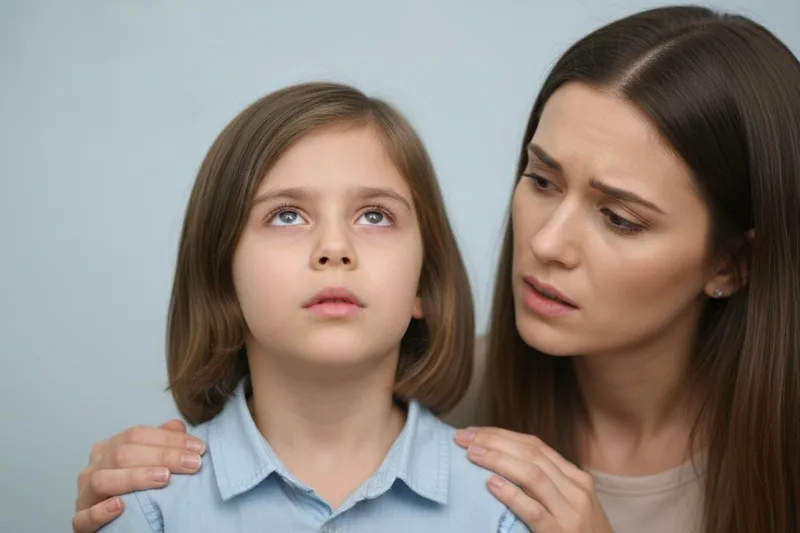
Has your little one suddenly started blinking rapidly? Or has their eyes started to roll back and their head felt like they were going backwards? Sometimes this can be accompanied by a small seizure. As a parent, it's normal to feel very scared and worried when you see something like this. Today we're going to talk about a rare type of epilepsy that shows these symptoms, but we don't hear about them very often. This is called Jeavons Syndrome, or Epilepsy With Eyelid Myoclonia.
What is Jeavons Syndrome?
Simply put, Jevons syndrome is a rare form of epilepsy . It is characterized by sudden, sudden blinking, or eye twitching. This condition is often caused by changing light patterns and sensitivity to light . The condition often begins in childhood .
You must have felt so scared when your child had their first seizure, and every time they had one, right? There is always concern for their safety. Even though your child wants to play, learn, and be happy like other children, it is normal for both of you to feel a little helpless about the situation.
But the good news is that there are treatments available to control these seizures and manage the impact they can have on your and your child's mental health . Jevons syndrome is not a condition that goes away as the child grows up, it is a lifelong condition . Therefore, the child will need proper medical treatment and monitoring throughout their life.
Is Jeavons Syndrome dangerous?
Yes, Jeavons Syndrome can be dangerous in some cases . The nature and severity of the seizure can have a big impact on the child's overall health. Since we don't know when a seizure will occur, there is a high chance that the child will suddenly fall and get injured . Therefore, it is essential to seek treatment from a doctor and follow the instructions to keep the child safe.
How rare is this condition?
Jeavons Syndrome affects between 1% and 2% of people diagnosed with epilepsy. It is estimated that around 50 million people worldwide suffer from epilepsy. So imagine how small a percentage of them have this condition.
What are the symptoms of Jeavons Syndrome?
There are three main features of Jevons syndrome:
1. Involuntary, rapid contractions of the eyelid muscles cause the child's eyes to close or blink continuously (`Eyelid Myoclonia`). During this time, the child's head and eyes may move back. This may occur with or without sudden loss of consciousness (`Absence Seizure`). This usually lasts a few seconds. This can happen several times a day, but is most often seen upon waking in the morning .
2. Eye closure-induced seizures (`Eyelid closure-elicited electroencephalographic paroxysms`) are seizures that are caused by changes in light or lack of sleep. This is when the child closes their eyes and experiences abnormal electrical patterns in the brain (`Eyelid closure-elicited electroencephalographic paroxysms`). A doctor can look for these patterns with an ``EEG`` test.
3. Photosensitivity. Flashing lights can trigger seizures. Bright lights or changing light patterns (e.g., sunlight shining through trees) can cause discomfort.
Imagine, while your child is playing, his eyes suddenly start blinking rapidly and his head goes back. After a few seconds, he returns to normal. How annoying would it be if this happened several times a day?
In addition, the child may have sudden jerking of the arms and legs (`Myoclonic seizures`) or uncontrollable jerking of the whole body (`Grand mal` or `Tonic-clonic seizures`) . However, these are not very common.
What are the triggers for Jeavons Syndrome?
These symptoms are mainly caused by bright, flashing or flickering lights .
- Strobe lights like disco lights
- A light bulb that needs to be changed (on, off)
- The sun suddenly appearing through the clouds
- Light shining on the surface of the water
- The changing light patterns as a vehicle drives through trees
These things can cause seizures. Therefore , avoiding certain light sources or protecting your child's eyes from changes in light can help reduce the frequency of these symptoms.
At what age do symptoms of Jeavons Syndrome begin?
These symptoms often begin in childhood . The average age of onset is between 1 and 15 years , but most cases are reported between 6 and 8 years .
What causes Jeavons Syndrome?
The exact cause of Jevons syndrome is not yet fully understood , but research suggests that there is a genetic mutation . It has been found that certain changes in the following genes may cause this seizure disorder:
- `CHD2`
- `COL6A3`
- `KCNB1`
- `NAA10`
- `NEXMIF`
- `RORB`
- `SYNGAP1`
Some of the genetic changes that cause this condition have not yet been identified. The way each genetic change is passed on from generation to generation (inheritance) may vary. You can seek the help of a genetic counselor to learn more about this.
Who is most at risk for this condition?
Anyone can develop Jeavons Syndrome. However, the risk is higher if someone in your family has epilepsy . About 80% of children diagnosed with Jeavons Syndrome have a blood relative who also has generalized epilepsy .
Also, this condition is more common among girls than boys .
What are the possible complications of Jeavons Syndrome?
About one in five people diagnosed with Jevons syndrome may have several consecutive absence seizures, without any rest in between. This is called eyelid myoclonic status epilepticus .
Most importantly, status epilepticus is a life-threatening medical emergency. It requires immediate medical attention!
If your child has a seizure that lasts longer than 5 minutes, or if they have several seizures in a row without a break in between, call 911 immediately or take your child to the nearest hospital emergency department.
Epilepsy can also have a significant impact on a child's mental health . After a seizure, the child may feel fearful and restless. Anxiety and depression are also common with Jevons syndrome. Therefore, it is important to take care of the child's mental well-being and, if necessary, seek help from a mental health counselor .
How is Jeavons Syndrome diagnosed?
A doctor diagnoses Jeavons Syndrome by considering these tests and factors:
- By doing a neurological exam.
- By knowing the child's health status and family health history (especially epilepsy).
- By performing an EEG test (Electroencephalogram - EEG).
During these tests, the doctor will look for the three main symptoms of Jevons syndrome mentioned earlier. He will also rule out other conditions that may cause similar symptoms to make an accurate diagnosis.
How is Jeavons Syndrome treated?
Jevons syndrome is treated with antiseizure medications . In addition, your doctor may recommend wearing special lenses to control symptoms caused by light.
What kind of medications are used for this?
Your child's doctor may prescribe one or more of the following antiseizure medications (listed in alphabetical order):
- Brivaracetam `(Brivaracetam)`
- Clobazam
- Ethosuximide
- Lacosamide
- Lamotrigine
- Levetiracetam `(Levetiracetam)`
- Perampanel `(Perampanel)`
- Topiramate
- Valproic acid `(Valproic acid)`
Everyone responds differently to seizure medications . It may take time to find the right medication or combination of medications for your child, and you may need to try several different medications . This can be a frustrating and sometimes long-term experience. During this time, you will need to see your child's doctor regularly to see how your child's body is responding to the medications.
The doctor will also inform you about the possible side effects of any medication your child is given. If you have any questions about the treatment the doctor recommends, ask.
Can this condition be treated by changing the child's diet?
There is no specific recommended diet for Jeavons Syndrome. There is currently no data to support the use of the ketogenic diet as a treatment for this condition.
What is the future of a child with Jeavons Syndrome? (Prognosis)
The future of a child with this condition varies depending on each child's specific situation . Your child's doctor is the best person to know about this.
There is no cure for Jevons syndrome, but more research is being done. Although it is a lifelong condition, there are treatments to control seizures .
Does Jeavons Syndrome affect a child's intelligence?
Seizures and blinking can interfere with a child's ability to learn in the classroom . If they can't keep their eyes open properly, it can be difficult to fully participate in class. Many children with Jevons syndrome have some difficulty learning at school and may need additional educational support . However, this condition does not directly affect a child's intelligence .
If the child has a developmental delay, it may be a sign that there is a genetic cause for Jevons syndrome.
Does Jeavons Syndrome affect lifespan?
Jeavons Syndrome does not directly affect a child's lifespan . A normal lifespan is possible. However, the severity of the seizures and how the child's body responds to treatment can affect the child's overall health. A doctor can help monitor and manage the condition throughout the child's life.
When should I see a doctor?
If your child has a seizure for the first time, call emergency services immediately or take them to a hospital.
If you or your child has been diagnosed with Jeavons Syndrome, if you have seizures or symptoms that seem to be getting worse, or if you are having side effects from treatment, see a doctor right away . Your doctor can help you and your child manage the condition and answer your questions.
What questions should I ask the doctor?
- "Doctor/Madam, what kind of treatment is best for my child?"
- "What are the possible side effects of these treatments?"
- "Do you recommend using a special type of glasses for light sensitivity?"
- "How can I help my child at school?"
Is Sunflower Syndrome related to Jeavons Syndrome?
Sunflower Syndrome and Jeavons Syndrome are two similar conditions . Sunflower Syndrome is also a type of epilepsy that is accompanied by eyelid myoclonia. In this, a person may turn towards a bright light source (such as sunlight) and wave their hand in front of their eyes. This can cause a change in the light pattern and trigger a seizure.
Finally, things to remember (Take-Home Message)
We sometimes forget how important light is to our daily lives. Light helps us see in the dark and grow plants, for example. But for someone with Jeavons Syndrome, light can trigger seizures . A doctor can help manage how light affects your child. They may prescribe medication and special lenses to cover the eyes.
Remember:
- Jeavons Syndrome is a rare but manageable epilepsy condition .
- The main symptoms are sudden blinking, sensitivity to light, and photophobia .
- Although this is a lifelong condition, it can be controlled with medication and lifestyle changes .
- Be mindful of your child's mental health as well . Seek professional help if necessary.
- A seizure lasting more than 5 minutes or a series of seizures is an emergency! Seek medical attention immediately.
I hope this information has helped you gain some understanding of this situation. I wish your child a speedy recovery!
` Jevons syndrome, epilepsy, seizures, eyelid myoclonus, pediatrics, photosensitivity, EEG




💬 Comments (0)
No comments yet. Be the first to share your thoughts here.
Add Your Comment