
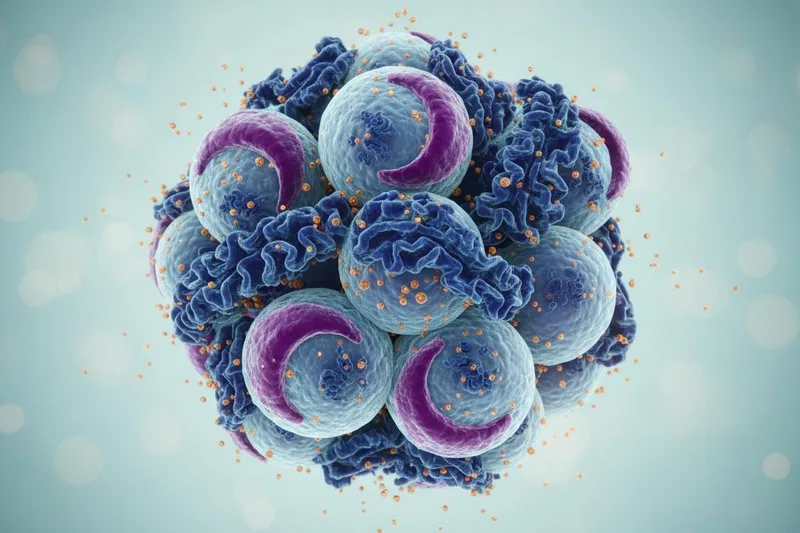
You've probably heard the word glands a lot, right? Sometimes a doctor says it, or we just say things like 'a gland is swollen' in conversation. But do you know exactly what these glands are, and what big job these little things do inside our bodies? Today, we'll talk about it simply, in a way that you can understand.
What exactly are glands?
Simply put, glands are tiny organs in our bodies. They are like factories. Each of these glands produces something. What they produce is very important for our bodies. There are more types of glands than you might think throughout our bodies. Some of them are very small, but despite their small size, they do a lot of work.
Let's divide these glands into three main categories based on their functions. Then it will be easier for you to understand.
1. Exocrine Glands
This is one type. The things made by these glands go directly out of the body, or they come to the surface of the body. There are several examples that are very easy to understand.
- Salivary glands: When you see a delicious food, or when you put it in your mouth, your mouth starts to salivate. That saliva comes from these salivary glands. These are located inside our mouths. The main function of this saliva is to help digest food. It helps to break down food particles, make them easier to swallow, and also helps to start the digestion of some of the ingredients in the food.
- Sweat glands: When we work hard or are exposed to the sun, we sweat. That sweat comes from the sweat glands under our skin. These make sweat and release it to the surface of the skin. The main function of this is to control the body temperature by sweating when the body gets hot and cool the body. It's like a natural `air conditioner` in our body.
- Lacrimal glands: Tears come out when we cry. And if even a speck of dust gets into our eyes, tears fill up. These tears come from the lacrimal glands, which are located above the eyes and under the eyebrows. These tears help keep the eyes clean, prevent them from drying out, and protect them from germs that enter the eyes.
- Mammary glands: This is special for women. When a girl grows up and becomes a mother, the mammary glands in her breasts produce breast milk for her baby. Breast milk is essential for a baby's growth and protection from diseases.
Think about how normal all of this sounds. But behind it all are these little glands.
2. Glands that produce hormones - our body's messengers!
Now let's talk about another very special group of glands. These produce chemicals called hormones . These hormones are like the postmen or messengers of our body. They are the ones who carry messages to each part and organ of the body, telling them 'do this, do this', 'grow this, do this', 'change this now', etc.
We call the system of glands that make these hormones the endocrine system . This is a very complex and very important system.
What happens in the endocrine system?
- Growth and development: These hormones control your height and body growth from a young age.
- Puberty: The physical changes that occur as a child gradually becomes a young adult – we call it puberty – depend entirely on this endocrine system.
- If it's a girl, things like breast development and the start of menstruation.
- If it's a boy, things like a deepening voice, the growth of a beard and chest hair, and muscle development.
All of this happens at the right time because the appropriate hormones are produced.
- Body balance: These hormones help to keep many things in our body, such as sugar levels, salt levels, and water levels, in balance.
Think of it this way: Hormones and the endocrine system work like a traffic controller in our body. They make sure everything runs smoothly and on time. For example, the thyroid gland is an important endocrine gland in the neck. The hormones it produces control the rate at which our body produces energy (metabolism).
3. Immune System Glands that help protect us from diseases
Finally, another important part of our body that we call 'glands' is our immune system . These are like our body's defense system. These glands produce substances that help fight off illness and help us recover quickly if we do get sick.
Do you remember when you had a bad cold or a throat infection, you would get little lumps on the sides of your neck, sometimes under your ears, under your armpits? Some people say 'flu'. That's when the glands of your immune system swell up and fight the disease. We also call these lymph nodes.
That means those glands are actually a good thing! It means your body's immune system is working properly and fighting off illness.
Inside these lymph nodes are special types of cells (white blood cells). When a germ enters the body, these cells are the ones who catch it and destroy it. When they fight it, these glands swell. When the disease is cured, they shrink back to normal.
So, you see, right? Even though we say 'glands', they are not the same thing. We have many glands in our bodies that perform different functions. From producing saliva, to growing us, to protecting us from diseases, the service performed by these small organs is immense.
So, what is the message for us from all this?
I hope you now have a rough idea of what glands are. These are some of the most important parts of our bodies that work silently, but constantly.
- Glands are organs of various types that perform different functions. Some of them secrete things like saliva, sweat, and tears.
- Others produce hormones that control our growth, development, and body functions. These belong to the endocrine system .
- The other important group is the glands that help the immune system . These fight disease.
- Don't be alarmed by swollen glands in your neck. It's a sign that your body is fighting an infection. However, if the swelling persists for several days, is painful, or gets worse, you should definitely see a doctor.
As long as these little glands are working properly, we are healthy. Therefore, eating a balanced diet, exercising, and living a healthy lifestyle are very important for the good functioning of these glands.
` Glands, Hormones, Endocrine system, Immune system, Health, Body functions


💬 Comments (0)
No comments yet. Be the first to share your thoughts here.
Add Your Comment