
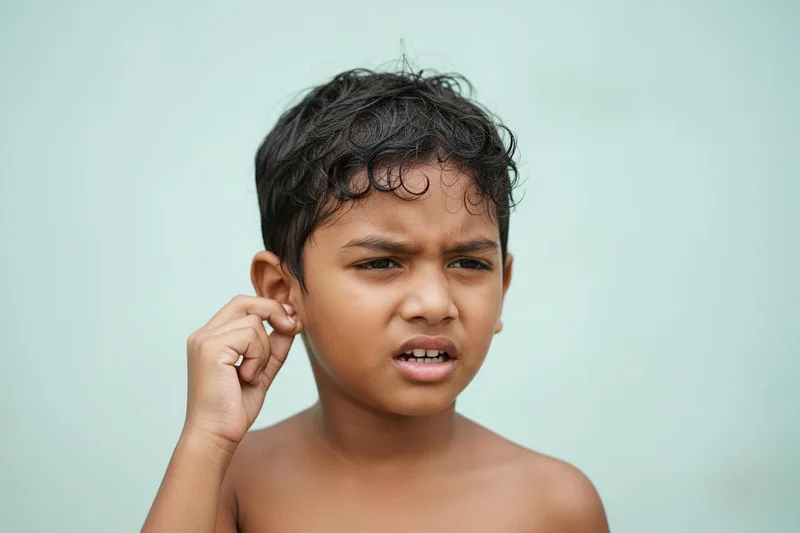
Have you ever suffered from pain inside your ear? Especially after a long swim or a dip in a swimming pool? Sometimes it can start with a slight itch inside the ear and then escalate to a severe pain. At times like these, we may suspect that this is a condition called 'Swimmer's Ear'. So today, let's talk about it in detail.
What is 'Swimmer's Ear'?
Simply put, 'swimmer's ear' is an infection that occurs in the area where our ear canal is. If you put your finger in your ear, you can feel a small part of the ear canal. However, if someone with 'swimmer's ear' tries to put their finger in, it can be so painful that they scream, ' Ouch! '
Most of the time, we refer to an 'earache' or 'ear infection' as an infection in the middle ear. Doctors call it 'Otitis Media'. It can sometimes come with a cold. But 'Swimmer's Ear' is different. The other medical name for this is 'Otitis Externa'. This refers to an infection of the outer ear, that is, the ear canal.
How does 'Swimmer's Ear' develop?
Okay, now let's see how this condition called 'swimmer's ear' occurs.
Our ear canal is like a road to the eardrum, or as we call it, the eardrum. This road has very delicate skin. That skin is protected by a thin layer of earwax. Most of the time, when we bathe or shower, even if water gets into our ears, it goes back out without any problems. That's why people who swim frequently are more likely to develop 'swimmer's ear' than those who just bathe.
Think about it this way. Let's say you or your baby spends several days in a swimming pool. Then some water that has gotten into the ear can get stuck in the ear without coming out. That's when the problem starts. Bacteria start to grow where that water is trapped. Because bacteria need a warm, moist environment to grow. When bacteria grow like this, the ear canal becomes red and swollen.
Even non-swimmers can get this condition. How do you know? Sometimes, even a small scratch inside the ear can lead to an infection. Some people use cotton swabs to clean their ears, or they just dig into their ears with their fingers, causing injury. That's when 'swimmer's ear' can occur.
Let's understand a little about the role of earwax?
The earwax in our ears is not just a type of dirt, is it? It serves to protect the ear canal. It has a slightly acidic and oily nature. This controls the growth of bacteria and also protects the skin of the ear from drying out. So trying to completely remove earwax is not a good idea. The ear has the ability to clean itself.
How do I know if I have 'Swimmer's Ear'? What are the symptoms?
Okay, now let's see how to tell if you have 'swimmer's ear' and what the symptoms are.
- Itching inside the ear: This often starts with a slight itch inside the ear. But it's best not to go to the dentist at this time, right? Doing so can worsen the infection.
- Ear pain: The main symptom of 'swimmer's ear' is ear pain. Sometimes, even touching the ear from the outside, or hitting the eardrum anywhere, can cause severe pain. Imagine, the pain can be so severe that you can't even turn your head to the side or sleep. This pain can gradually increase.
- Ear swelling and redness: The ear canal may appear swollen and red. Sometimes a watery fluid or pus may come out of the ear. This fluid may be clear at first, but later turn yellow or green.
- Hearing loss: Due to swelling and fluid buildup inside the ear, hearing may be slightly reduced in the affected ear. It may feel like something is stuck inside the ear.
- Pain when touching the jaw: In some severe cases, pain may also occur in the ear area when the jaw is moved while talking, eating, or eating.
- Fever: Sometimes you may experience a fever, especially if the infection is severe.
Important: If you have any of these symptoms, especially if the ear pain is severe, there is fluid coming from the ear, or you have a fever, you should definitely see a doctor. Do not self-medicate. Doing so may make the condition worse.
What happens when you see a doctor? What are the treatments?
When you go to a doctor, he or she will ask you about your symptoms and examine your ear. They may use a small instrument (called an `otoscope`) to look inside the ear. If a condition called `swimmer's ear` is suspected, treatment will be started.
Often, your doctor will prescribe ear drops to put in your ear. These drops usually contain antibiotics to kill bacteria. Sometimes, you may also be given ear drops that contain a steroid or an acidic solution to reduce swelling and pain. These work by making the environment inside the ear less conducive to bacterial growth.
Sometimes, if the ear canal is very swollen and the drops don't go in properly, the doctor may use something called a 'wick.' It's not like the screen on a candle, is it? It's like a small piece of sponge or gauze. The doctor gently inserts it into your ear and puts medicine on it. The 'wick' then helps the medicine spread to all the infected areas of your ear. When it's done, the doctor will remove it, or it may come out on its own in a few days.
You should use the drops for exactly the number of days your doctor tells you to. Don't stop taking them just because your earache has subsided. Doing so can cause the infection to come back, and the bacteria can develop resistance to the medication you used.
If you have ear pain, your doctor will probably tell you to take a pain reliever. This will help to reduce the pain until the antibiotics start working. Most often, they will prescribe something like paracetamol or ibuprofen.
Remember: Never put anything in your ear without medical advice. Some people put coconut oil, sesame oil, or other Ayurvedic oils in their ears, which can make the infection worse, especially if the eardrum is damaged.
When can I go to the swimming pool again?
The biggest question for everyone, especially young children, is 'When will I be able to bathe and swim again?' That's something you'll have to ask your doctor. But be prepared to wait a little longer. It usually takes between 7 and 10 days before the doctor says, 'Okay, you can swim now.' That can be a bit of a bummer in the summer. But it's better than having that terrible earache again, right?
It is very important to protect the ear from water until the infection is completely healed. You should also be careful not to let water get into the ear when bathing. Sometimes the doctor will tell you to dip a cotton ball in something like ``Vaseline`` and keep it out of the ear when bathing. This will prevent water from entering.
How to prevent swimmer's ear?
Swimmer's ear is better prevented than treated after it occurs. If you suffer from swimmer's ear regularly, or if you spend a lot of time in the water (especially swimmers), there are several ways to prevent this condition.
- Keep your ears dry: This is the most important thing. After swimming or bathing, keep your ears dry. Turn your head to one side to drain any water from your ears. Wipe the ear canal and earlobe with a soft, clean cloth. Never put anything inside your ear, such as cotton swabs, fingers, hairpins, or key rings, to dry them. This can damage the delicate skin inside the ear and lead to infection.
- Using a Hair Dryer (Carefully!): You can also dry your ear slowly by setting the hair dryer to the lowest heat and speed setting, holding it about a foot away from the ear. But you need to be very careful not to send too much heat inside the ear.
- Special Ear Drops: Your doctor may recommend special ear drops to put in your ears after swimming. These work by drying out the water in your ear, creating an environment that is hostile to bacterial growth. They usually contain a small amount of acetic acid or isopropyl alcohol. However, these should only be used under medical advice, especially if you have a perforated eardrum or have had previous ear surgery.
- Using earplugs: You can use earplugs to prevent water from getting into your ears while swimming. But make sure to use properly fitting, clean earplugs. Don't forget to clean them after each use.
- Wearing a Swimming Cap: Wearing a swimming cap can cover your ears and can also reduce water ingress to some extent.
- Taking care of earwax: As mentioned earlier, earwax is a protective covering. So, don't try to remove earwax all the time. The ear canal cleans itself. If you feel like your ear is blocked by earwax, see a doctor to have it removed safely.
If you frequently get 'swimmer's ear', it's best to talk to your doctor to find out what protective measures are best for you.
Finally, a few things to remember (Take-Home Message)
Okay, so we've talked a lot about 'Swimmer's Ear' today, haven't we? Finally, here are the most important things you need to remember:
- Swimmer's ear (Otitis Externa) is an infection of the ear canal. It is more common in people who swim frequently or come into contact with water.
- If you experience symptoms such as itching inside the ear, severe pain (especially when touching the earlobe), swelling, fluid draining from the ear, and hearing loss, it could be 'swimmer's ear'.
- If you experience these symptoms , see a doctor immediately and get the right treatment (usually antibiotic ear drops). Use the medication correctly for the full duration of the treatment, as directed by your doctor.
- This condition can be largely prevented by keeping the ears dry after swimming and following safety measures as advised by a doctor.
- Never put anything in your ear without medical advice, or clean the inside of your ear with sharp objects like ear sticks. Doing so can damage the ear.
So, I hope this information is useful to you. Take care of your ears! Because, ears are a very valuable organ for us. Have a wonderful day!
` Earache, Swimmer's Ear, Otitis Externa, Ear Infection, Swimming, Ear Medication, Antibiotics, Ear Pain


💬 Comments (0)
No comments yet. Be the first to share your thoughts here.
Add Your Comment