
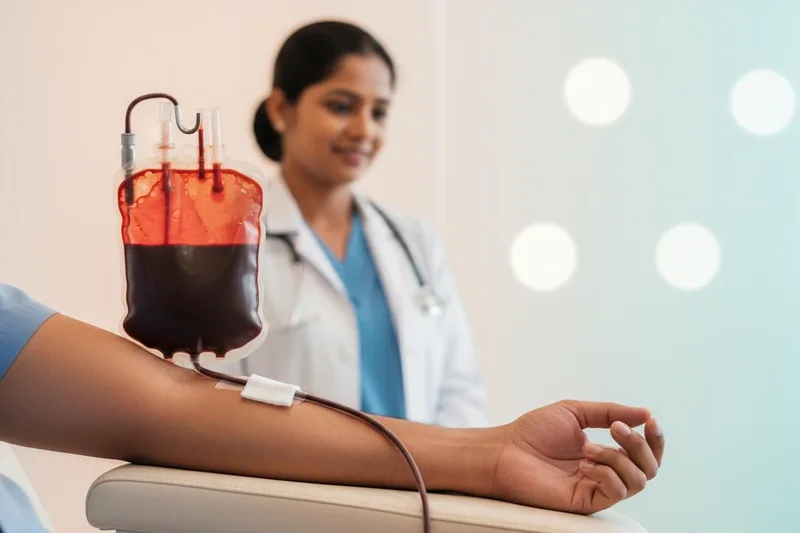
Have you ever heard of blood donation, or of a need for blood in an emergency, or a major operation? Do you know who can help us in such times? That is blood banks. Although they are called banks, they do not deposit money. So what? Let's talk about this life-saving service today.
So what is a blood bank?
Simply put, a blood bank is a place where blood is collected from healthy, voluntary donors, tested, and stored properly. Just like we deposit money in a bank and withdraw it whenever we want, blood banks provide life-saving blood to those who need it, when they need it. But remember, it's not about money, it's about lives!
Why are blood banks so important to us?
Think about someone who has lost a lot of blood in an accident. Or, about someone who is preparing for a major surgery. There are some diseases, for example, like Thalassemia, where people with severe anemia, cancer patients, or people with certain blood diseases have to continuously give blood. Also, a mother can lose a lot of blood during childbirth. In any case, if they cannot be given blood quickly, it can be life-threatening. That is when the blood in these blood banks becomes a life-saving medicine. Blood is not something that can be made artificially. That is why the role of blood banks is so important.
How do these blood banks get blood? (Let's also learn a little about blood donation)
Now you might be thinking, 'Okay, there's blood in blood banks. But where does that blood come from?' This precious blood comes from healthy adults like you and me who voluntarily donate blood. This is a very noble donation. Generally, anyone between the ages of 18 and 60, who is healthy, has no infectious diseases, and weighs more than 50 kilograms can donate blood. Some people may be a little scared about donating blood. Things like, 'Will it hurt when I get a needle? Will I get tired when I give blood? Will I have enough blood in my body?'
In fact, donating blood can be a little painful, but it is not unbearable. Doctors and nurses carefully examine you to see if you are suitable for blood donation. A very small amount of blood is taken from your body (usually about 450 milliliters). That amount is replenished in your body within a few days. Therefore, there is no harm to your body, and you will not feel much fatigue. All the equipment used to donate blood is brand new and sterilized, so you will not be infected with any disease. Did you know that one blood donation can save up to three lives ?
What happens to the blood received at the blood bank?
Okay, now let's say you donate blood. What happens to that blood after that? Does it go straight to a patient? No, it doesn't. Every bag of blood that comes to the blood bank is very carefully and undergoes several special tests.
1. Blood Group and Rh factor testing
The first thing you need to do is find out exactly what your blood type is (A, B, AB, or O) and Rh factor (positive or negative). Because when donating blood, you need to give blood that exactly matches the patient's blood type. Otherwise, big problems can arise.
2. Testing for infectious diseases
Next, the blood is tested for pathogens such as HIV (the virus that causes AIDS), Hepatitis B and C (viral diseases that affect the liver), and Syphilis. The main purpose of these tests is to prevent the transmission of diseases through blood transfusion. If blood is confirmed to have such a disease in any way, that blood will not be given to any patient.
3. Separation into Blood Components
Most of the time, we don't give whole blood to patients. Because each patient needs each component of the blood, the donated blood is separated into its main components using special machines.
- Red Blood Cells: These are what carry oxygen throughout the body. They are given to people with anemia, those who have lost a lot of blood in accidents, and those who have undergone surgery.
- Platelets: These help the blood clot. You may have heard that platelets decrease when you have dengue. They are also needed by people with diseases like leukemia and those undergoing cancer treatment.
- Plasma: This is the liquid part of the blood. Plasma is given to people who have suffered burns, liver disease, and blood clotting problems.
- Cryoprecipitate: This is another special fraction separated from plasma. It is used for people with bleeding disorders such as haemophilia.
Imagine how valuable it would be to be able to separate parts like this from a single blood donation and help several different patients!
4. Proper storage
The blood and blood components that have been tested and separated into components in this way are stored at the appropriate temperature in special refrigerators and freezers. Each blood component has a valid period. For example, while red blood cells can be stored for about 35-42 days, platelets can only be stored for 5 days. Plasma can be stored in a freezer for about a year. This proper storage makes it possible to donate blood quickly in an emergency.
Who receives blood? (Let's also be aware of blood transfusions)
Who needs blood from a blood bank? As we have discussed before, blood is given to anyone who needs it due to accidents, surgeries, or various medical conditions. But there is something very important here. That is blood type compatibility.
Before giving blood to a patient, the patient's blood type and the blood type in the donated blood bag are checked repeatedly to make sure they match. We call this ``Crossmatching''. If the wrong blood type is given, it can even be life-threatening to the patient. Therefore, this is something that is done very carefully.
A blood transfusion is usually done in a hospital, under the supervision of doctors and nurses. It is similar to giving a saline solution. The blood bag is hung on a saline stand and the blood is given through a cannula into the patient's vein. During this time, the medical staff also pays close attention to whether the patient is experiencing any discomfort (such as fever, itching, difficulty breathing).
Some misconceptions about blood donation and blood banks
Although donating blood is a great thing that can save lives, there are some misconceptions that some people have about it. Let's take a look at that.
- 'The sting will hurt, I'm afraid': True, there is a little pain. But it's a small thing, like being bitten by a mosquito. If that little pain can save a life, how much is it worth?
- 'Will I get sick if I give blood': Absolutely not. All the equipment used to take blood is new and sterilized. So you won't get any diseases.
- 'I don't have enough blood in my body, I'll have a problem if I donate it': Before taking blood from you, your health condition is carefully assessed. Blood volume, weight, and blood pressure are checked, and blood is only taken if you are not at risk. The amount taken is small and will not cause any harm to the body.
- 'Donating blood makes you slimmer/bigger': This is also a misconception. There is no connection between donating blood and changes in body weight.
Therefore, it is important to not be fooled by such misconceptions and to come forward to donate blood whenever possible. Just think of how many lives your one donation could save!
How is the blood bank service in Sri Lanka?
In our country, Sri Lanka, this blood bank service is carried out in a very systematic manner, in accordance with international standards, by the National Blood Transfusion Service (NBTS) . They maintain a network of blood banks in hospitals across the country. They also organize blood donation camps, test the blood, store it, and distribute it to the hospitals in need. All this is done free of charge. This is a very important and essential part of the health service in our country.
How can we help with this?
For blood banking services to be successful, there must be a constant supply of blood. We can all contribute to that.
- If you are a healthy adult and eligible to donate blood, definitely donate blood. Check if there is a blood donation camp in your area, or you can visit the blood bank at the nearest government hospital and get details.
- Educate your friends and family about the importance of donating blood. Clear up misconceptions and encourage others to do the same.
- Share blood donation messages via social media.
Remember, a drop of blood you donate can save someone's life!
Finally, things to remember
So, you probably understand now that a blood bank is not a place where you deposit money, but a very valuable place where you deposit lives and help save lives. A blood bank is where blood donated by healthy people is carefully screened, separated into parts, stored safely, and given to the right person, when needed.
Blood is something that cannot be manufactured artificially and can only be obtained from the human body. Therefore, donating blood is the greatest sacrifice a person can make. Your single blood donation can save several lives. Therefore, come forward to donate blood without fear or doubt. The satisfaction you will get from it will be priceless.
` Blood bank, blood donation, blood transfusion, blood groups, NBTS, Sri Lanka, health


💬 Comments (0)
No comments yet. Be the first to share your thoughts here.
Add Your Comment