
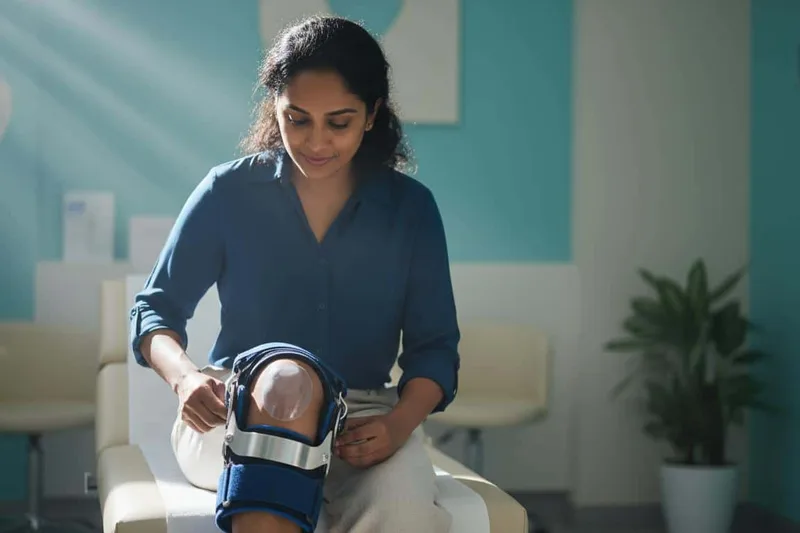
Do you sometimes hear a 'cracking' sound from your knee when you walk, run, or climb stairs? Or do you feel unbearable pain? Maybe you are a sports person, or you have suffered a knee injury. At times like these, your doctor may tell you to use a 'knee brace'. So let's see what a knee brace is, what it does, and how to use it.
What is this knee brace?
Simply put, a Knee Brace is a medical device that helps keep your knee joint stable and straight. To be precise, these are also called ``Orthoses''. Doctors recommend using these to provide protection and support to the knee, whether after a knee injury or surgery.
When is a knee brace needed?
There are many reasons why you might need a knee brace. For example:
- Knee sprains or other injuries to the knee ligaments (Ligament injuries)
- Patellofemoral pain syndrome, a painful condition around the kneecap
- Kneecap instability or frequent popping
- Conditions such as inflammation of a tendon attached to the kneecap (Patellar tendinitis)
- Some conditions caused by nerve weakness (Peripheral neuropathy)
- Knee arthritis
- Joint hypermobility syndrome
- Genetic conditions such as `Ehlers-Danlos syndrome`
Additionally, if you are an athlete, your doctor may recommend that you wear a knee brace to reduce the risk of injury while playing sports. For some people, this can also help manage knee pain.
But remember this. It is not a good idea to buy a knee brace from a store or pharmacy without seeing a doctor as soon as you feel pain in your knee. First, see a doctor and find out exactly what your problem is, and only if he recommends it, choose a brace that suits you best.
What really happens with a knee brace?
A knee brace is designed to support your knee and keep it in the correct position. These are often made of sturdy plastic or metal. They have straps that can be tightened around the knee and leg.
This reduces unnecessary stress on your knee joint. It also prevents your knee from suddenly bending too much or turning in the wrong direction. The amount of support and restriction it provides will vary depending on the type of brace you need.
What types of knee braces are there?
There are several types of knee supports. Let's take a look at the main types.
| Brace Type | What is it used for? (What is it used for?) |
|---|---|
| Unloader knee braces | These work by "unloading" some of the body's weight from the knee, meaning it is removed and directed to other stronger parts of the leg. This is the type that doctors most often recommend for people with knee arthritis. |
| Patellofemoral knee braces | These are used to protect and support your kneecap (patella) and the front of your knee. |
| Knee immobilizer braces | These are often used during the recovery period after surgery. They are a bit stiff and rigid. They almost completely stop the knee from moving. |
| Functional knee braces | These help to use the knee safely. They prevent the knee from bending or turning too much to one side. This type is most commonly used after an injury. |
| Prophylactic braces | These are used by athletes to prevent accidents, especially those who play contact sports like rugby and football. |
| Knee sleeves | These are not really braces. They are a covering made of elastic-like fabric that is placed around the knee. This provides some compression to the knee. This is a common support that many people use. |
Your doctor will tell you where to get the knee brace you need. Some may need to be custom-fitted to your leg. Some can be purchased at pharmacies or other stores. However, some types are only available with a prescription.
How to properly put on a knee brace?
Most knee braces are designed to be secured around your knee with elastic or Velcro® straps.
The most important thing is that it should be snug, but not too tight. That is, it shouldn't feel like your leg is being cut off or that it's causing you pain.
It may feel a little strange at first. It may feel like the brace is pushing your knee into the right position. But it should never cause pain or make existing pain worse. Talk to your doctor or physical therapist before getting a new brace. They can help you get it on properly and get used to walking with it on.
What are the benefits and risks of using this?
A knee brace is an easy way to quickly support your knee joint. It can help reduce symptoms such as pain and stiffness in your knee. It can also help you recover safely after an injury and gain the confidence to work without fear.
However, sometimes a brace may not be of much help. There is still little research that can 100% prove that wearing a brace prevents an accident. But many players say that prophylactic braces allow them to play with confidence and without fear. That mental peace is a big thing for them.
Complications from using a knee brace are rare, but there are some risks that can occur:
- Skin irritation or skin lesions
- Pressure sores
- Nerve compression
How long should I wear this?
The answer to this question depends on the reason you need it. Whether you have had surgery or an injury, your doctor will tell you how long you need to wear it.
Some people may be advised to wear it only when they are physically active or playing sports. You may also be told to wear it all the time. This is all up to your doctor to decide.
What time should I see a doctor?
If you experience any of these symptoms, whether you are wearing a knee brace or have a knee injury, see a doctor immediately.
- Unbearable pain
- If the swelling is getting worse
- If you notice any discoloration or bruising around the knee
- If it feels like numbness
- If you feel a numbness in your legs
- If you can't move your knee or leg
Knee braces come in many shapes and sizes. Whatever your needs, a knee brace can provide good support to your knee and help you stay safe and active. So, follow your doctor's instructions exactly.
Take-Home Message
- A knee brace provides support and protection for an injured knee, but it is not a cure-all.
- Never purchase and use a knee brace on your own without consulting a doctor.
- It is very important to choose the right type of brace for your problem.
- Wear the brace exactly as your doctor or physical therapist instructs you. It should not be too tight or too loose.
- If the pain increases after putting on the brace, or if you notice any swelling, numbness, or skin discoloration, notify your doctor immediately.


💬 Comments (0)
No comments yet. Be the first to share your thoughts here.
Add Your Comment