

You've probably heard a lot of people talking about 'Leaky Gut' these days, right? Some say it's the cause of various stomach problems and even various diseases. So what exactly is this "Leaky Gut Syndrome"? Can your gut really be "leaky"? Let's talk about this simply, in a way that you can understand.
Does our gut really "leak"? (Intestinal Permeability)
Simply put, everyone's intestines are permeable to some extent. That is, the inner wall of our intestines is like a filter. It is designed to absorb water and nutrients from the food we eat and add them to the blood. This is normal. But in some people, this permeability, that is, the ability of things to move around, is a little too much. Doctors call this ``Intestinal Permeability`` or ``Hyperpermeability``.
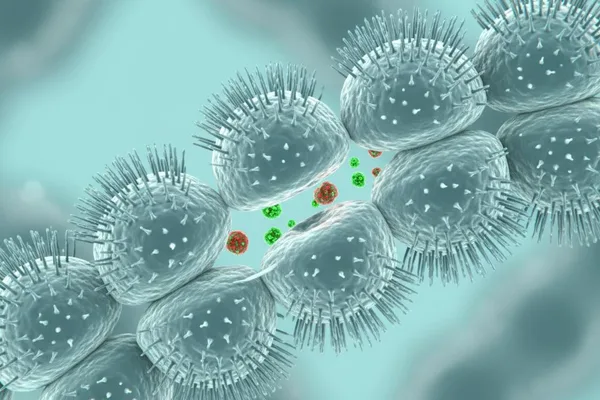
Imagine what would happen if the holes in this filter in your gut got a little bigger? Then not only water and nutrients, but also large particles that normally wouldn't go in, and possibly even toxic things, would start to "leak" or seep into your blood.
The lining of our intestines is not just a membrane. It is an important part of our immune system . It acts like a protective wall that prevents germs and disease-causing substances, such as bacteria, from entering the body.
So what is this "Leaky Gut Syndrome" thing?
"Leaky Gut Syndrome" is a current theory, a hypothesis . According to this theory, increased intestinal permeability is not only a symptom of a digestive system disease (GI diseases), but it can also be the root cause of a number of other diseases that develop on their own .
This theory states that if this protective wall of your gut becomes weak, toxins can leak into your bloodstream. These toxins can cause inflammation within the body, which can manifest as a variety of diseases.
In fact, while this theory may help us understand some diseases for which we still don't know the exact cause, it has not yet been fully proven scientifically . We know that increased intestinal permeability, or "leaky gut," is a real condition. However, there is still not enough clear evidence to determine whether it is a single disease or whether it causes other diseases. Therefore, "Leaky Gut Syndrome" is not currently a medically accepted diagnosis.
What diseases are said to be linked to "leaky gut"?
In addition to diseases that have already been found to be related to intestinal permeability, there are also diseases that are suspected to be related to this, but have not yet been definitively proven.
Diseases that are actually related:
In some inflammatory and autoimmune diseases, especially those affecting the digestive system, intestinal permeability has been found to increase. For example:
- Inflammatory Bowel Disease (IBD)
- Celiac Disease
In cases like this, scientists generally consider increased intestinal permeability to be a symptom of the disease , rather than a cause. This is because the disease causes long-term inflammation in the intestines, which gradually weakens the protective lining of the intestines over time.
Sometimes, even before these diseases are diagnosed, they have been found to have increased intestinal permeability. This has led some to believe that this permeability may be a pre-existing condition, or even a cause of the disease. However, scientists have concluded that increased permeability alone is not enough to cause the disease in these cases. It may be an early sign of the disease .
Diseases that are thought to be related, but have not been definitively proven:
There are many other diseases that are thought to be caused by "leaky gut syndrome." The idea is that toxins that "leak" from the gut enter the bloodstream and cause inflammation. In fact, chronic low-grade inflammation in the body is linked to a number of diseases. For example:
- Metabolic disorders like obesity and diabetes mellitus
- Joint pain (Arthritis)
- Chronic Fatigue Syndrome
- Asthma
- Fibromyalgia
However, the exact cause of this association is not yet clear. People with gastrointestinal (GI) disorders, which are known to increase intestinal permeability, have been found to have higher levels of gut bacteria in their blood. In these cases, inflammation is caused by other factors, but these bacteria can also increase inflammation. They have also been found in people with liver disease. This is because the liver is an organ directly connected to the gut. These bacteria can travel through a major vein that runs from the gut to the liver and contribute to liver disease. However, it is not necessarily the root cause of the disease.
Who is most affected by intestinal permeability?
For intestinal permeability to increase, that is, for the protective lining of the intestine to be damaged, it has to be damaged gradually and continuously . This is not easy. Your intestinal lining has many protective layers. And, even if it is temporarily damaged, it is constantly being repaired and regenerated. So, to weaken this lining enough to allow it to pass through, it has to have a big impact. That usually means:
- Chronic disease
- Long-term use of certain medications or alcohol consumption
- It should be something like radiation therapy .
The "Leaky Gut Syndrome" theory is that anything that damages the lining of the gut, if the damage continues, can lead to intestinal permeability. Therefore, this theory says that everyday factors such as diet and stress can gradually weaken the lining of the gut, eventually making it permeable. However, scientists are not yet sure about this. However, they do agree that these everyday factors can cause inflammation of the gut lining and cause you to have uncomfortable ``GI`` symptoms.
How does a "leaky gut" affect the body?
Damage to the lining of the gut and increased intestinal permeability are two different things. Many people who think they have a "leaky gut" experience common gastrointestinal (GI) symptoms such as stomach pain, food sensitivities, bloating, and digestive problems. These symptoms are very common, and they can have many causes. And many of those causes can also damage your gut lining. So, you don't have to have a "leaky gut" to experience the effects.
Damage to the intestinal lining:
When your gut lining is constantly being damaged, it eventually becomes unable to protect itself from chemicals, roughage, or bacteria in the gut. This is what happens in conditions like peptic ulcer disease and small intestinal bacterial overgrowth (SIBO ). When bad bacteria outnumber the good bacteria that normally keep them in check, the acids and enzymes in the gut become stronger than the protective mucus that normally keeps them in check.
If the lining of your gut is damaged, it can affect your digestion, your immune system, and how you feel about your gut . In some cases, it can even cause increased intestinal permeability. However, it doesn't have to go that far to make you feel uncomfortable. If you have `(GI)` symptoms, they are often related to an underlying condition that is damaging your gut lining in the first place. Many `(GI)` diseases have similar symptoms.
Intestinal Permeability:
Some people actually have a leaky gut. But the symptoms of this leaky gut can be difficult to distinguish from the symptoms of an underlying inflammatory condition. When your gut lining is compromised, bacteria that live in your gut can get past this protective barrier and enter your body. But we don't yet know if this causes any significant damage beyond the initial injury. Some studies suggest that bacteria moving from your gut to your liver may contribute to liver disease.
What are the main causes of a "leaky gut"?
If your gut barrier is compromised, it must have been severely compromised, often over a long period of time. Some of the direct causes of gut permeability include:
- Chronic inflammatory states , for example `(IBD)` and `(Celiac Disease)`.
- Other diseases that damage the intestines, for example `HIV/AIDS` .
- Chemotherapy and radiation therapies that damage the intestinal mucosa.
- Long-term excessive use of alcohol or NSAIDs (e.g., painkillers such as aspirin and ibuprofen) .
- Food allergies are the immune system's response to certain foods.
What are the symptoms of a "leaky gut"?
There are no specific symptoms that can be directly attributed to increased intestinal permeability. However, because intestinal permeability usually occurs after damage to the intestinal lining, you may experience symptoms that are a result of that damage. For example:
- A burning sensation caused by an intestinal ulcer.
- A painful condition of indigestion caused by damage to the intestinal mucosa.
- Diarrhea .
- Gas and bloating are caused by excessive bacterial fermentation in the intestines.
- Feeling low energy due to reduced ability to absorb energy from food.
- Gastrointestinal mucositis caused by radiation therapy.
How do you measure intestinal permeability?
There is currently no standard test that can directly measure intestinal permeability in patients. This is one reason why intestinal permeability is not currently accepted as a medical diagnosis. However, several different tests are being conducted at the clinical research level to find evidence of intestinal permeability in patients. These tests include:
- Urine test: This involves giving you a drink of a mixture of sugars of different sizes (some of which are not normally absorbed by the intestines). Then, the sugar levels in your urine are measured to see which sugars have passed through the intestinal wall.
- Blood test: This involves taking a sample of your blood and looking for signs of intestinal bacteria. This test looks for specific antibodies and biomarkers such as endotoxins.
- Tissue biopsy: This is a slightly more complicated test. A sample of tissue from your colon is placed in a special device called an ``Ussing chamber.'' This uses an electric current to measure the movement of ions across the intestinal barrier. This measurement of ion movement is similar to the movement of water.
- Confocal endomicroscopy: This is an advanced endoscopy . It allows scientists to see the lining of your intestines at very high resolution and magnification. A special fluid (contrast fluid) is injected into a vein and can be seen leaking into your intestines if there is a break in the lining.
How to heal a "leaky gut" quickly?
The only way to cure "leaky gut," or increased intestinal permeability, is to treat the underlying condition that caused it . For example, specific treatments for diseases associated with intestinal permeability, such as IBD and Celiac Disease, have been shown to repair the intestinal lining in those affected by the disease.
But, remember, treatments that target only the intestinal lining have not been proven to cure these diseases or prevent the recurrence of intestinal permeability.
How do I take care of my gut health? (Tips to keep our gut healthy)
Scientists are continuing to research various treatments that can improve the general health and strength of the intestinal lining. These treatments may not completely control a major condition. However, they can help reduce the impact of everyday factors such as diet, stress, and bacterial overgrowth on the intestinal lining. They may also help relieve your general ``GI`` symptoms. Some such treatments include:
- Probiotics: Some specific types of probiotics are being studied for their ability to restore the function of the intestinal barrier. However, in general, probiotics can help maintain the health of the intestinal lining by preventing the overgrowth of bad bacteria in your gut, especially in the small intestine.
- Prebiotics: Prebiotics are food for the good bacteria in your gut. They feed them and help them fight off the bad bacteria. These are usually plant fibers - another reason why you should eat your fruits and vegetables!
- Reduce fat and sugar in your diet: These promote the growth of bad bacteria in your gut. They also release harsh digestive substances (dietary emulsifiers) that can irritate your gut.
- Nutrition: A balanced diet that includes all the necessary macronutrients and micronutrients (vitamins and minerals) can help strengthen your gut. Vitamin D and the amino acid L-glutamine can especially help repair the lining of your gut.
- Low FODMAP Diet: This is a specific diet. It is recommended for people with IBS (Irritable Bowel Syndrome) and those who are sensitive to certain foods. This is because it gradually eliminates many common food triggers. By following this for a while, you can find out which foods you are sensitive to while giving your gut the rest it needs to repair itself.
Finally, what to remember (Take-Home Message)
Many people have unexplained GI symptoms. Sometimes it can be very frustrating to find the cause. So, in the absence of a clear answer, "Leaky Gut Syndrome" has become a popular diagnosis for common indigestion, and perhaps many other conditions.
However, true intestinal hyperpermeability is a very specific and severe condition. It is not enough to explain the symptoms of most people.
Most people have general gut inflammation – the condition that precedes leaky gut. It can be caused by a specific disease, or it can be the result of a combination of poor diet, chronic stress, and other common factors.
First, try to eliminate these common factors. If that doesn't help, be sure to seek medical advice . A qualified gastroenterologist can help you rule out the possible causes of your specific symptoms.
` Leaky gut, leaky gut syndrome, leaky gut, intestinal permeability, digestive system, stomach upset, gut health, nutrition




💬 Comments (0)
No comments yet. Be the first to share your thoughts here.
Add Your Comment