
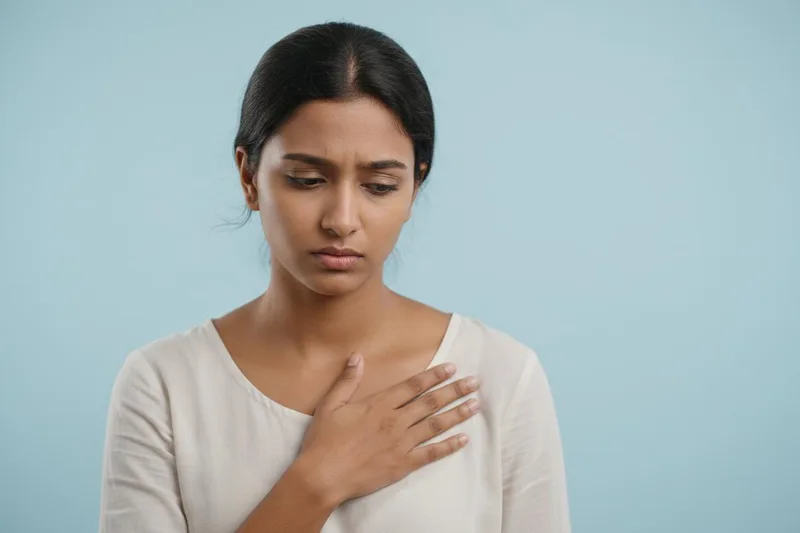
Have you ever been so scared of a sudden pain in your left chest? There have been many times when you were afraid to breathe, and you thought, 'Oh my God, is this a heart attack?' When we hear the word "chest pain" in the left side of our chest, our minds immediately jump to a heart problem. It's true, sometimes it can be a symptom of heart disease. However, not all chest pains are heart attacks. Not only the heart, but also problems with our lungs, digestive system, or muscles and bones can cause this kind of pain. Therefore, it is very important to be aware of this without being afraid.
Can pain on the left side of the chest be a symptom of a heart attack?
Yes, it definitely can. Pain on the left side of the chest is one of the main symptoms of a heart attack. But that's not the only one. A heart attack usually comes with other symptoms like these:
- Difficulty breathing (feeling like you're suffocating)
- A feeling of pressure or pain in the middle of the chest, as if something is pressing or squeezing
- This pain spreads to the left arm, neck, jaw, shoulder, or back.
- Excessive sweating
- Feeling dizzy, lightheaded
- Nausea or vomiting
If you or someone you know has chest pain with one or more of these symptoms, it is highly likely that it is a heart attack. Don't waste time and go to a hospital's Emergency Department (ETU) immediately or call an ambulance.
So, apart from heart problems, what other reasons are there?
As we said before, there could be many reasons. To understand this clearly, let's break these reasons down into parts.
| Affected system | Condition/Cause | Simply put... |
|---|---|---|
| Causes related to the heart and blood vessels | ||
| Heart | Heart Attack | A sudden blockage of a coronary artery that supplies blood to the heart causes the heart muscle to die. It causes severe chest pain. |
| Heart | Angina / Coronary Artery Disease | The arteries that carry blood to the heart become narrowed due to cholesterol deposits. The pain increases when exercising or climbing stairs, and decreases when resting. |
| Heart | Pericarditis | The thin membrane around the heart swells due to an infection. There is a sharp, stabbing pain. The pain is worse when you lie down or take a deep breath. |
| Aorta | Aortic Dissection | A rupture of the aorta, the main blood vessel that leads from the heart. This can cause severe, unimaginable pain in the chest and back. This is an emergency. |
| Causes related to the digestive system | ||
| Stomach | Gastritis / GERD | Heartburn is a burning sensation in the chest caused by stomach acid coming up (up into the throat). We also call this "gas". This is often mistaken for a heart attack. |
| Pancreas | Pancreatitis | Pancreatitis. Severe pain in the upper abdomen that may radiate to the chest. |
| Lung-related causes | ||
| Lungs | Pneumonia | An infection in the lungs (phlegm). Along with chest pain, there are symptoms such as fever, cough, and phlegm. |
| Lungs | Pulmonary Embolism | A blood clot that has formed elsewhere in the body (often in the leg) breaks loose and becomes lodged in a vein in the lungs. The main symptoms are sudden, sharp chest pain and severe difficulty breathing. This is also an emergency. |
| Lungs | Pleurisy | Swelling of the membrane surrounding the lungs. Sharp pain that increases when breathing or coughing. |
| Muscle and bone-related causes | ||
| Ribs/Muscles | Costochondritis / Muscle Strain | Swelling of the cartilage that connects the ribs in the chest or a pull in the chest muscles. You may feel pain if you touch or press on the area. The pain may increase when you turn your body or lift a weight. |
| Ribs | Broken Rib | Fracture of a rib from an accident such as a fall. Severe pain when taking a deep breath or coughing. |
Are there other reasons?
Yes. For example, consider a condition called shingles . This is a reactivation of the chickenpox virus that occurs in childhood. It causes painful blisters on one side of the chest along with an inflammation of the skin. Also, although rare, chest pain can occur in conditions such as lung cancer .
How to treat this pain?
Treatment depends entirely on the cause of your pain. When you see a doctor, he or she will examine you and possibly do an ECG, X-ray, or blood tests to determine the exact cause.
- If the cause is something like gastritis , it can be cured with medications that control stomach acid.
- If the cause is a muscle strain , painkillers and rest may be enough.
- If the cause is an infection such as pneumonia , antibiotics will need to be given.
- If the cause is a serious condition such as a blocked artery in the heart , you may need to be hospitalized and take special medications or even undergo surgery such as angioplasty.
Therefore, do not try to treat yourself at home. Taking medication without knowing the cause of the pain will only make the situation worse. The right thing to do is to seek medical advice.
Can't situations like this be prevented?
Most of the time, we can! We can control the causes of heart disease and digestive problems, especially. Try to incorporate these habits into your life.
- Healthy diet: Reduce foods high in oil, salt, and sugar as much as possible. Eat more vegetables, fruits, and greens.
- Regular exercise: Engage in exercise, such as walking or running, at least a few days a week.
- Maintaining a healthy weight: Maintaining a weight that is appropriate for your height protects you from many diseases.
- Avoid smoking completely: Smoking is very harmful to the heart as well as the lungs.
- Limit alcohol consumption.
- If you have diabetes, high blood pressure, or high cholesterol , follow your doctor's instructions and medications exactly.
Take-Home Message
- Pain on the left side of the chest can have many other causes, not just heart disease, such as gas, lung infections, and muscle spasms.
- Whatever the pain, don't ignore it. Definitely see a doctor to find out exactly what's causing it.
- If you experience symptoms such as severe chest pain, difficulty breathing, or pain spreading to your arm, it could be a heart attack. Go to a hospital's Emergency Department (ETU) immediately.
- You can prevent many of the conditions that can cause these pains by adopting a healthy lifestyle.




💬 Comments (0)
No comments yet. Be the first to share your thoughts here.
Add Your Comment