Do you know about this gadget that you wear to protect yourself from sudden cardiac arrest? (LifeVest) Let's talk!

Do you know about this gadget that you wear to protect yourself from sudden cardiac arrest? (LifeVest) Let's talk!

How would you feel if your doctor told you that you had a dangerous change in your heart rhythm, and that your heart could suddenly stop at any moment? It's a scary story. However, with the advancement of medical science, there are wonderful devices today that can protect people who are at such risk. Today we are going to talk about a special device that can be worn on your body and can be your lifesaver. That is the LifeVest.

Simply put, what is this LifeVest?

LifeVest is a wearable defibrillator that acts like your personal bodyguard. Simply put, Sudden Cardiac Arrest (SCA) is when the heart suddenly stops beating. This LifeVest is designed to protect children and adults at risk of SCA.

This is in two parts:

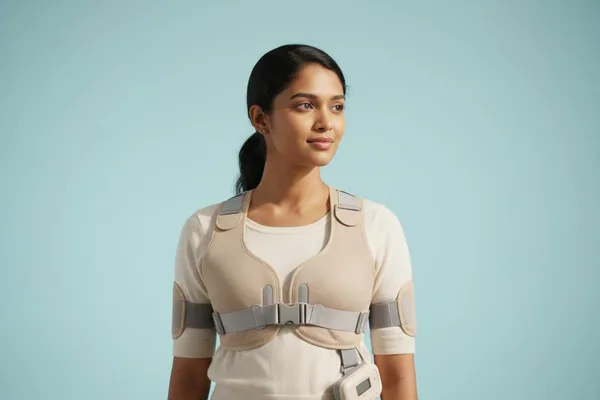
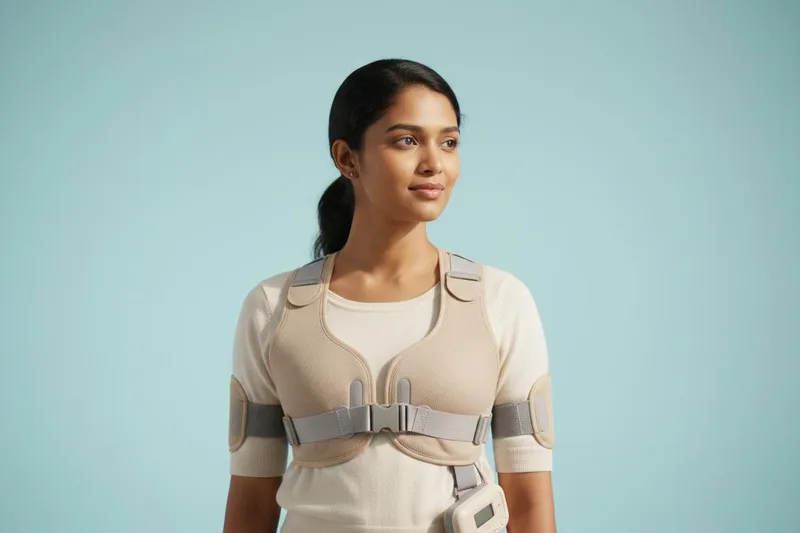
1. Garment: This is a vest-like garment made of very light fabric. You can wear it under your regular clothes. The inside of this garment has electrodes that monitor your heart rate.

2. Monitor: This is a device about the size of a small book. You can wear it around your waist with a belt or carry it over your shoulder. It's like a small bag. The data coming from the electrodes on the garment, that is, your EKG (Electrocardiogram) , is constantly monitored by this monitor.

You should wear this LifeVest at all times, except when bathing. This is how your heart is protected 24 hours a day.

How does the LifeVest work? It's an amazing mechanism!

The way this works is amazing. Imagine, you're going about your normal business. The LifeVest monitor is silently watching your heart's EKG.

Let's say you suddenly develop a life-threatening arrhythmia. For example, if you have a condition like Ventricular Tachycardia , which is when the lower chambers of the heart beat too fast, or Ventricular Fibrillation , which is when the lower chambers of the heart quiver uncontrollably, the LifeVest will immediately detect it.

Then these things happen:

1. Alarm: First, the device will start to sound an alarm, letting you know that there is a problem.

2. You have a chance to respond: If you are conscious at this time, meaning you hear this alarm, you have less than a minute to press two buttons on the device to stop the treatment. That is, to let the device know that you are conscious and that you are okay.

3. Warning bystanders: If you don't press those two buttons, the device will determine that you are unconscious. Next, it will warn bystanders that you are about to be shocked. It will say something like "Bystanders, do not touch patient." This is very important, because if someone is holding you while the shock is being administered, that person could also be in danger.

4. Life-saving electric shock: If your heart continues to beat irregularly and you don't respond, an electric shock is delivered to your chest through electrodes on your suit. This is to "reset" the erratic electrical activity in your heart and try to get it back to a normal rhythm. You won't feel the shock because you're unconscious.

5. Remonitoring: After the shock is delivered, if your heart rate returns to normal, the alarm will stop and the LifeVest will return to normal monitoring. However, if your heart rate is still abnormal, this treatment cycle may be repeated. The device can deliver up to five such shocks.

Simply put, this LifeVest acts as a lifeguard that can save your life, even when you are home alone or sleeping.

How is the LifeVest different from AEDs and ICDs?

Two other types of devices used to treat heart rhythm are AED and ICD. Let's see how the LifeVest is different from these.

Device Difference and functionality
AED (Automated External Defibrillator) You've probably seen these in public places (airports, shopping malls, etc.). If someone suddenly has a heart attack, someone else has to come and get this device, follow the instructions, and give the person a shock. This means that bystander help is essential. The chance of survival decreases by about 10% for every minute that passes after the heart stops. That's why it's so important to act quickly.
LifeVest The LifeVest doesn't require the help of another person. It constantly monitors your heart and automatically treats it as soon as there's a problem, usually within a minute. It protects you even when you're alone, even when you're sleeping. An AED can't do that.
ICD (Implantable Cardioverter Defibrillator) An ICD is also a device that provides constant protection. But it's not something you wear like a LifeVest. It's a device that's surgically implanted under the skin of your chest and into a vein . It's a permanent solution. A LifeVest is something you wear on the outside, like a garment.

Who needs this LifeVest?

Doctors usually recommend this LifeVest as a temporary protection in certain situations. That is, to protect the patient in the interim until a permanent solution is found.

Here are some such cases:

  • For those waiting for a permanent ICD device to be implanted.
  • For those waiting for a heart transplant.
  • For those who are under observation until a decision is made whether or not an ICD is needed due to a medical condition.
  • For the interim period until a previously implanted ICD is removed due to infection or malfunction and a new one is implanted.

Also, LifeVest may be a good option for people with the following conditions:

  • For those who are not suitable for ICD surgery for some reason.
  • For those who have suffered a heart attack and have a weakened left ventricular ejection fraction.
  • For those who are about to undergo bypass surgery or stent placement or are in the risk period after having it.
  • For people with diseases that weaken the heart muscle, such as cardiomyopathy.
  • For those with heart failure.

For those with an Ejection Fraction of less than 35%?

Yes, you've probably heard this term from your doctor. Ejection Fraction (EF) is a measurement of how much blood is pumped out of the left ventricle of the heart into the body in one heartbeat, after it has filled to the brim with blood. Simply put, it's a measure of the pumping power of your heart.

  • A normal EF value is between 55% and 70%.
  • Risk level: If your EF is 35% or less , you are at increased risk of sudden cardiac arrest (SCA). Your doctor may recommend a LifeVest in such cases.

How effective is the LifeVest? And what are the advantages and disadvantages?

Research has shown that the LifeVest has a 99% success rate in treating dangerous heart rhythm disorders such as ventricular tachycardia/ventricular fibrillation. In many cases, it has been able to restore the heart rhythm with a single shock.

Like everything else, the LifeVest has its advantages and some disadvantages.

Advantages Disadvantages or Risks
As long as you wear this, you will be protected from sudden cardiac arrest (SCA). If you don't wear this, nothing will work. So you should always wear it.
It works automatically, without the help of anyone else. You must be ready to respond to warning sounds at any time.
It provides good temporary protection until a permanent solution, like an ICD, can be found. You have to take this off when you shower.
Since EKG data is recorded from your heart, it is easier for the doctor to examine. The monitor battery needs to be changed/charged every day.
No surgery is needed. If someone is holding you when the shock is given, that person could also be in danger.

When do you need to see your doctor?

When using a LifeVest, it is very important to stay in touch with your doctor. Especially in cases like this, notify your doctor immediately.

  • If you regain consciousness after receiving a shock from the LifeVest: As soon as you regain consciousness, you should call your doctor immediately. You may be asked to go to the hospital's Emergency Department (ETU) .
  • If you have any questions about the LifeVest: how it works, what to do if an alarm sounds, or anything else, don't hesitate to ask.
  • If the device doesn't feel right or doesn't fit properly: It's important that the device is in proper contact with the body. If it doesn't fit properly or you feel something is wrong, tell your doctor immediately.

Living with the risk of SCA can be stressful. But having a wearable defibrillator, like a LifeVest, can bring great peace of mind to you and your family. The most important thing is to make sure you and your family are well-informed about how this device works.

Take-Home Message

  • A LifeVest is a special wearable device that protects you from the risk of sudden cardiac arrest.
  • This works automatically, so you are protected even when you are alone or sleeping.
  • This is usually a temporary safety measure used until a permanent solution, such as an ICD, can be found.
  • To get the most out of the device, it is essential to wear it properly at all times, except when bathing, and to take care of the battery.
  • If you receive a shock from the device, or if you have any questions or concerns about it, never hesitate to ask your doctor.

LifeVest, sudden cardiac arrest, defibrillator, arrhythmia, heart health, heart attack, heart disease, lifevest, sudden cardiac arrest, electric shock, heartbeat

⚠️ Important: The medical articles and information on Nirogi Lanka are for general awareness only, and are by no means a substitute for professional medical advice, diagnosis, or treatment. For any medical problem you have, consult a qualified physician immediately.

💬 Comments (0)

No comments yet. Be the first to share your thoughts here.

Add Your Comment

Please calculate: 4 + 3 =
Do you know about this gadget that you wear to protect yourself from sudden cardiac arrest? (LifeVest) Let's talk!

Do you know about this gadget that you wear to protect yourself from sudden cardiac arrest? (LifeVest) Let's talk!

How would you feel if your doctor told you that you had a dangerous change in your heart rhythm, and that your heart could suddenly stop at any moment? It's a scary story. However, with the advancement of medical science, there are wonderful devices today that can protect people who are at such risk. Today we are going to talk about a special device that can be worn on your body and can be your lifesaver. That is the LifeVest.

Simply put, what is this LifeVest?

LifeVest is a wearable defibrillator that acts like your personal bodyguard. Simply put, Sudden Cardiac Arrest (SCA) is when the heart suddenly stops beating. This LifeVest is designed to protect children and adults at risk of SCA.

This is in two parts:

1. Garment: This is a vest-like garment made of very light fabric. You can wear it under your regular clothes. The inside of this garment has electrodes that monitor your heart rate.

2. Monitor: This is a device about the size of a small book. You can wear it around your waist with a belt or carry it over your shoulder. It's like a small bag. The data coming from the electrodes on the garment, that is, your EKG (Electrocardiogram) , is constantly monitored by this monitor.

You should wear this LifeVest at all times, except when bathing. This is how your heart is protected 24 hours a day.

How does the LifeVest work? It's an amazing mechanism!

The way this works is amazing. Imagine, you're going about your normal business. The LifeVest monitor is silently watching your heart's EKG.

Let's say you suddenly develop a life-threatening arrhythmia. For example, if you have a condition like Ventricular Tachycardia , which is when the lower chambers of the heart beat too fast, or Ventricular Fibrillation , which is when the lower chambers of the heart quiver uncontrollably, the LifeVest will immediately detect it.

Then these things happen:

1. Alarm: First, the device will start to sound an alarm, letting you know that there is a problem.

2. You have a chance to respond: If you are conscious at this time, meaning you hear this alarm, you have less than a minute to press two buttons on the device to stop the treatment. That is, to let the device know that you are conscious and that you are okay.

3. Warning bystanders: If you don't press those two buttons, the device will determine that you are unconscious. Next, it will warn bystanders that you are about to be shocked. It will say something like "Bystanders, do not touch patient." This is very important, because if someone is holding you while the shock is being administered, that person could also be in danger.

4. Life-saving electric shock: If your heart continues to beat irregularly and you don't respond, an electric shock is delivered to your chest through electrodes on your suit. This is to "reset" the erratic electrical activity in your heart and try to get it back to a normal rhythm. You won't feel the shock because you're unconscious.

5. Remonitoring: After the shock is delivered, if your heart rate returns to normal, the alarm will stop and the LifeVest will return to normal monitoring. However, if your heart rate is still abnormal, this treatment cycle may be repeated. The device can deliver up to five such shocks.

Simply put, this LifeVest acts as a lifeguard that can save your life, even when you are home alone or sleeping.

How is the LifeVest different from AEDs and ICDs?

Two other types of devices used to treat heart rhythm are AED and ICD. Let's see how the LifeVest is different from these.

Device Difference and functionality
AED (Automated External Defibrillator) You've probably seen these in public places (airports, shopping malls, etc.). If someone suddenly has a heart attack, someone else has to come and get this device, follow the instructions, and give the person a shock. This means that bystander help is essential. The chance of survival decreases by about 10% for every minute that passes after the heart stops. That's why it's so important to act quickly.
LifeVest The LifeVest doesn't require the help of another person. It constantly monitors your heart and automatically treats it as soon as there's a problem, usually within a minute. It protects you even when you're alone, even when you're sleeping. An AED can't do that.
ICD (Implantable Cardioverter Defibrillator) An ICD is also a device that provides constant protection. But it's not something you wear like a LifeVest. It's a device that's surgically implanted under the skin of your chest and into a vein . It's a permanent solution. A LifeVest is something you wear on the outside, like a garment.

Who needs this LifeVest?

Doctors usually recommend this LifeVest as a temporary protection in certain situations. That is, to protect the patient in the interim until a permanent solution is found.

Here are some such cases:

  • For those waiting for a permanent ICD device to be implanted.
  • For those waiting for a heart transplant.
  • For those who are under observation until a decision is made whether or not an ICD is needed due to a medical condition.
  • For the interim period until a previously implanted ICD is removed due to infection or malfunction and a new one is implanted.

Also, LifeVest may be a good option for people with the following conditions:

  • For those who are not suitable for ICD surgery for some reason.
  • For those who have suffered a heart attack and have a weakened left ventricular ejection fraction.
  • For those who are about to undergo bypass surgery or stent placement or are in the risk period after having it.
  • For people with diseases that weaken the heart muscle, such as cardiomyopathy.
  • For those with heart failure.

For those with an Ejection Fraction of less than 35%?

Yes, you've probably heard this term from your doctor. Ejection Fraction (EF) is a measurement of how much blood is pumped out of the left ventricle of the heart into the body in one heartbeat, after it has filled to the brim with blood. Simply put, it's a measure of the pumping power of your heart.

  • A normal EF value is between 55% and 70%.
  • Risk level: If your EF is 35% or less , you are at increased risk of sudden cardiac arrest (SCA). Your doctor may recommend a LifeVest in such cases.

How effective is the LifeVest? And what are the advantages and disadvantages?

Research has shown that the LifeVest has a 99% success rate in treating dangerous heart rhythm disorders such as ventricular tachycardia/ventricular fibrillation. In many cases, it has been able to restore the heart rhythm with a single shock.

Like everything else, the LifeVest has its advantages and some disadvantages.

Advantages Disadvantages or Risks
As long as you wear this, you will be protected from sudden cardiac arrest (SCA). If you don't wear this, nothing will work. So you should always wear it.
It works automatically, without the help of anyone else. You must be ready to respond to warning sounds at any time.
It provides good temporary protection until a permanent solution, like an ICD, can be found. You have to take this off when you shower.
Since EKG data is recorded from your heart, it is easier for the doctor to examine. The monitor battery needs to be changed/charged every day.
No surgery is needed. If someone is holding you when the shock is given, that person could also be in danger.

When do you need to see your doctor?

When using a LifeVest, it is very important to stay in touch with your doctor. Especially in cases like this, notify your doctor immediately.

  • If you regain consciousness after receiving a shock from the LifeVest: As soon as you regain consciousness, you should call your doctor immediately. You may be asked to go to the hospital's Emergency Department (ETU) .
  • If you have any questions about the LifeVest: how it works, what to do if an alarm sounds, or anything else, don't hesitate to ask.
  • If the device doesn't feel right or doesn't fit properly: It's important that the device is in proper contact with the body. If it doesn't fit properly or you feel something is wrong, tell your doctor immediately.

Living with the risk of SCA can be stressful. But having a wearable defibrillator, like a LifeVest, can bring great peace of mind to you and your family. The most important thing is to make sure you and your family are well-informed about how this device works.

Take-Home Message

  • A LifeVest is a special wearable device that protects you from the risk of sudden cardiac arrest.
  • This works automatically, so you are protected even when you are alone or sleeping.
  • This is usually a temporary safety measure used until a permanent solution, such as an ICD, can be found.
  • To get the most out of the device, it is essential to wear it properly at all times, except when bathing, and to take care of the battery.
  • If you receive a shock from the device, or if you have any questions or concerns about it, never hesitate to ask your doctor.

LifeVest, sudden cardiac arrest, defibrillator, arrhythmia, heart health, heart attack, heart disease, lifevest, sudden cardiac arrest, electric shock, heartbeat

⚠️ Important: The medical articles and information on Nirogi Lanka are for general awareness only, and are by no means a substitute for professional medical advice, diagnosis, or treatment. For any medical problem you have, consult a qualified physician immediately.

💬 Comments (0)

No comments yet. Be the first to share your thoughts here.

Add Your Comment

Please calculate: 4 + 3 =