
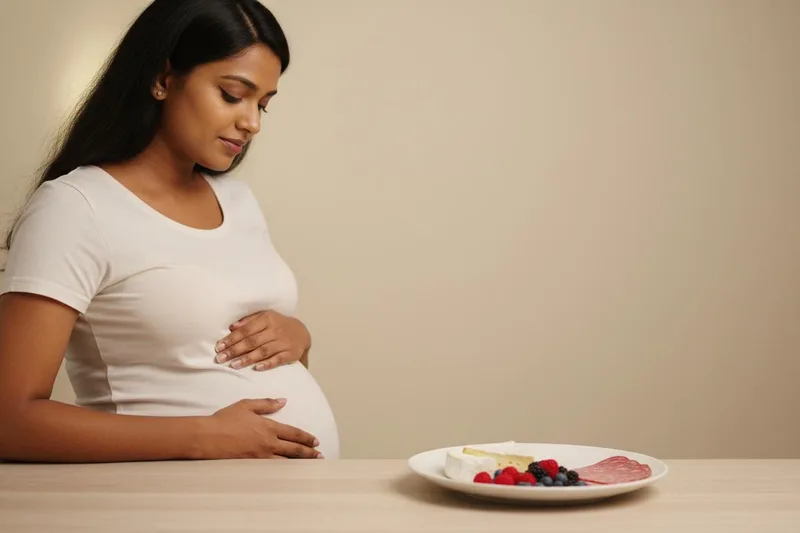
We are all very careful about what we eat and drink during pregnancy, right? We hear so many stories like "It's not good to eat raw, this is bad." In fact, the toxins that enter our bodies through certain foods can cause unexpected problems for both the pregnant mother and the little baby in the womb. Listeria is one such infection that is a little hidden, but can be very dangerous. Let's talk about this in a little more detail today, because this is very important for your safety and that of your baby.
What exactly is Listeria? Why is it especially dangerous for pregnant women?
Simply put, listeria is an infection caused by a type of bacteria . To be precise, the bacteria responsible for this is `Listeria monocytogenes`. It is usually contracted by eating spoiled, unclean food . It is like what we call `food poisoning`.
Now you might be thinking, "So this happens to everyone, why is it only for pregnant women?" The reason is that during pregnancy, certain changes occur in a mother's immune system . This is a natural thing. But because of these changes, she is more susceptible to infections like listeria than other people. This means that when you are pregnant, this listeria bacteria can easily settle in your body. That's why doctors sometimes say, "Don't eat junk food or drink junk food during pregnancy." The main reason for that is the risk of listeria.
What are the symptoms if I get Listeria while pregnant?
If you get a listeria infection during pregnancy, some of the symptoms may be similar to a common cold or other minor illness. So it can sometimes be difficult to recognize it. The main symptoms that can be seen are:
- Having a high fever : The body feels hot, and you may even shiver.
- Body pain : It may feel like a lump in the flesh.
- Headache : A severe headache may occur.
- Diarrhea : loose stools.
- Vomiting and nausea : Feeling like your stomach is churning, feeling like you're going to throw up.
But here's something to keep in mind. Sometimes you can be infected with Listeria without showing any symptoms . That's the most dangerous part of it.
How do you know if a baby is infected with Listeria?
If the mother is infected with Listeria, it can also affect the baby. A newborn or young child who is infected with Listeria may show symptoms such as:
- Low birth weight : The baby may be born with low birth weight.
- Fever : The baby's body temperature may also increase.
- Breathing difficulties : The baby may have difficulty breathing.
- A skin rash : It can appear on the body like eczema.
- Jaundice : Yellowing of the eyes and skin.
- Difficulty drinking milk : The baby may not want to drink milk, or may have difficulty drinking.
- Constant restlessness and crying : The baby is constantly crying and seems to be in no mood for anything.
These symptoms can appear immediately after the baby is born, or they can appear later, up to two months later. Therefore, it is very important to be aware of this as well.
How does Listeria get into our bodies? What foods are at risk?
Listeria bacteria mainly enter our bodies by eating food contaminated with this bacteria . This bacteria can survive even at low temperatures in the refrigerator. That's why it's important to be especially careful with certain foods. Check out this list:
- Deli meats, cold cuts, and hot dogs : These are the sausages, hams, and bacon we buy at the store. These can sometimes be undercooked or contaminated with listeria bacteria from cuts and handles.
- Pâté and meat spreads : These are also risky.
- Cold-smoked fish (e.g. lox) : Fish that is smoked without being cooked properly.
- Soft cheeses : Specifically, cheeses like Brie, Camembert, and queso fresco. These are often made from unpasteurized milk.
- Unpasteurized milk and dairy products : It is very important to check whether the milk, cheese, and ice cream we drink have been pasteurized. Pasteurization is a process that heats milk to a specific temperature to kill harmful germs. If this is not done, bacteria like Listeria can be present.
- Unpasteurized fruit juice : For example, some fruit juices, such as apple cider.
- Raw, unwashed fruits and vegetables : Especially large fruits like watermelon, you should wash the skin thoroughly before cutting them. Otherwise, bacteria on the skin can get into the fruit.
- Sprouts : There is also a risk in eating sprouted foods like green beans and peas raw.
- Raw sushi .
This infection can be transmitted from mother to baby either through the placenta during pregnancy or through the vagina during birth. This is what we call 'vertical transmission' in medicine.
Will food poisoning during pregnancy affect the baby?
Yes, absolutely. Any type of food poisoning during pregnancy can affect the baby. Here are some things that can happen:
- Miscarriage
- Stillbirth
- Preterm birth
Listeria can cause serious health problems for babies.
If a mother has a Listeria infection and it infects her baby, it can cause very serious conditions for the baby. Sometimes it can even be fatal. Or it can cause lifelong health problems.
Just think, this little bacteria can change a baby's entire life. That's why we're talking about this so much.
The main problems that the baby can have are:
- Meningitis : This is an infection and swelling of the membranes surrounding the baby's brain and spinal cord. This is very dangerous.
- Sepsis : This is an extreme response of the body to an infection. It affects the entire body.
These conditions can cause the baby to:
- Paralysis
- Seizures
- Blindness
- Developmental delays or differences
- Organ damage or failure
So, you probably understand now that Listeria is no joke.
How do doctors accurately diagnose Listeria?
If you have symptoms of listeria, or suspect that you may have eaten food that may have listeria, your doctor will first ask you about your medical history. Then, to confirm the infection , they will take a blood sample and do a blood culture . This is done to see if the listeria bacteria grow in your blood sample. After the baby is born, the placenta can also be tested if necessary.
What are the treatments for Listeria infection?
The good news is that Listeria infection is treatable. Pregnant women and newborns are given antibiotics for this.
Imagine, if you found out that a food you ate had listeria and it was recalled, or if you heard that other people who ate that food had gotten sick, your doctor would tell you to pay close attention to the symptoms. Only if symptoms appear can you start treatment .
When should I see a doctor?
If you develop a fever during pregnancy, or if you experience one or more of the symptoms of listeria we discussed earlier, see your antenatal clinic doctor or family doctor immediately. Also, it is very important to tell your doctor, even if you have the slightest suspicion that you have eaten a food that may contain listeria. This way, he or she can monitor your condition and start treatment if necessary.
What should I do if I am confirmed to have Listeria? Should I be worried?
If you are diagnosed with Listeria, don't panic. Getting treatment early can greatly reduce the risk of miscarriage and other complications for your baby. It also reduces the risk of mother-to-child transmission.
Your doctor will check your baby for signs of listeria after birth. If there is an infection, your baby can be treated as soon as possible.
What can we do to prevent Listeria during pregnancy?
This is the most important thing. They say, "Precaution is the best remedy." The best way to protect yourself from listeria is to practice food safety. Here are some things you can do:
- Avoid risky foods : Avoid eating things like soft cheeses, unpasteurized milk and fruit juices, and deli meats as much as possible during pregnancy.
- Follow food safety guidelines :
- Wash fruits and vegetables, especially those that are eaten raw, thoroughly under running water . If necessary, scrub the skin with a vegetable brush.
- Cook meat, fish, and poultry thoroughly . Cook until no longer pink inside and cooked through. If possible, use a food thermometer to check for safe temperatures.
- If you eat things like lunch meat and hot dogs, heat them until they are well-smoked.
- Do not cut cooked food on the same cutting board or knife as raw meat. Use separate utensils for raw and cooked food.
- Check if the refrigerator temperature is correct.
- If you are trying to get pregnant , you can reduce your risk of listeria by following these steps.
The list of things you should "not eat" during pregnancy can sometimes seem long. But these things are for your own safety and that of your baby. Avoiding things like soft cheeses and deli meats can greatly reduce your risk of listeria. But don't panic . If you accidentally eat a food that's been recalled, or if you find out that a food you had in your fridge has been recalled, tell your doctor. Prompt treatment can protect you and your baby's health.
Finally, finally, remember this (Take-Home Message)
It's important for every expectant mother to be aware of this infection called Listeria. Although it's not commonly talked about, it can have serious consequences.
Remember, by being a little mindful of what you eat and following a few simple food safety practices, you can provide great protection for yourself and your most precious possession, your baby.
If you have any doubts or questions, don't be afraid to talk to your doctor. They are there to help you. May you find the strength to bring a healthy, happy baby into this world!
` Listeria, pregnancy, infection, food safety, baby, health, food poisoning




💬 Comments (0)
No comments yet. Be the first to share your thoughts here.
Add Your Comment