

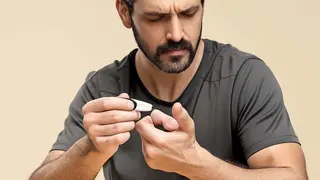
Do you sometimes feel suddenly scared and anxious for no reason? Do you feel your heart beating faster, your palms sweat, and your body shake? There can be many reasons for these things. But if you have diabetes, the hidden reason behind these symptoms may be a drop in your blood sugar levels, or as doctors call it, hypoglycemia. So why does this happen? More importantly, what can we do about it? Let's talk about this simply.
HbA1c to blood glucose converter. Convert between HbA1c (%), mmol/mol, and average blood glucose in mg/dL and mmol/L instantly.
Why do I feel anxious when my blood sugar is low?
Simply put, when your blood sugar level drops dangerously low, our body tries hard to bring it back to normal. The body, which sees this as an emergency, releases several hormones at once.
One of the most important of these is epinephrine , also known as adrenaline . This is the hormone that prepares our body for "fight or flight." This hormone signals our liver to produce more glucose, or sugar, and add it to the blood.
This adrenaline hormone is what makes your heart beat faster, your palms sweat, your body shake, and you feel anxious and nervous. These are actually your body's warning signs. It's your body's way of telling you, "Hey, your blood sugar is really low, do something about it!"
Imagine, if this low sugar level continues, the body produces other hormones. One of them is cortisol . It is also called the "stress hormone" because it helps control things like our mood and fear.
Now look, on one side is adrenaline, on the other side is cortisol. When these two come together, it's more than enough to cause anxiety. To be precise, this is like a recipe for anxiety.
Why do our blood sugar levels suddenly drop?
The main goal of treating diabetes is to control and lower blood sugar levels. But sometimes, it gets too low. Most people start to experience these symptoms when their blood sugar levels drop below 70 mg/dL (milligrams per deciliter). There are several things that can cause this.
Even a person without diabetes can sometimes experience low blood sugar. Let's look at these reasons clearly in a table.
| Reasons why people with diabetes have low blood sugar | Situations where people without diabetes may experience low blood sugar |
|---|---|
| Increasing the amount of diabetes medication (especially insulin). | Drinking too much alcohol. |
| Skipping the main course. | Some surgeries performed to reduce weight loss surgery). |
| Eating less than you normally eat. | Eating foods high in sugar and carbohydrates at once (this can cause a sudden drop in blood sugar levels later). |
| Exercising more than usual. | Some other medical conditions or medications. |
What can we do to control this situation?
If you have diabetes, the best way to control your anxiety is to keep your blood sugar levels within a safe range. It's not as easy as it sounds, but these tips will help you do just that.
Be careful when using insulin.
The main and most common cause of low blood sugar is taking too much insulin. If you are taking insulin, always make sure you are taking the right type and dose . When injecting, make sure it is injected just under the skin. Sometimes, if you inject into a muscle, the insulin can be absorbed too quickly and lose its effectiveness quickly.
Be careful about what you eat - Foods with a low glycemic index
Some foods cause our blood sugar levels to spike suddenly, then drop again within a few hours. But other foods help keep our blood sugar levels stable. One measure that helps us understand this is the Glycemic Index (GI) .
Simply put, this refers to how quickly the carbohydrates in a food we eat are converted into sugar and added to the blood. The higher the GI value, the faster the sugar level rises.
| High-Glycemic Foods | Low-Glycemic Foods |
|---|---|
| Simple sugars (sugar, honey) | Chicken, fish, and other proteins |
| Sweet drinks | Nuts |
| Carbohydrates like white bread, pasta, white rice, and potatoes | Beans like lentils and chickpeas |
| Some fruits (watermelon, mango) | Low-starch vegetables (asparagus, beets, broccoli, tomatoes) |
This doesn't mean you can't eat high-GI foods. But if you do eat them, eat them in small amounts , balanced with healthy fats, protein, and fiber. Just as important as what you eat is how much you eat and what you eat with it .
Be smart when exercising.
Exercise is a great way to lower your blood sugar levels. It can also help reduce stress and anxiety. When we exercise, our brain releases "feel-good" chemicals like endorphins.
But remember, exercise can cause your blood sugar to drop too low. So before you exercise, you need to adjust your diet and insulin dose . How you do this depends on many things, such as the type of exercise you do and your weight. Talk to your doctor about this and get advice on how to exercise safely.
Limit alcohol.
Your blood sugar levels can drop for up to 24 hours after drinking alcohol. If you drink alcohol, limit it. It is best to limit yourself to one drink per day for women and two drinks per day for men. Never drink alcohol on an empty stomach.
What if lifestyle changes alone aren't enough?
Even if you eat healthily, stay active, and avoid low blood sugar, you may still feel anxious. If so, talking to someone like a counselor can help.
Cognitive Behavioral Therapy (CBT) is a proven treatment for anxiety. It involves identifying negative thoughts that come to your mind and learning new, healthier ways to deal with challenging situations. You can also talk to your doctor about this to learn more.
💡 Take-Home Message
- If you suddenly feel anxious, have a rapid heartbeat, or start sweating, it could be due to low blood sugar (hypoglycemia). If you have diabetes, check your blood sugar levels.
- This feeling of anxiety is caused by the "fight-or-flight" hormones produced by the body, such as adrenaline and cortisol.
- Control your blood sugar levels with proper insulin use, a balanced diet with a low glycemic index (Low-GI), and a smart exercise plan.
- Limit your alcohol consumption. Never drink alcohol on an empty stomach.
- If anxiety persists despite lifestyle changes, talk to your doctor about seeking professional help. Treatments such as CBT can be very effective.




No comments yet. Be the first to share your question or experience below.