
Did you recently get a 'high lymphocyte count' in your blood test results? Or are you a little worried because someone told you about this? Maybe you didn't quite understand when a doctor said this word. Don't worry! Today, we'll talk about this condition called Lymphocytosis in a simple way that you can understand.
What are lymphocytes? Why are they important to us?
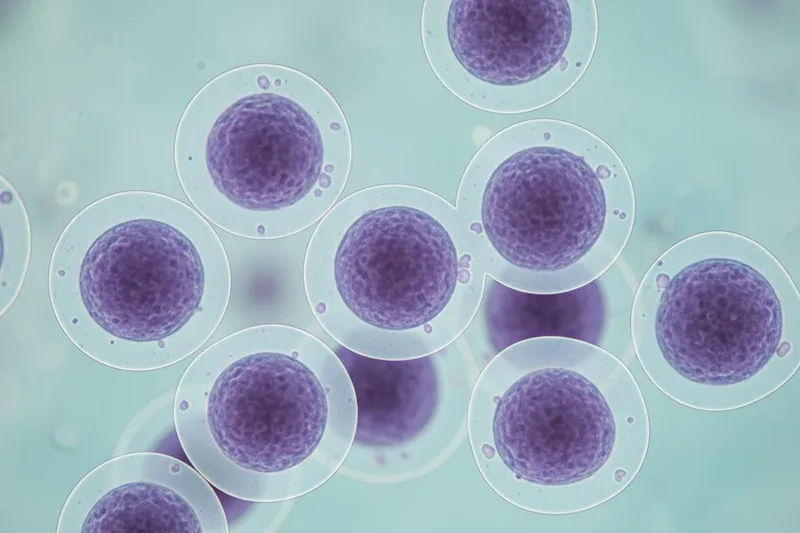
Okay, first let's see what a lymphocyte is. Simply put, a lymphocyte is a type of white blood cell in our blood. They are a very important part of our body's immune system . Just like the soldiers who protect our country, these lymphocyte cells fight germs, such as viruses and bacteria, that enter our body and protect us from diseases.
Imagine, if our body is like a fortress, lymphocytes are a group of specially trained soldiers who protect that fortress.
Therefore, lymphocytes are essential for our healthy existence.
What exactly is lymphocytosis?
Now that you have a little idea about lymphocytes, what is lymphocytosis? It means that you have more lymphocyte cells than the normal number of lymphocytes in your blood.
Now let's see what is considered 'high' for an adult. Generally, if there are more than 4,000 lymphocytes per microliter of blood, we consider it to be high. However, this value can vary slightly from lab to lab, and this normal range also varies by age. In young children, the number of lymphocytes is usually slightly higher than in adults.
Most of the time, a temporary increase in lymphocyte count means your body is fighting off an infection. That's a good thing. But, rarely, it can be a sign of a more serious underlying condition. That's why it's important to be aware of it.
Why does this lymphocyte count increase? What are the causes?
You may be wondering, "Why are these lymphocytes suddenly increasing in my blood?" Simply put, these lymphocytes are produced in large quantities when your body is fighting an infection or other inflammatory condition. It's like our "soldiers" getting ready for battle.
Let's see what the main reasons are.
Most common causes: Infections
This is the most common cause of lymphocytosis.
- Viral Infections: These are the main causes of an increase in lymphocytes. For example:
- Common cold, flu (Influenza)
- Mononucleosis - This is a condition caused by a virus called the Epstein-Barr virus, and symptoms include a sore throat and swollen lymph nodes.
- Cytomegalovirus (CMV)
- Whooping cough - Although this is a bacterial infection, it sometimes shows an increase in lymphocytes.
- Adenovirus - Can cause infections of the respiratory system and eyes.
- Hepatitis - a virus that affects the liver.
- Chickenpox or herpes zoster (Shingles)
- Measles `(Mumps)`, Rubella `(Rubella)`
- HIV infection
Imagine you have a bad cold, aching all over, and a fever. If you go to the doctor and get a blood test, there's a good chance your lymphocyte count is high. Why is that? Because your 'soldiers', the lymphocyte cells, are fighting the cold virus in your body!
- Bacterial Infections and Parasitic Infections: Some bacterial and parasitic infections can also cause an increase in lymphocyte count. For example, this can be seen in conditions like tuberculosis.
Cancer
This is something that many people are afraid of. Although rare , an increase in lymphocytes can also be seen as an early symptom of some blood cancers or lymphatic system cancers.
- Types of Leukemia:
- Chronic Lymphocytic Leukemia (CLL): This is a type of leukemia that is most common in adults.
- Acute Lymphoblastic Leukemia (ALL): This is most common in children, but can also occur in adults.
- Large granular lymphocytic leukemia
- Types of Lymphoma:
- Non-Hodgkin Lymphoma
However, it is important to remember this: Not everyone with an increased lymphocyte count has cancer. In many cases, the cause of this can be a simple infection. So don't worry unnecessarily. A doctor will be the one who will examine you and tell you exactly what to do.
Other reasons
In addition to these two main reasons, several other factors can cause an increase in lymphocyte count:
- Smoking: Long-term smokers may have slightly higher lymphocyte counts.
- Allergic reaction to medicine: It can also be your body's reaction to a new medication.
- Stress related to a medical emergency: Imagine someone has been in an accident and has been brought to the hospital. The extreme physical and mental stress that occurs at that time can sometimes cause a temporary increase in lymphocyte count.
- Some autoimmune diseases: These are diseases in which our own immune system attacks our own body's cells. For example, conditions like rheumatoid arthritis.
- For those who have had their spleen removed (Asplenia): The spleen is an important organ in our immune system. If for some reason the spleen has been surgically removed, changes in the number of lymphocytes may also be seen.
How do you know if you have lymphocytosis? What are the symptoms?
Here's an important point: There are no specific symptoms for lymphocytosis. That is, you won't feel anything special about having high lymphocytes in your blood.
So how do you find this? Most of the time, it 's discovered by accident when you're having a blood test for some other illness or for a routine check-up.
However, you may experience symptoms due to the underlying cause of the increase in lymphocytes. For example:
- If it is due to an infection, symptoms may include: fever, body aches, sore throat, and swollen lymph nodes (small lumps in places like the neck and armpits).
- If it's a serious condition like cancer (this is rare): Symptoms may include extreme fatigue, weight loss, and night sweats.
Therefore, an increase in lymphocytes is not a disease, but only a sign of an underlying condition.
How does a doctor diagnose this?
If your blood test report shows that your lymphocytes are high, the first thing your doctor will do is find out what is causing this.
- You will be asked questions about your medical history, current symptoms, medication list, and lifestyle. For example, you may be asked about your risk of exposure to sexually transmitted infections (STIs).
- A physical exam will be performed: Checking for fever and swollen lymph nodes.
- Blood tests: The most important test is the Complete Blood Count (CBC) . This counts the different types of cells in the blood (red blood cells, white blood cells, and platelets). The differential count also measures the number of lymphocytes among the white blood cells.
- Retesting: If your lymphocyte count is high, your doctor will probably do the test again in a few days or weeks to see if this is temporary or ongoing. In most infections, the lymphocyte count returns to normal once the infection clears up.
- Additional tests: If the lymphocyte count remains high and the cause is unclear, your doctor may order more specialized tests:
- Flow cytometry test: This tests to see if the lymphocytes in the blood are abnormal or if they are of the same type (clonal), as in cancer. This is especially helpful in diagnosing conditions such as leukemia.
- Bone marrow biopsy: Sometimes, a small sample of the bone marrow, where lymphocytes are produced, may need to be taken for testing. This can help determine the exact cause of lymphocytosis.
- Referral to a specialist: If necessary, your doctor may refer you to a hematologist.
How is this treated? (Treatment)
Treating lymphocytosis means treating the underlying disease, which is the cause of the increase in lymphocytes.
- Think about it, if your body has increased these cells to fight a germ, you probably don't need any special treatment. For example, if it's a viral infection, if you give your body rest, drink plenty of water, and take medicine to reduce fever if necessary, your immune system will resolve it over time. Then the lymphocyte count will simply return to normal.
- If it is a bacterial infection, the doctor may prescribe antibiotics.
- If the underlying cause is a serious condition like cancer (again, this is rare), your doctor will discuss with you the appropriate treatment options (e.g. chemotherapy, radiation therapy).
The important thing is that when the underlying cause is properly treated, the lymphocyte count returns to normal.
Can lymphocytosis cause complications?
In some cases, especially if left untreated or the underlying condition is serious, lymphocytosis can be a sign of a complication.
For example, as mentioned earlier, it can be an early sign of a blood cancer such as Chronic Lymphocytic Leukemia (CLL). However, this does not mean that everyone with high lymphocytes has cancer. It is more likely to be caused by an infection. Further tests are definitely needed to make an accurate diagnosis and rule out other conditions.
Can this situation be prevented from occurring? (Prevention)
There is no specific way to prevent lymphocytosis itself. Because it is not a disease, but a symptom. However, we can take steps to reduce the risk of infections, which are the main cause of this. Then, we can reduce the chances of an unnecessary increase in lymphocytes.
- Take care of cleanliness:
- Avoid close contact with someone who has a contagious disease as much as possible.
- Do not use the personal items of people who are sick (such as towels, cups, cutlery).
- Wash your hands thoroughly with soap and water often, especially before eating, after using the bathroom, and after coming from the bathroom.
- Clean frequently used surfaces (doorknobs, table surfaces) with disinfectant.
- A healthy lifestyle: Eat a balanced diet, get enough sleep, and exercise. These things will strengthen your immune system.
When should we be more concerned about lymphocytes?
If your blood test shows that your lymphocytes are high, don't panic at first. However, it's wise to see a doctor for advice in these cases:
- If you have a persistent infection (e.g. frequent fevers, slow recovery).
- If you feel like your chronic symptoms are getting worse (e.g., persistent fatigue, unexplained weight loss, excessive night sweats, or lumps on your body).
- If you know that your lymphocyte count is high, and then check it again after a while, the count has not decreased or has increased even more.
At a time like this, a doctor will examine you, perform further tests if necessary, and help you find the cause.
Can lymphocytosis lead to leukemia?
This is a question that many people ask, and it's a scary one. The short answer is, yes, it can happen sometimes, but it's very rare .
There is a condition called monoclonal B-cell lymphocytosis (MBL). In this condition, there are too many B-cells (these are all the same type of lymphocytes, clonal, meaning they have developed from a single parent cell) in the blood. But not as many as leukemia. Sometimes, after many years, this MBL condition can develop into chronic lymphocytic leukemia (CLL). Not all MBLs become CLL.
So, don't panic if you find out that your lymphocyte count is high. While it's possible for a serious condition like cancer to cause an increase in lymphocytes, it's much more likely that it's caused by an infection.
Once your immune system has cleared the infection, your lymphocyte levels will likely return to normal. If your lymphocyte levels remain high, your doctor will recommend tests and treatment to determine the cause.
Take-Home Message
Okay, I hope you have a good idea about Lymphocytosis from what we have discussed. Finally, here are some important things to remember:
- Lymphocytosis is an increase in the number of lymphocytes, a type of white blood cell, in the blood.
- This is often because the body is fighting an infection. It is temporary and nothing to worry about.
- Rarely, it can also be a sign of a more serious underlying condition, such as cancer.
- Lymphocytosis itself does not have specific symptoms . Symptoms depend on the underlying cause.
- This is detected by a blood test (Complete Blood Count - CBC) .
- Treatment is directed at the underlying cause of the increase in lymphocytes.
- If your blood test shows high lymphocytes , don't panic . However, if the condition persists, or if you have other unusual symptoms, be sure to see a doctor for advice.
I hope you find this information useful. Stay healthy!
` Lymphocytosis, lymphocyte, high lymphocyte count, white blood cell, immune system, infection, virus, bacteria, cancer, leukemia, lymphoma, CBC, blood test, hematologist, லிம்போச்சோட்ஸீட், லிம்போஸ்ட், செய்துக்கியா, புருத்தியா, இருத்தவா, குற்றியா, அருத்தியாவா, குற்றியா, எருத்தியாவா, எருத்தியாவா, எருத்தியாவா, எருத்தியா�


💬 Comments (0)
No comments yet. Be the first to share your thoughts here.
Add Your Comment