
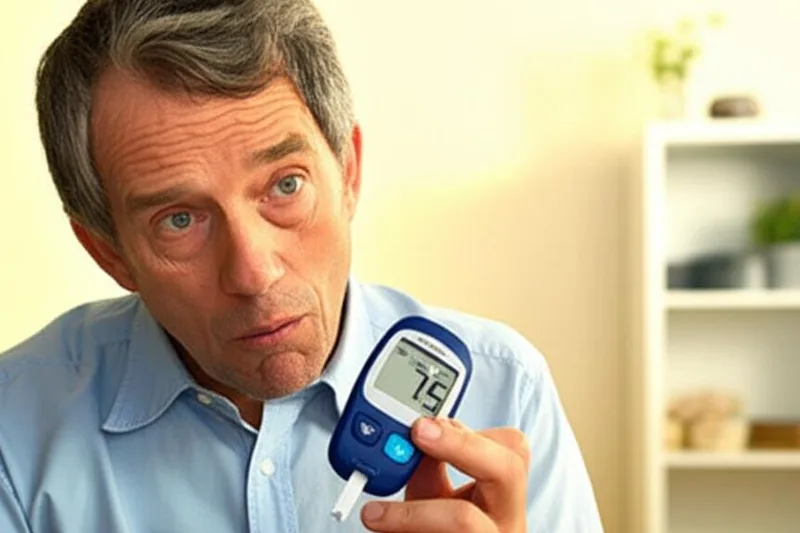
Stress, or as we all call it, 'stress', has become an inevitable part of our lives. We struggle with a thousand things every day, such as job problems, family problems, and financial problems. But if you are a person with diabetes, did you know that this stress not only affects your mood, but also directly affects your blood sugar levels? Today, let's talk about this deep connection between diabetes and stress.
Can stress really cause diabetes?
Simply put, yes. It has some potential. Stress is not just something you feel. It is something that disrupts our body's hormone system. When we experience excessive physical or mental stress, our body's response to insulin (insulin resistance) decreases and blood sugar levels rise. Sometimes, even in people who have never had diabetes before, we see temporary increases in blood sugar levels when there is excessive physical stress, such as after major surgery.
Imagine, our body is preparing to face a sudden danger. It is called the 'fight-or-flight' response. That means the body is preparing to fight or run away. At this time, the body needs immediate energy. This energy comes from glucose in the blood.
This process happens like this:
| Steps | What happens inside the body |
|---|---|
| Step 1: A signal from the brain | When you feel stressed, your brain releases a hormone called CRH (Corticotropin-releasing hormone). |
| Step 2: A command to the pituitary gland | CRH signals the pituitary gland to produce another hormone called ACTH (Adrenocorticotropic hormone). |
| Step 3: Cortisol release | ACTH signals the adrenal glands to release the main stress hormone, cortisol. |
| Step 4: Increased sugar levels | Cortisol signals the liver to release more glucose (sugar) into the bloodstream, giving you instant energy. |
This is very important in an emergency. However, if your stress continues, your cortisol levels will remain high. Over time, this can lead to insulin resistance, which increases the risk of developing Type 2 Diabetes. If you already have diabetes, it will become even harder to control.
Let's find out if there is a connection between your stress and your sugar levels.
Although stress increases blood sugar, how much does it increase? It varies from person to person and depending on the situation. The best way to know for sure is to keep track of your stress levels and blood sugar levels.
Every time you feel stressed, whether mentally or physically, keep a little note:
- Level of stress: Rate from 1 to 10 (1 = no stress at all, 10 = unbearable stress).
- Blood sugar level: Measure your blood sugar level with your glucose meter at that time and write it down.
- Event: Briefly write about what happened at that time (e.g., an argument with your boss, having to go on an emergency trip).
After a few days of doing this, you will start to see a pattern. You will be able to understand if your sugar levels increase when you are stressed. If you use a CGM (Continuous Glucose Monitor), you can even catch these sudden changes in sugar levels.
Be kind to yourself, it's like medicine.
We all make mistakes. When living with diabetes, there are times when you may lose control of your diet or feel unable to exercise. Don't blame yourself for those times. Forgive yourself and be kind. This is called 'self-compassion'.
Studies have shown that being kind to yourself can reduce stress, anxiety, and depression. It also...
- There is a sense of satisfaction with life.
- Blood sugar levels are better controlled.
- Diabetes becomes easier to manage.
- It even helps keep your A1c levels at a healthy level.
Exercise is a great way to reduce stress.
Exercise is like an insulin shot. It promotes glucose uptake into your muscles, even if you have insulin resistance. This naturally lowers blood sugar levels.
Not only that, by doing the right exercises:
- Inflammation and cortisol levels in the body are controlled.
- Your mood and thinking ability will improve.
- Symptoms such as stress, anxiety, and depression are relieved.
- Helps maintain a healthy weight.
- Heart rate and blood pressure decrease.
Try to do something like walking or cycling for at least 30 minutes a day, most days of the week. Add muscle-strengthening exercises two or three days a week.
But the most important thing is to choose an exercise that you enjoy . That way you'll feel like continuing to do it. Don't forget to talk to your doctor before starting a new exercise program.
Should we try some calming habits every day?
Simple things like these can help reduce the stress that accumulates throughout the day.
- Deep Breathing: Sit in a chair and close your eyes. Take a slow, deep breath in through your nose. Hold your breath for a few seconds, then exhale slowly through your mouth. Imagine your body relaxing, like a balloon being deflated. Do this several times until your mind is calm.
- Muscle Relaxation: Close your eyes and get into a comfortable position. Starting with your toes, tense each part of your body (about 5 seconds), then relax completely. Do this up to your feet, legs, stomach, arms, neck, and face.
- Yoga: Yoga is an exercise that connects the body and mind. Practice a few simple yoga poses. You can now learn these online. Even just 5-10 minutes a day is enough.
If you can't do it alone, never be afraid to ask for help.
'Diabetes distress' is a common mental state experienced by people with diabetes. It refers to feelings of fatigue, frustration, and boredom caused by the disease. If you're feeling this way, remember that you're not alone.
Here are some places you can get help:
- Your doctor or diabetes educator: Talk openly with them about your feelings. They can help you find a solution that works for you.
- Mental Health Professional : Treatments like CBT (Cognitive Behavioral Therapy) can help you change your negative thought patterns and learn ways to manage stress.
- Support Groups: Talking to others who are living with diabetes like you can be a great relief.
Remember, asking for help with mental health is not a sign of weakness, it's a sign of strength.
Take-Home Message
- Stress is a major factor that increases blood sugar levels in people with diabetes.
- By recording your stress levels and blood sugar levels, you can identify unusual patterns.
- Stress can be controlled by practicing things like exercise, deep breathing, and yoga daily.
- Being kind, without blaming yourself, is also essential for mental well-being.
- If you are struggling to cope with the stress of diabetes, never hesitate to seek advice from your doctor or a mental health professional.





💬 Comments (0)
No comments yet. Be the first to share your thoughts here.
Add Your Comment