
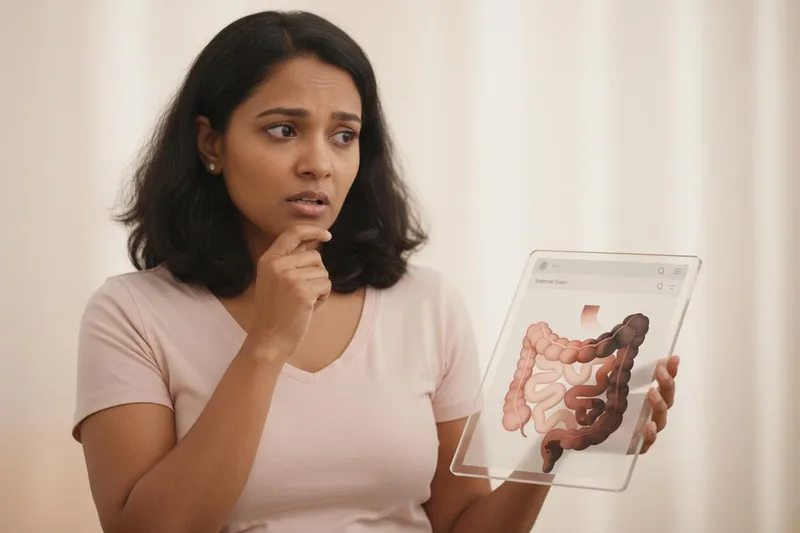
Have you ever wondered about the color of the inside of your colon? Perhaps when a doctor sends you for a test like a colonoscopy, he or she may say that the inside of your colon is a little darker than normal, and in some places it looks like a blackish brown color. This may sound a little scary, right? But don't worry. Today we are going to talk about this condition called Melanosis Coli.
What is Melanosis Coli?
Simply put, Melanosis Coli is a condition where the lining of your large intestine (colon) becomes darker than normal. To be precise, it can sometimes look dark brown or even black. But this is not cancer , so there is nothing to worry about. You will not have any symptoms from it. Usually, this color change is noticed when a doctor examines you for another reason, for example, during a colonoscopy.
Now you're probably thinking, 'Oh, why is this color changing?' This is because of a pigment called Lipofuscin that's in the walls of your colon. If you use certain types of stimulant laxatives for a long time, this pigment (Lipofuscin) can build up. Stimulant laxatives are medications that stimulate the nerves in your colon, causing them to contract, helping you pass stool.
But, if a doctor sees this Melanosis Coli condition, he will tell you to stop using that type of laxative. After you stop it, your colon will return to its normal color. So there is nothing to worry about.
Is this a serious situation?
No, not at all. Melanosis Coli is not a serious condition . Also, it does not increase your risk of developing any other serious illness. So, don't worry, it's not a big deal.
What are the symptoms?
The best part is that Melanosis Coli does not cause any symptoms . Many people only find out they have the condition as an incidental finding during a colonoscopy or flexible sigmoidoscopy, which is a test that looks inside the colon for some other reason.
During a colonoscopy, a gastroenterologist passes a small camera-equipped tube down your large intestine to look inside. They check for any abnormal growths (such as polyps) or signs of colon cancer. A flexible sigmoidoscopy is a similar test, but it only looks at the lower part of your large intestine.
What are the causes of Melanosis Coli?
There is a main reason for this, but there may also be other minor reasons.
Main cause: Long-term use of a laxative group
Melanosis Coli is often caused by certain types of laxatives ( laxatives ).For those who use it for longer than necessary. If you have constipation, laxatives can help relieve it. But they are designed to provide short-term relief only. They are not a long-term solution for persistent constipation.
Laxatives that have been linked to Melanosis Coli contain organic compounds called Anthraquinones. These are found in some plants. Although they may relieve constipation, they should not be used for longer than two weeks .
Researchers say that when these laxatives are used for a long time, usually more than two weeks, they can damage the cells that line the lining of your colon. When those cells are damaged, they release a pigment called Lipofuscin that we talked about earlier. This pigment accumulates and is what gives your colon its dark brown or black color. But the good news is that even if this happens, your colon's lining can quickly recover.
Here are some types of laxatives that contain anthraquinones:
- Some products made from Aloe (are these available in Sri Lanka too?)
- Senna (this is also something we know well)
- (Buckthorn)
- (Cascara Sagrada)
- (Frangula)
- (Rhubarb) (This is also sometimes used as a laxative)
Imagine, some people continue to use this as a quick fix for constipation. For example, Aunt Kamala boils some fenugreek leaves and drinks them every night, saying, 'Everything in the stomach will be clean.' After doing this for months, her colon may change color without her even realizing it. But as soon as she stops taking it, it returns to normal after a while.
Are there other reasons besides laxative use?
Yes, although in very rare cases, people who do not use laxatives can develop Melanosis Coli. Here are some other factors that can contribute to it:
- If you have chronic diarrhea .
- Conditions like Inflammatory Bowel Disease (IBD).
- Irritable Bowel Syndrome (IBS).
- Vitamin E deficiency .
- If you continue to use nonsteroidal anti-inflammatory drugs (NSAIDs) (e.g., painkillers).
- A cream called Anthralin is used to treat the skin disease psoriasis .
- If you regularly eat foods high in unsaturated fatty acids (these are usually found in plant foods).
How to recognize this condition?
As we mentioned before, Melanosis Coli is usually an incidental finding.. This is seen during an endoscopy, or colonoscopy. With these tests, doctors look for any abnormal growths inside the large intestine, such as polyps, or signs of cancer. If you have constipation, your doctor may do a colonoscopy or flexible sigmoidoscopy to find the cause. Constipation is a common condition that can be associated with melanosis coli.
Doctors don't specifically look for Melanosis Coli, but they can see this color change when they do the test.
How is it treated? What can be done about this?
This is often caused by the continued use of laxatives containing anthraquinones, and the main treatment is to stop using the laxatives . Melanosis Coli is a reversible condition. This means that once you stop taking the laxatives, the lining of your colon will return to its normal color. This discoloration usually disappears within 6 to 12 months .
In the meantime, there are other ways you can control constipation.
Other ways to relieve constipation
It's best to talk to a doctor and choose a method that's right for you. Here are some such methods:
- Eat more fiber-rich foods . Include foods like brown rice, whole grain bread, pasta, fruits, and vegetables in your diet. These will help make bowel movements easier.
- Drink plenty of water . Your body needs plenty of water to soften stools and help them move through your intestines. Make sure you drink enough water throughout the day. Stay away from drinks that dehydrate you, like alcohol and coffee.
- Be active and exercise . Exercise stimulates bowel movements and helps with bowel movements. Even just walking for 30 minutes a day is good.
- Change the type of laxative . You may need to switch from a stimulant laxative to a different type of laxative, such as a bulking laxative or stool softener. Talk to your doctor about this.
If these solutions don't help, your doctor will find another treatment option that's right for you.
What happens if this situation exists?
Once you stop taking laxatives containing anthraquinones, or if the underlying cause is treated, your colon color should return to normal. This color change does not affect your colon or your overall health in any way .
Can Melanosis Coli be prevented?
Yes, you can. The best way to prevent Melanosis Coli is to avoid using laxatives containing Anthraquinones.. Follow your doctor's advice on how to manage (and prevent) constipation. Don't take laxatives without first consulting a doctor.
Is this cancer? Is it related to cancer?
No, this is not cancer. To be clear, Melanosis Coli is not a sign of colon cancer. And there is no evidence that it increases your risk of developing colon cancer. It is simply a harmless discoloration of the lining of your colon.
Some people may be concerned about this cancer link because of the history of anthraquinone laxatives. Studies examining the safety and effectiveness of these drugs have shown that long-term use of these drugs has caused cancerous tumors in mice. However, there is no evidence that this is the case in humans. Researchers are continuing to investigate the safety of these drugs, especially when used long-term for constipation. To date, there is no evidence that there is a direct link between anthraquinone laxative use and colon cancer (or any other cancer).
However, overuse of any laxative (including stimulant laxatives) can pose health risks . So, work with your doctor to find a treatment plan that is effective and safe for you.
Many people think that when a tissue turns black, it means it's dying or something serious. But in the case of Melanosis Coli, this dark tissue is not a sign of disease or irreversible damage. Usually, it means that you need to change the way you're managing your constipation. Talk to your doctor about long-term ways to manage and prevent constipation, rather than relying on laxatives containing anthraquinones.
In summary, the take-home message
Okay, so let's recap the most important facts about Melanosis Coli that we talked about today:
- Melanosis Coli is a thickening of the lining of the large intestine. This is not cancer and is nothing to worry about.
- Most often, this is caused by long-term use of certain laxatives containing compounds called anthraquinones.
- This condition does not cause any symptoms and is usually discovered incidentally during another test.
- Once the laxative is stopped, the color of the colon will return to normal . This can take about 6-12 months.
- This does not cause colon cancer or increase the risk of cancer .
- If you are constantly constipated, it is wise to see a doctor to find out the cause and get the most appropriate treatment, rather than just taking laxatives . That is the wise thing to do.
So, if you ever have a doctor tell you that your colon is a little different in color, don't panic, keep these facts in mind, and talk to your doctor carefully to find out the details. Got it?
👩🏽⚕️ Additional questions (FAQs)
💬 Is Melanosis Coli a type of colon cancer?
It's not cancer! This is like a wonderful sight that a 'doctor only' sees through the camera during a colonoscopy. The inside of a normal person's colon is a bright pink color. But the inside of a person with this condition has become dark, like the skin of a crocodile, with 'dark brown/black pigmentation'.
💬 Is my bowel movement black/brown due to a poison/food?
The poison is not gone! 99% of the time, this is because you are taking laxatives containing 'Senna' (a plant extract like Aralu, Bulu, Nelli) for a long time for constipation. When you continue to take these medicines, the compounds in them cause a pigment similar to Melanin, which darkens the skin (Lipofuscin), to be deposited in the cells of the intestines, turning the intestines black.
💬 Is it necessary to undergo dangerous surgeries for this disease that causes black bowels?
This is not a dangerous condition at all (benign condition), it does not cause cancer, and you will not experience any stomach pain. There is no surgery or medication given by the clinic for this! As soon as you stop taking the 'Senna' laxatives for constipation, within a few months or a year, the black color will fade on its own and the intestines will turn a bright pink color again.
` Melanosis Coli, Melanosis Coli, Colon, Laxatives, Constipation, Colonoscopy, Anthraquinones


💬 Comments (0)
No comments yet. Be the first to share your thoughts here.
Add Your Comment