
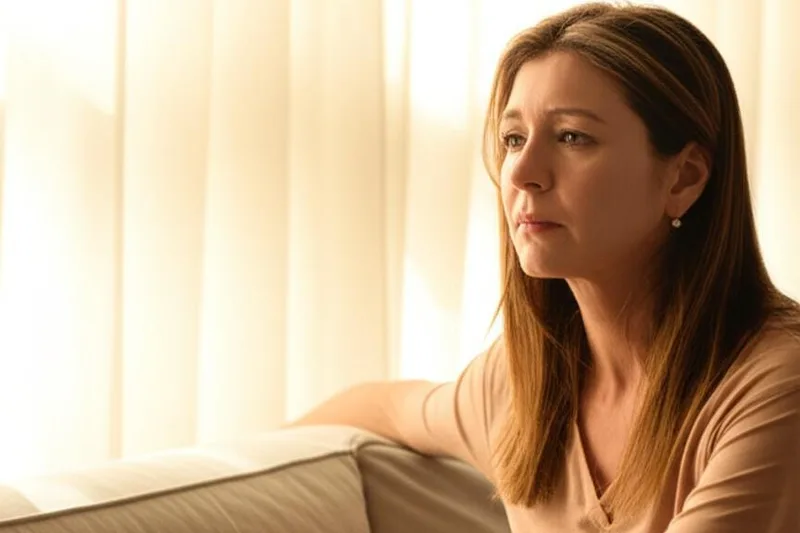
Since you turned 40, have you ever felt angry, hurt, sad, or anxious about the smallest things? Do you sometimes feel like staying in bed without doing anything? You may think that all this is because of work or problems at home. But did you know that these things are related to the hormonal changes in your body? Today, we will talk about the relationship between the important life milestone called menopause and the mental condition called depression.
What happens to hormones and your mind?
Simply put, menopause is not a single day. It is a process. This period is called ``Perimenopause''. It is the few years before your monthly periods stop completely. During this time, your periods become irregular. Sometimes they don't come for months, sometimes they come early, and sometimes you bleed a lot or very little. This is all because the levels of the hormones estrogen and progesterone in your body are fluctuating.
Now think about it, these hormones don't just affect your reproductive system. They're also directly related to how your brain functions. There's a chemical in our brain that makes us feel happy and relaxed, called serotonin . When estrogen levels drop, it also affects these serotonin levels. As a result, you can start to feel anxious, irritable, and sad .
To be precise, most of your life your hormones change in a pattern that your body is used to. But during this period (perimenopause), that pattern is disrupted. Just as mood swings occur when hormones rapidly change after childbirth, you may experience similar mood swings during this time.
When menstruation stops for 12 consecutive months, we call it ``Menopause.`` The period after that is called ``Postmenopause.`` The physical and psychological changes that many people call ``menopause'' actually occur during a period called ``Perimenopause.``
Is this just a change in mood? Or is it depression?
This is the biggest question that many people have. "Is this just a mood swing, or am I depressed?" they wonder. Because the symptoms are very similar. Things like drowsiness, fatigue, weight changes, and decreased sex drive can be seen in both.
But there is a clear difference between the two. Let's look at this table.
| Symptom | What can be seen in depression? |
|---|---|
| Mood | A feeling of sadness, emptiness, and hopelessness that lasts for days or weeks. An inability to be happy even for a short while. |
| Functionality | Loss of interest in doing things you used to enjoy (hobbies, seeing friends). Difficulty performing daily tasks (work, housework). |
| Sleep | Inability to sleep properly at night or feeling sleepy and sleeping unnecessarily throughout the day. |
| Appetite | Complete loss of appetite or overeating, resulting in weight loss or gain. |
| Thoughts | Feelings of worthlessness, feelings of failure, and sometimes even thoughts of ending your life. |
As one doctor puts it, "Depression is a state of really disabling daily functioning. Your mood is low, and you find it difficult to do normal things."
What is the treatment for this?
This is the most important thing. This condition is completely treatable and curable . You don't have to suffer alone.
1. Hormone Therapy: Some people, especially if their symptoms are not severe, may find relief with hormone therapy (especially estrogen). These can be taken as a pill or as a skin patch. They can help control hot flashes and mood swings.
2. Antidepressants: If your symptoms are severe, your doctor may prescribe medications to treat depression. The most commonly used of these is a class of drugs called selective serotonin reuptake inhibitors (SSRIs). These help restore serotonin levels in the brain.
3. Therapy: Along with medication, counseling is also a very important treatment method. Talking to a psychiatrist or counselor (Talk Therapy) can help you understand and manage your emotions. Cognitive Behavioral Therapy (Cognitive Behavioral Therapy) is also a very effective counseling method used for this purpose.
The most important thing is to talk to your doctor about these treatments. A gynecologist, family doctor, or psychiatrist can guide you through this.
Things you can do at home
Along with medical treatment, making small changes to your lifestyle can provide great relief.
- Exercise: Do something like walking or yoga for at least 30 minutes every day. Exercise is a natural mood booster.
- Reduce alcohol and caffeine: These can further disrupt your mood.
- Sleep well: Get into the habit of going to bed at the same time and waking up at the same time.
- Get some sunlight: Getting some sunlight a day can improve your mood.
- Eat nutritious foods: Eat a diet rich in vegetables, fruits, legumes, whole grains, and protein.
- Write down what's on your mind: Keeping a diary and writing down your feelings can be a great way to relax.
Take-Home Message
- Depression can be caused by hormonal changes during perimenopause. It's not your fault.
- Distinguish between a simple mood change and depression. Be aware of persistent sadness, inability to function, and hopelessness.
- This is a completely treatable condition. Don't suffer alone.
- See your doctor immediately and talk about this. He or she will provide you with the most appropriate treatment.
- Things like exercise, a good diet, and healthy sleep can greatly boost your mental health.




💬 Comments (0)
No comments yet. Be the first to share your thoughts here.
Add Your Comment