

If you suffer from regular urinary tract infections, you know how frustrating they can be. Burning pain when you use the restroom, constant urges to go, and nagging lower belly pressure can completely ruin your day. When infections keep coming back month after month, your doctor may suggest a special preventative medicine instead of treating each flare-up separately. Today, we will explore one such preventative medicine called methenamine hippurate.
Living with chronic urinary issues affects your work, sleep, and peace of mind. Preventative care helps break this exhausting cycle so you can feel like yourself again. This complete guide will walk you through how methenamine works, why urine acidity matters so much, and how to use this medicine safely and effectively.
Key Takeaways About Methenamine Hippurate
- Prevention Only: Methenamine prevents future urinary tract infections and does not treat active infections.
- Acidity Rule: Your urine must remain acidic for the medicine to convert into its active antibacterial form.
- Swallow Whole: Never crush, chew, or split the tablets; swallow them whole with a full glass of water.
- Drug Interactions: Avoid taking sulfa drugs and antacids that can block how methenamine works in your body.
- Complete Course: Take your medicine for the full duration recommended by your doctor, even when you feel completely fine.
Know your body mass index (BMI) and weight classification
What is Methenamine?
Simply put, methenamine is a prescription medicine given to prevent bacterial infections in your urinary tract. The most important thing to understand right away is that this medicine is not a treatment for an active, ongoing infection. It is designed to stop new infections from starting, rather than curing an infection that you already have.
Think of it like carrying an umbrella before the rain starts. An umbrella helps keep you dry when rain is on the way, but it does little good if you are already soaked to the bone in the middle of a heavy downpour. Similarly, if you currently have a painful urinary tract infection with strong symptoms, methenamine will not fix it. In that situation, your doctor will prescribe a standard antibiotic.
Also, this medicine does not work against viruses like colds or the flu. It is specifically engineered to target bacteria inside your urinary tract and nowhere else in your body. Knowing its exact role helps you manage your expectations and work effectively with your care team.
What to Tell Your Doctor Before Starting Treatment
Before you take your first dose of methenamine, giving your doctor a complete medical history is vital. Sharing accurate health details keeps you safe and helps prevent dangerous interactions or unwanted side effects.
Be sure to mention if you have any of the following health conditions or personal circumstances:
- Kidney problems or decreased kidney function, which can change how your body processes medicines.
- Liver disease or liver impairment, which requires careful medical monitoring.
- Severe dehydration, meaning your body is critically low on water and fluids.
- Allergies to methenamine, artificial food colorings like tartrazine dye, specific foods, or other everyday medicines.
- Pregnancy, plans to become pregnant, or breastfeeding, as safety during these times must be evaluated by your doctor.
Your doctor will review these details carefully to decide if methenamine hippurate is the right choice for your specific body and lifestyle.
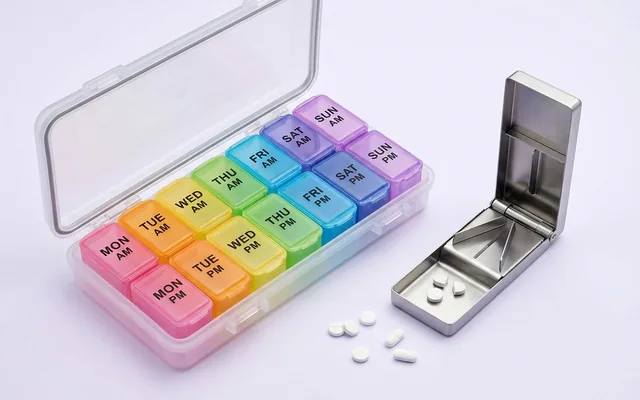
Airtight double-lock weekly medication organizer with removable day pods and a surgical stainless-steel tablet cutter for accurate half-tablet splitting and adherence.
View Clinical Details →How to Use This Medicine Correctly
To get the maximum benefit from any prescription medicine, you must use it exactly as directed by your doctor. Proper administration ensures steady protection for your urinary system.
- Take each tablet with a full glass of water to help your kidneys flush properly.
- Follow your doctor's exact dosing schedule and take your doses at the same times every single day.
- The most important rule: do not crush, chew, or break the tablet. Swallow it completely whole.
- Continue taking your medicine for the entire duration prescribed by your doctor. Never stop early just because you feel better.
- If children are prescribed this medicine, it must be managed strictly under the guidance of a pediatrician. Doctors sometimes prescribe it for children over six years old under specific conditions.
What to Do If You Take Too Much
If you accidentally take more than your prescribed dose, do not panic, but act quickly. Contact your local emergency services or poison control center right away. In the United States and Canada, call 911 or contact Poison Control at 1-800-222-1222. In the United Kingdom, call 999 or NHS 111. You can also head straight to your nearest hospital Emergency Department (ER or A&E).
The Most Important Rule: Urine Acidity
Here is the most crucial detail you need to know about how methenamine works. For this medicine to do its job inside your body, your urine must be acidic.
Put simply, your urine needs to maintain a low pH level. When your urine is acidic, methenamine converts into a powerful natural germ-killing chemical called formaldehyde. If your urine is not acidic enough, the medicine simply passes through your system without doing anything to stop bacteria.
Because of this requirement, your doctor will likely recommend specific dietary adjustments and hydration habits:
- How much water you should drink daily to stay well-hydrated.
- Foods that help make your urine more acidic, such as certain fruits or vitamin C supplements.
- Foods and drinks that make your urine alkaline, which you should limit or avoid, including certain vegetables, dairy products, and antacids.
Ask your doctor for clear, personalized guidelines on managing your diet and fluid intake while taking this therapy.
Proper hydration and fluid intake support overall urinary tract health and medicine effectiveness.
Other Things That Interact With This Medicine
Methenamine can interact with other substances you put into your body. Always share a complete list of your prescription drugs, over-the-counter medicines, vitamins, and herbal supplements with your doctor.
| Medicine or Substance Class | What You Need to Know |
|---|---|
| Sulfa Drugs | Avoid taking sulfa-based antibiotics with methenamine. Combining them can cause harmful chemical crystals to form in your urine and reduce effectiveness. |
| Antacids | Over-the-counter heartburn remedies and sodium bicarbonate make your urine alkaline, which stops methenamine from converting into its active form. |
| Acetazolamide & Methazolamide | These specialized prescription drugs alter urine pH levels. Always inform your doctor if you take them alongside methenamine. |
Possible Side Effects
Like all medicines, methenamine can cause side effects in some people, though many users experience no issues at all. Knowing what to watch for helps you stay safe and get help when needed.
| ⚠️ Serious Symptoms: Call Your Doctor Right Away | |
|---|---|
| Severe Allergic Reactions | Skin rashes, hives, itching, or swelling of your lips, tongue, and face. Seek emergency care right away. |
| Bladder Irritation | Sharp bladder pain, cramping, or severe discomfort when urinating. |
| Dark Urine | Unusually dark or discolored urine that persists throughout the day. |
| Lower Back or Abdominal Pain | New or worsening aches in your lower back, flank, or stomach area. |
| Mild Side Effects: Contact Doctor If They Continue | |
|---|---|
| Upset Stomach & Nausea | Mild nausea or digestive discomfort after swallowing your dose. |
| Loss of Appetite | A temporary drop in your desire to eat meals normally. |
| Mild Diarrhea | Loose stools that settle down after your body adjusts to the medicine. |
| Mouth Sores | Small irritations inside your mouth that linger. |
When to Seek Emergency Medical Attention
If you experience sudden trouble breathing, facial swelling, severe chest pain, high fever with chills, or signs of a severe kidney infection, call 911 (US/Canada) or 999 (UK) right away, or go straight to the nearest hospital Emergency Department.
💡 Take-Home Message
Managing chronic urinary tract infections takes patience, consistency, and close teamwork with your doctor. Keep these core points in mind as you start your preventative routine:
- Methenamine is strictly designed to prevent future infections, not cure active ones.
- Your urine must remain acidic for the medicine to work properly. Follow your dietary guidelines closely.
- Swallow your tablets whole without crushing, chewing, or breaking them.
- Inform your doctor about all other medicines you take, especially sulfa drugs and antacids.
- Report severe symptoms like skin rashes, facial swelling, or intense burning right away.
- Never share your prescription medicine with friends or family members.
A note from Dr. Priya Sammani, MD: Preventing recurring urinary tract infections requires a balanced lifestyle, proper daily hydration, and strict adherence to your prescribed regimen. Always reach out to your doctor if you have questions about your lab results or daily symptoms.


No comments yet. Be the first to share your question or experience below.