
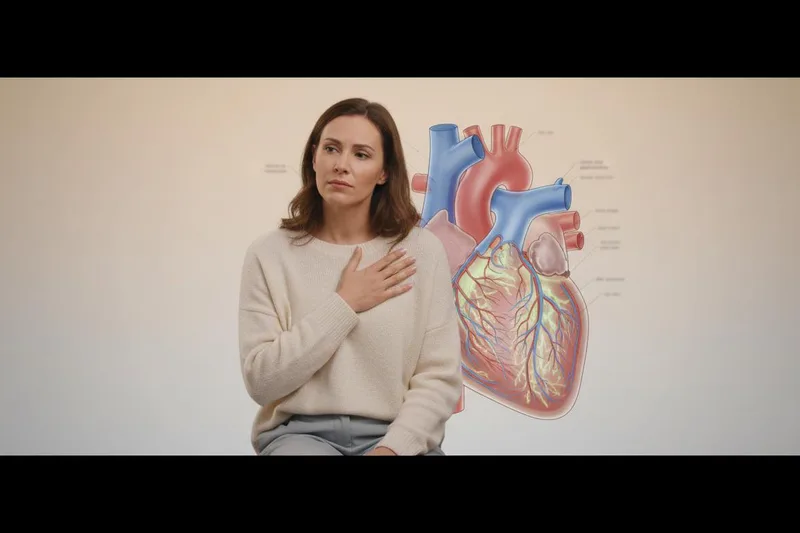
Do you sometimes feel a strange pain or a feeling of tightness in your chest? When that happens, we get scared and go to see a doctor. Even after doing tests like ECG and scan, the doctor says, "There is no blockage in the large blood vessels of the heart." Then we may think, "Then why is this chest pain?" In fact, sometimes the cause of this is not the large blood vessels of the heart, but the very small, tiny blood vessels that branch off from them. That is the condition we are talking about today, `Microvascular Coronary Disease` or `Small Vessel Disease`.
What is Microvascular Coronary Disease?
Simply put, this is a disease that affects the very small blood vessels in our heart. Imagine our heart like a big city. This city has big highways (these are the large coronary arteries) that supply blood and oxygen. But to get off those highways and get to every house and shop in the city, you need small side roads, cobblestone roads, right? In the same way, every tiny cell in the muscles of our heart is brought blood, oxygen and nutrients by a network of very fine blood vessels, no thicker than a strand of hair. This is what we call `(coronary microvasculature)`.
In a condition called `Microvascular Coronary Disease`, even though those big highways are in good condition, these little byways are damaged and do not function properly. Then the heart muscle does not get the oxygen and nutrition it needs.
There are several other names used for this condition. Your doctor may use one of these names:
- Small artery disease
- Small vessel disease
- Cardiac X syndrome
- Microvessel disease
- Nonobstructive coronary heart disease
How is this different from normal heart disease (Coronary Artery Disease)?
Many people confuse the two because both of these diseases increase the risk of heart attack. However, the functioning of the two is completely different. Let's understand this difference clearly.
| Point of comparison | Common Coronary Artery Disease | Microvascular Coronary Disease |
|---|---|---|
| Affected blood vessels | It affects the main, large coronary arteries on the surface of the heart. | It affects the very small, delicate blood vessels that branch off from larger arteries. |
| The main cause of the disease | Cholesterol and oil deposits (plaque) inside blood vessels, causing blockages. | Damage to small blood vessels or impaired function. There is no plaque buildup . |
| How it looks in tests | These blockages can be clearly seen in tests such as an angiogram. | Problems with these small vessels are not visible on a regular angiogram, so it can be difficult to diagnose the disease. |
Who is most at risk of developing this condition?
This condition is more common in women than men, especially during and after menopause, when estrogen levels in the body decrease.
In addition, people with the following are also at higher risk of developing this disease:
- Having diabetes .
- High blood pressure .
- Having high cholesterol levels in the blood .
- Obesity and weight gain.
- Smoking .
- Living a sedentary lifestyle without exercise .
- Eating too much salt, saturated fat, and processed foods .
- Having autoimmune diseases such as lupus or rheumatoid arthritis.
Why does this disease occur?
In a healthy heart, the delicate muscles in the walls of these small blood vessels control blood flow by contracting and relaxing as needed. For example, when we exercise, the heart needs more blood, so these vessels widen and pump more blood. When we are at rest, they return to their normal position.
But in the case of `Microvascular Coronary Disease`, the inner walls of these small blood vessels are damaged. This damage disrupts their function. Sometimes these channels can suddenly contract strongly (spasms). Then the blood supply to the heart muscle is suddenly disrupted, causing symptoms such as chest pain.
What are the symptoms of this disease?
The main and most common symptom of this disease is chest pain called angina . However, this pain may be slightly different from the pain that occurs in normal heart disease.
- It usually lasts 10 minutes or more .
- This pain can occur during exercise as well as at rest .
- Pain can increase when there is mental stress .
- For some people, this pain makes it so difficult for them to even perform daily tasks properly.
In addition to this chest pain, other symptoms may also occur:
- Shortness of breath and difficulty breathing .
- Excessive fatigue for no reason .
- Sleep issues, including insomnia .
Very important: Chest pain can be a symptom of a heart attack. Therefore, if you have persistent chest pain, if it gets worse, if you have difficulty breathing, or if you have pain that spreads to your arm, neck, or back, go to the nearest hospital emergency room (ETU) immediately.
How to accurately diagnose the disease?
To be honest, diagnosing this disease can be a bit challenging because these tiny blood vessels are too small to be seen with standard heart tests. So, if you have these symptoms, it's best to see a cardiologist who specializes in these types of diseases.
The gold standard test for diagnosing this disease is a specialized test called `Cardiac catheterization with coronary flow reserve (CFR).` This measures how quickly these small blood vessels can dilate and supply more blood to the body's needs.
In addition, the doctor may recommend several other tests:
- Nuclear cardiac stress test (PET scan)
- Cardiac MRI with perfusion
What are the treatments for this?
The main goal of treatment is to improve the function of blood vessels, control symptoms, and reduce the risk of complications such as heart attack. Your doctor may prescribe several medications to help you do this.
- Angiotensin-converting-enzyme (ACE) inhibitors: help control blood pressure by widening blood vessels.
- Anticoagulants: Drugs that prevent blood clotting.
- Aspirin: Prevents blood platelets from sticking together and reduces blood clot formation.
- Beta-blockers: Control heart rate and lower blood pressure.
- Calcium channel blockers: Relax the muscles in the blood vessels, widening them.
- Diuretics: Remove excess fluid and salt from the body, lowering blood pressure.
- Statins: Drugs that lower blood cholesterol levels.
What should we do to prevent and control the disease?
Along with medication, positive changes in our lifestyle are very important in controlling this disease.
- Follow a heart-healthy diet: Reduce salt, oil, sugar, and processed foods, and eat more vegetables, fruits, legumes, and fiber-rich foods.
- Exercise regularly: Get at least 30 minutes of exercise a day, such as walking or jogging. If you're new to exercise, talk to your doctor and consider a cardiac rehab program if necessary.
- Maintain a healthy body weight.
- Keep blood pressure and blood sugar levels within the appropriate range.
- If you smoke, stop it completely.
About living with this disease
Using multiple medications and making lifestyle changes like this can be a bit difficult at first. Some medications can cause side effects like dizziness.
Be sure to talk openly with your doctor about any discomfort you experience. He or she may be able to adjust your medication or give you other advice.
It can also be very helpful to keep a diary of your symptoms and blood pressure, as this will help your doctor get a clear picture of your condition and tailor your treatment accordingly.
Take-Home Message
- Microvascular Coronary Disease is a condition that occurs not in the large blood vessels of the heart, but in the very small, delicate blood vessels .
- This is different from normal heart disease, where cholesterol deposits (plaque) clog blood vessels.
- This condition is commonly seen among women .
- The main symptom is persistent chest pain that worsens at rest and with stress.
- Routine tests are not sufficient to diagnose the disease, and specialized tests may be necessary.
- Medication and lifestyle changes can help you manage your symptoms, prevent complications, and live a healthy life. It's important to maintain regular contact with your doctor .




💬 Comments (0)
No comments yet. Be the first to share your thoughts here.
Add Your Comment