

Do you also forget little things as you get older? Do you find it hard to keep your mind in one place? Sometimes you think that these are normal signs of aging, but sometimes there may be another health reason behind this. Well, today we are going to talk about a condition that affects the small blood vessels in our brain. This is called `(Microvascular Ischemic Disease)`. Let's see what this is, who gets it, and what are the symptoms.
What is this (Microvascular Ischemic Disease)? Simply put...
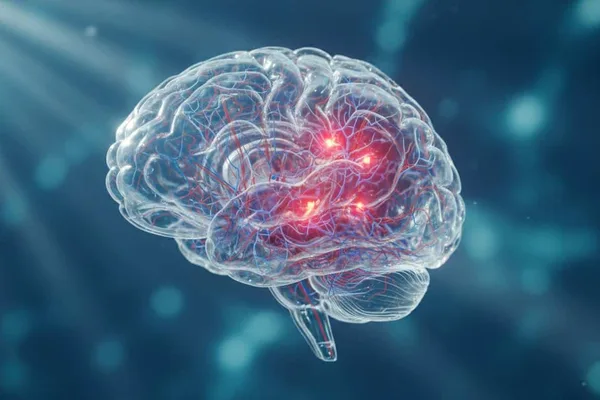
Simply put, `(Microvascular Ischemic Disease)` is a general name for a group of different changes that occur in the very small, delicate blood vessels (we call these `(microvessels)`) in your brain. Just like a water pipe gets clogged as it gets older, these blood vessels can also change little by little. Depending on the severity of these changes, you can develop various complications. It could be something as minor as difficulty concentrating, or it could be as serious as a `(stroke)`.
There are several other names used for this condition. You may have heard these names:
- ``Cerebral small vessel disease (CSVD)''
- ``Chronic microvascular ischemic disease''
- ``Small vessel ischemic disease''
No matter what name you call it, it's all about the same thing.
Who is affected the most by this?
This condition called ``Microvascular Ischemic Disease`` is mostly seen among the elderly. Both men and women can develop it. The most important thing is that the risk of developing this condition increases with age.
Just think, by the age of 50, about 5% of people may have this condition. However, among those who have passed the age of 90, it is said that almost one hundred percent (100%) of all people have this condition to some extent. This means that it is very common as we age.
This is so common that it is estimated to be the cause of about 45% of people who develop dementia, a condition in which memory is gradually lost, and 25% of people who suffer from stroke. Therefore, it is very important to be aware of this.
Why is this happening? What are the reasons for this?
The main cause of `(Microvascular Ischemic Disease)` is the thickening of the walls of the small blood vessels in the brain, and the accumulation of fat inside them, causing `(plaque build-up)`. It is like rust forming inside old water pipes. However, experts do not know exactly why this happens. However, it has been found that there are many factors that affect this.
What are the risk factors? Be careful if you have these things!
Aging is the main risk factor. We cannot control it. However, there are several other health problems that increase the risk of developing `(Microvascular Ischemic Disease).` They are:
- Chronic kidney disease: If you have kidney problems, this risk is higher.
- Diabetes: People with diabetes are also more likely to develop this condition, as diabetes can damage blood vessels in general.
- High blood pressure: Especially if your blood pressure is 140/90 mm Hg (arterial hypertension) or higher, it puts a lot of pressure on the small blood vessels in the brain.
- High cholesterol: When cholesterol levels in the blood increase, there is a greater chance that it will build up and become blocked inside the blood vessels.
- Snoring and obstructive sleep apnea: This is also a more serious problem than you might think. Not breathing properly at night reduces the body's oxygen supply, which is also not good for the blood vessels.
- Smoking or using other tobacco products: Smoking is a risk factor for almost every disease. It directly damages the blood vessels.
If you have one or more of these things, it's a good idea to be a little more careful.
What are the symptoms? How do we recognize this?
Doctors sometimes call this condition ``Microvascular Ischemic Disease'' a ``silent disease'' . That's because the symptoms are sometimes so subtle that they can be easily missed. Also, people tend to ignore them, thinking they are normal changes that occur with aging.
However, in some older people, these symptoms can range from moderate to severe. Since this condition affects multiple systems in the body, the symptoms can be very broad. Let's take a look at what they are:
Changes in the urinary system:
- Difficulty controlling urine (urinary incontinence): To put it simply, the involuntary loss of urine.
- Urinary urgency: The sudden, strong need to urinate .
Changes in thinking ability (Cognition):
- Dementia: The gradual loss of memory and difficulty performing daily tasks.
- Difficulty concentrating: Difficulty concentrating on something.
- Mild cognitive impairment: Difficulty making decisions and understanding things.
- Sudden confusion, feeling like you're losing your mind (delirium): This can come on suddenly.
Changes in the nervous system (Neurology):
- Difficulty swallowing food or liquids (dysphagia): Food may feel like it is getting stuck.
- Inability to control facial muscles properly: One side of the face may appear to be drooping.
- Sudden, uncontrollable crying or laughing for no reason (pseudobulbar affect): This can be a very strange experience.
- Slurred speech and slurred speech (dysarthria): as if the tongue were sprained.
Changes in mental health:
- Anxiety: Feeling uneasy or fearful.
- Apathy: A state of being bored with everything .
- Depression: A feeling of intense sadness and disappointment.
- Constant tiredness, fatigue: A feeling of being tired no matter what you do.
- Getting angry quickly over small things, impatience (Irritability) .
Sleep problems:
- Various sleep disorders .
- Not sleeping well at night, insomnia problems .
Walking problems:
- Losing balance while walking, having difficulty maintaining balance .
- Falling or falling frequently .
- A shuffling walk .
If you have one or more of these symptoms, it is very important to talk to a doctor about it.
How is this condition diagnosed? What tests are done?
Doctors usually use an MRI (Magnetic Resonance Imaging) scan to diagnose this condition. This is a virtually painless test. It uses a large magnet, radio waves, and a computer to take very clear pictures of your brain.
A person with ``Microvascular Ischemic Disease'' may have various changes in their brain. Doctors look for things like these on MRI images:
- Cerebral microbleeds are small blood vessels in the brain that bleed . These are very small bleeds.
- Whether the white matter in the brain has been damaged. These damaged areas appear as bright white spots on the scan. These are called white matter hyperintensities.
- Whether there are small, non-neurological lesions in the brain (lacunar infarcts) that do not show major neurological symptoms. These are like small areas of damage.
When these things are found on an MRI scan, the doctor can determine whether you have ``Microvascular Ischemic Disease'' or not.
Can this disease be reversed and completely cured?
This is a bit of a complicated issue. In the early stages of ``Microvascular Ischemic Disease'', it may be possible to ``reverse'' some of the changes that have occurred in the brain to some extent. That is, the situation can be turned around a little for the better.
However, this disease usually has a progressive nature. Over time, these changes can become irreversible.
That's why it's so important to identify this as soon as possible and control risk factors.
So what is the treatment for this?
Currently, there are no specific treatments for Microvascular Ischemic Disease. The main goal of current treatments is to reduce your risk factors and prevent or delay the development of serious complications such as dementia and stroke.
Because everyone's risk factors are different, the treatment plan may vary from person to person. That means the treatment will be tailored to you. In general, treatment may include:
- Developing healthy habits: Things like exercising and eating more nutritious foods.
- Quitting smoking completely.
- Taking medications to lower high blood pressure, control cholesterol, and control blood sugar levels.
Your doctor will examine you and tell you what treatment plan is best for you.
How can I reduce this risk?
This is the most important thing. It's very important to work with your doctor to identify exactly what your specific risk factors are and develop a plan that fits them.
Here are some strategies to help reduce the risk:
- Follow a healthy diet: Reduce salt, saturated fat, and sugar as much as possible. Eat more vegetables, fruits, and herbs that contain a variety of nutrients.
- Engage in a variety of exercises: Choose exercises that improve your balance, strength, and cardiovascular health. It's a good idea to get help from a physical therapist or fitness trainer to help you decide what exercises are safe and appropriate for you.
- Participate in programs that help you quit smoking: Scientifically based support groups or one-on-one counseling can help.
- Use techniques to reduce stress and relax: Things like meditation and yoga can help with this.
Although it may seem a little difficult to incorporate these things into your life, they will bring great benefits to your health in the long run.
How do I know if I am at risk?
To find out if you are at risk, you need to pay attention to your symptoms. It is also important to have regular checkups and blood work. Keep track of your cholesterol levels and blood pressure. If you have underlying conditions like diabetes or kidney disease, it is also important to keep them under control.
Is this situation dangerous? What will happen next?
If left untreated, Microvascular Ischemic Disease can lead to serious, even life-threatening complications, such as stroke and severe cognitive decline.
However, if you follow your doctor's personalized treatment plan, you can control the worsening of this condition and live a healthy, independent life. Therefore, it is important to follow your doctor's instructions without fear.
When should I see a doctor?
If you feel like you are suddenly or gradually losing your ability to do any of the things below, be sure to see a doctor for a checkup.
- The ability to control urine.
- The ability to remember things.
- Ability to think clearly.
Don't underestimate changes like this.
When should you go to the Emergency Treatment Unit (ETU) ?
People with `(Microvascular Ischemic Disease)` are at increased risk of stroke. Therefore, if you suddenly experience any of the symptoms below, you should go to an emergency room (ER) immediately.
- Dizziness, a feeling of spinning in the head .
- Inability to talk .
- Loss of balance or coordination, such as when walking .
- Numbness or weakness on one side of the body .
- Severe headache .
- Vision loss in one or both eyes .
These could be signs of a stroke, so getting treatment quickly without wasting time could be life-saving.
Finally, the most important things to remember
This condition, called ``Microvascular Ischemic Disease,'' can affect some people mildly and others severely. It can cause changes in your mood, difficulty thinking, and problems walking.
But the best thing is that by identifying and addressing your specific risk factors, you can control or minimize these complications, allowing you to live a healthier life.
So, talk to your doctor and create a personalized plan that works for you. Don't be afraid, awareness and taking the right steps are the most important thing!
` Blood vessels in the brain, aging health, stroke, dementia, high blood pressure, diabetes, cholesterol




💬 Comments (0)
No comments yet. Be the first to share your thoughts here.
Add Your Comment