
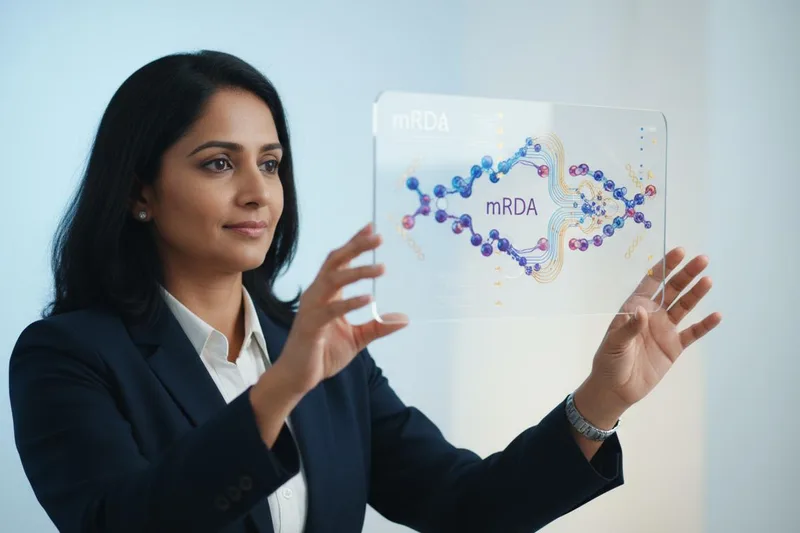
We've all heard the word "mRNA" a lot with the COVID-19 pandemic, haven't we? But at the same time, many people have questions about this, and even a little fear. "Is this something new?", "What will this do to our bodies?" You may have wondered. So today, let's talk very simply and politely about what this mRNA vaccine is and how it actually works inside our bodies.
Let's first see, what is this mRNA?
The full name of mRNA is messenger Ribonucleic Acid. Although the name is a bit complicated, the work is very simple. Think of the DNA in our body as a huge cooking recipe book. This book contains the instructions for making all the proteins our body needs. But you can't take this entire big book to the kitchen (that is, to the ribosomes in our cells that make proteins).
This is where the 'messenger' called mRNA comes in. What it does is it writes down on a piece of paper the recipe for the protein it needs to make from that big DNA book, and takes that message to the kitchen. Simply put, mRNA is like a short message that copies the instructions in DNA and sends them to the place where the protein is made. This is a process that happens naturally in our bodies all the time.
So what happens with an mRNA vaccine?
Like all vaccines, an mRNA vaccine trains our body's immune system to fight a disease. But the way it does it is a little different.
Take the mRNA vaccine for COVID-19 as an example. What this vaccine does is deliver to our cells only the instructions (mRNA message) needed to make the 'Spike Protein', which is part of the SARS-CoV-2 virus that causes COVID-19.
Most importantly, this vaccine does not contain the entire virus, nor any living or dead parts of the virus . It only contains the 'recipe' to make a single part of the virus.
When our cells receive this instruction, they make some of this 'thorn protein.' When our immune system sees this newly formed protein, it says, "Oh... this is an invader that doesn't belong in our body." Then, it prepares to make weapons, such as antibodies, to fight it.
Because we are trained in this way in advance, if the real COVID-19 virus enters the body later, our immune system will recognize it as soon as it sees it, attack it very quickly and efficiently, and protect us from becoming seriously ill.
The mRNA message from the vaccine breaks down, breaks down, and disappears within a few days in the body. Just like the recipe book we take to the kitchen and destroys it when we're done. It never integrates with our DNA or changes our genes.
What is the difference between mRNA vaccines and traditional vaccines?
The main difference is in the way the virus is presented to the immune system. See the table below for more information.
| mRNA Vaccines | Traditional Vaccines |
|---|---|
| The body is given the instructions (mRNA) needed to make a part of the virus. | Inactivated ("killed") viruses , weakened viruses , or protein fragments of the virus itself are given to the body. |
| The vaccine does not contain any part of the virus. | The vaccine contains some kind of part of the virus. |
| Examples: Pfizer-BioNTech (Comirnaty®), Moderna (Spikevax®) COVID-19 vaccines. | Examples: Novavax® COVID-19 vaccine (a protein subunit vaccine), measles vaccine (attenuated virus). |
What happens when you get vaccinated?
A doctor or nurse will clean the top of your arm with alcohol and give you the injection. Then, you will be asked to wait about 15 minutes. This is to check for an immediate allergic reaction to the injection. Some people feel faint during the injection, so it is best to sit down.
What are the benefits and risks of mRNA vaccines?
Advantages
One of the biggest advantages of mRNA technology is speed . Traditional vaccines require the virus to be grown in a laboratory. That can take months, even years. But mRNA vaccines don't require that, so they can be produced very quickly, even in the event of a new pandemic.
Speaking of COVID-19 vaccines, getting vaccinated,
- Reduces the risk of COVID-19 infection.
- Even if infected, the risk of serious illness, hospitalization, and death is greatly reduced.
- Reduces the risk of long-term effects (Long COVID) after contracting COVID-19.
Risks and Side Effects
Like any vaccine, mRNA vaccines can have minor side effects. These are actually a sign that your immune system is starting to work.
Common side effects:
- Pain or swelling at the injection site
- Fatigue
- Headache
- Muscle pain
- Mild fever
These symptoms usually disappear completely within a day or two.
Rare but serious allergic reactions:
Very rarely, someone may have an allergic reaction to something in the vaccine. Symptoms include:
- Skin rash or itching
- Itching
- Swelling of the face, lips, tongue, or throat (Anaphylaxis)
If you experience serious allergic symptoms such as difficulty breathing, swelling of the face or throat, go to the nearest hospital's Emergency Department (ETU) immediately.
Is this technology really new?
No. Research into mRNA technology has been going on since the 1970s. It wasn't until the 1990s that research into using this technology to produce vaccines began. It took scientists more than 20 years to figure out how to get this mRNA into cells without our immune system destroying it.
This technology was being successfully used for a drug (Patisiran) that treats a rare neurological disease even before the COVID-19 pandemic. When the COVID-19 pandemic hit, scientists were able to use the knowledge gained from decades of research to develop safe, effective vaccines faster than ever before.
It's normal to be a little afraid and skeptical of new things. But mRNA is a huge leap forward in medical science, researched and developed over decades. This little messenger molecule may help us treat many other diseases, such as cancer, in the future.
Take-Home Message
- mRNA vaccines do not contain the virus, either live or dead. They only contain the instructions to make one part of the virus.
- These vaccines do not change your DNA . The mRNA message in the vaccine is eliminated from the body within a few days.
- This is to train your immune system in advance to fight off an illness.
- Side effects are usually mild and go away within a few days, indicating that your immune system is working.
- This is a safe and effective technology that has been researched for decades.
- If you have any concerns or questions, talk to your doctor about it.


💬 Comments (0)
No comments yet. Be the first to share your thoughts here.
Add Your Comment